
Strengths
- Blockchain is proving its real-world utility in traditional finance, as France’s Lightning Stock Exchange (LISE), a blockchain-based exchange for tokenized securities, prepares what could be Europe’s first fully onchain IPO, planning to take aerospace supplier ST Group public under the EU’s DLT pilot regime, highlighting how tokenization is moving into capital raising.
- Tokenization is reinforcing digital assets’ strength in bringing real-world financial assets onto blockchain, with tokenized assets at roughly $27 billion today and projected to reach nearly $19 trillion by 2033, as institutions focus on practical blockchain use cases beyond trading.
- The Uniswap Foundation, supporting the decentralized exchange Uniswap, ended 2025 with $85.8 million in assets, committed $26 million in grants, and maintained runway through January 2027, reflecting continued ecosystem growth with Uniswap v4, Unichain, and onboarding over 1,500 developers despite market volatility.
Weaknesses
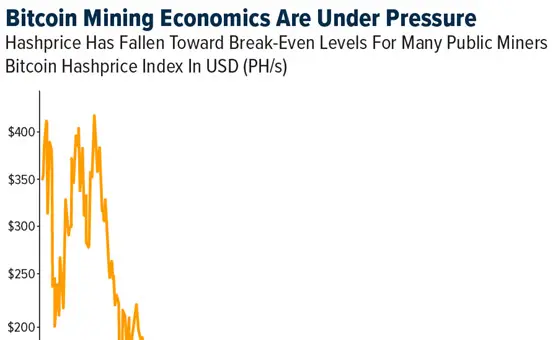
- Bitcoin miners continue to face profitability pressure, highlighting a weakness in the digital asset ecosystem even as many firms pivot toward AI infrastructure. According to CoinShares, the average cost to produce one bitcoin among public miners rose to nearly $80,000 in Q4, while hashprice fell to just $36–$38 per PH/s per day, leaving many operators near break-even. Publicly traded miners have already reduced their bitcoin treasuries by more than 15,000 BTC from peak levels, suggesting that unless bitcoin prices recover materially, further miner capitulation could continue weighing on sentiment.

- Spot Bitcoin ETF flows show uneven institutional demand, with U.S.-listed ETFs recording net outflows of $366.7 million from March 17–30, despite occasional inflow days, suggesting institutional participation remains fragile.
- Smaller bitcoin miners face mounting financial stress, as exemplified by Cango, which risks losing its NYSE listing after shares fell below $1, down 70% YTD, raising $10 million via a convertible note and $65 million in insider financing, highlighting reliance on fresh capital and pivots to remain viable.
Opportunities
- The rise of AI-driven commerce could create a major new opportunity for blockchain-based payments as Coinbase’s x402 protocol, a payment system designed to let AI agents send and receive small, high-frequency transactions over blockchain rails, gains backing from some of the world’s largest technology and financial infrastructure firms. The protocol is moving under the Linux Foundation with support from companies including Google Cloud, Stripe, AWS, Visa, and Mastercard. It aims to solve a growing need for open payment infrastructure that can handle microtransactions more efficiently than traditional financial networks.
- Franklin Templeton’s decision to expand its cryptocurrency business highlights a growing opportunity for digital assets as traditional finance deepens its involvement in the space. The firm, which manages more than $1.7 trillion in assets and was among the first issuers of U.S. spot bitcoin ETFs in 2024, is now building out Franklin Crypto to serve pensions, sovereign wealth funds, and other institutional investors.
- SoFi, a U.S. fintech and digital banking company, is underscoring a growing opportunity for digital assets as traditional banking and blockchain infrastructure continue to converge. The company launched a new business banking platform that allows firms to hold U.S. dollars, convert them into stablecoins, and move funds 24/7 within a regulated bank environment. By combining fiat, crypto, and settlement tools into a single system, SoFi aims to reduce reliance on fragmented providers and outdated payment rails, making digital assets a more practical component of modern financial infrastructure.
Threats
- Geopolitical volatility is becoming a more direct threat to digital asset markets as tokenized macro products gain traction on crypto-native trading venues. This week, tokenized Brent oil futures on Hyperliquid, a decentralized trading platform offering leveraged, 24/7 access to crypto and tokenized assets, generated $46.6 million in liquidations, making oil the third-most liquidated asset behind ether and bitcoin, with the single largest liquidation a $17.17 million oil trade. Rising Middle East tensions pushed Brent crude above $106, catching traders offside and amplifying volatility across crypto markets.
- Regulatory uncertainty remains a key threat to the digital asset market, as the head of the Commodity Futures Trading Commission (CFTC) said it is prepared to regulate the entire $3 trillion crypto industry, highlighting unresolved questions around jurisdiction, oversight, and enforcement while lawmakers continue debating the stalled CLARITY Act.
- Stablecoin adoption still faces regulatory friction, highlighting a threat to one of the digital asset market’s most important growth narratives. Hong Kong, which has positioned itself as a major crypto and fintech hub, failed to meet its March target for issuing its first stablecoin licenses, with no approved issuers listed so far. The delay shows regulators remain cautious around reserve quality, anti-money laundering controls, and redemption requirements, potentially slowing broader adoption.
