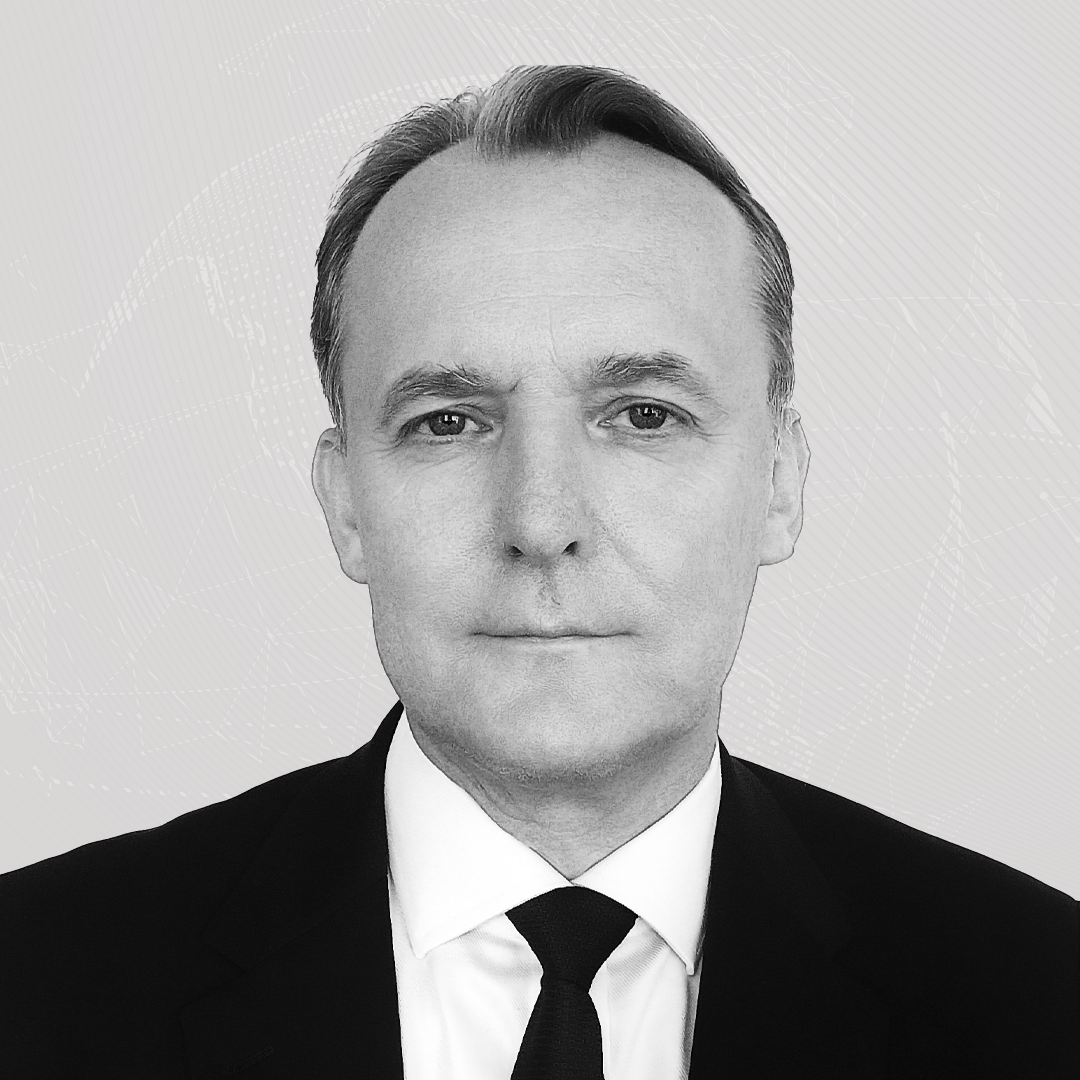
An interview conducted by Stephan Bogner, Managing Director of Elementum International AG, with Thorsten Polleit, who has become a member of the Board of Directors of Elementum International AG, Switzerland, in May 2026.
Stephan Bogner (SB): Mr. Polleit, you were recently elected to the Board of Directors of Elementum International AG. What prompted you to accept this mandate?
Thorsten Polleit (TP): I have been active in the international precious metals market for many years and have always followed the market and its players with great interest—whether in mining, production, trading, transport, or storage. The development of Elementum AG has particularly caught my attention: a family-run company with a clear focus, managed with great business prudence, which has implemented its goals in recent years in a very thoughtful and professional manner. Being able to offer gold and silver storage in Switzerland is, in my view, a really major competetive advantage. When my friend Professor Philipp Bagus, who has been President of the Board of Directors of Elementum International AG for many years, arranged a conversation with Bojan Pravica, and Bojan Pravica asked me whether I could be won over as a member of the Board of Directors, I agreed. Yes, I am really looking forward to supporting Elementum International AG and its excellent team.
SB: You have been dealing with monetary theory, capital markets, and precious metals for decades. How has your view of gold and silver changed over the course of your career?
TP: A great deal has changed, but not everything, as I realized recently at a conference. A member of the audience approached me and said: “Mr. Polleit, I have been listening to you for 25 years, and much of what you presented today you already said a quarter of a century ago!” The gentleman was referring to my recommendation to hold at least part of one’s portfolio in gold and silver, because these two precious metals represent the ultimate means of payment—they are something like “insurance with upside potential.” That made it clear to me: Yes, indeed, a lot has changed over the years, but some things have remained unchanged! What has changed for me is that I am probably more confident today than I was back then that the trend in precious metals prices will continue upward in the future. This is likely due to the experiences I gained as an economist at a leading international investment bank through various crisis cycles, and also to a deeper understanding of the problems embedded in the international credit and monetary architecture, which continue to build up.
SB: What significance do physical precious metals have today for private investors in an increasingly digital financial world?
The digitalization that is underway cannot be stopped; it will encompass more and more areas of the economy and life. This is not only associated with positive effects—such as lowering transaction costs and accelerating business processes. The move away from the physical, from the literally tangible, also harbors considerable dangers. Just think of power outages, dependence on expensive IT technologies, data protection breaches, hacker attacks and cybercrime, bank failures, and much more. Gold and silver in the form of coins and bars do not carry any of these risks. Their usability does not depend on bank or stock exchange opening hours, and they carry no default or counterparty risk. For these reasons alone, gold and silver offer investors the possibility of risk diversification. In addition, it should be noted that even an increasingly digital financial world carries the same crisis potential that has repeatedly led to financial and economic crises in the past. Because the digitalization of the financial world is also built on an unbacked paper system, or: fiat money system. In such a monetary system, crises are virtually pre-programmed.
SB: Many people are worried about inflation, government debt, and the stability of the financial system. How do you assess the current situation from a macroeconomic perspective?
TP: The world is literally hanging on a “fiat money regime,” and this will not have a good ending. Fiat money is inflationary, it causes an unequal and unsocial distribution of income and wealth (a few become particularly rich at the expense of the many), it drives economies into over-indebtedness, and it makes the state ever larger and more powerful at the expense of the freedoms of citizens and entrepreneurs. These problems of the fiat money system are evident not only in Germany, Europe, and the United States, but all over the world. However, one cannot say exactly when the debt pyramid will start to slip or when exactly the next crisis will be at the door. The current situation can be interpreted as a kind of “apparent stability”—the calm before the storm. In my view, inflation and currency debasement remain the biggest problem for investors—a problem that is very likely to become much larger. Because if a crisis occurs—for example, because states become insolvent—it will seem to rulers and many of the ruled as the comparatively smallest evil to pay the outstanding bills with newly created money.
SB: Gold has reached numerous record highs in recent years. Do you still see the long-term upward trend as intact?
TP: Yes. The course of gold and silver prices since the beginning of the 21st century has been characterized by a steady upward path, and this upward path will very likely continue. The price gains in the last two years—gold in U.S. dollars has risen by 94 per cent, silver by 135 per cent—were tremendous and have pushed precious metals prices far beyond the previous price trend lines. This means that gold prices have now entered “unknown territory.” A correction has set in since around the end of January 2026, but it will probably soon come to an end. I have carried out a number of analyses on this in my BOOM & BUST REPORT, and my conclusion is: The last two years have led to a “revaluation” of gold and silver relative to other asset classes such as stocks, bonds, and real estate—a revaluation that will very likely be permanent. While this does not rule out a correction like the one currently observable, it makes a return to the previous upward price path very likely.
SB: Silver is currently coming back into sharper focus. What role does silver play in your view compared to gold?
TP: First, three observations: Over the long term, say from 1970 to today, gold has achieved higher average price increases than silver. That speaks for gold. However, there have always been phases in which silver prices rose more strongly than gold prices. Consequently, there have always been special “windows of opportunity” that allowed one to buy silver and achieve correspondingly higher returns. And: Gold and silver prices have shown a relatively close connection, although silver prices have been significantly more volatile than gold prices. Now to your question: I usually recommend that investors hold both gold and silver in their portfolios, under the category of “liquid assets.”
The allocation of the proportions is situational: For example, if an investor wants to buy gold and silver during boom phases, I generally recommend a high gold allocation and a correspondingly lower silver allocation; in bust phases, exactly the opposite applies. You may already recognize: I encourage investors to act counter-cyclically—that is, to enter precisely when prices are relatively low, especially when many investors consider gold and silver unattractive.
SB: The gold-silver ratio is watched by many investors. What significance do you attach to this ratio?
TP: It is a particularly interesting ratio, both historically and in the current market environment. The ratio of gold price to silver price has shown a clear upward trend since the early 1970s. This means: On average, the gold price has risen more strongly than the silver price, as I have already pointed out. However, there have always been strong fluctuations around the trend—so the price ratio between gold and silver has changed significantly. If one assumes that the underlying trend observable for decades will continue in the future, then investors can draw conclusions from this. If the price ratio rises, say to 100, while the trend value is, say, 70, this indicates that gold is expensive relative to silver. Taken by itself, this is a signal for the investor to sell gold and buy silver with the proceeds. But a word of caution: The gold-silver price ratio should not be used as the sole indicator for buy and sell decisions. The investor is better advised to cross-check the signal from the gold-silver ratio with other analysis results (for example, from interest-rate and credit markets, the liquidity situation in the banking sector, whether a boom or bust phase is imminent in the precious metals market, etc.). And whoever knows how to handle the gold-silver price ratio reliably can generate very substantial gains for their portfolio!
SB: Central banks worldwide are buying large quantities of gold. What signals does this development send to private investors?
TP: The most important signal is probably that many non-Western central banks are trying to make their currency reserves more independent of Western fiat currencies—that is, of the U.S. dollar, euro, Japanese yen, British pound, Canadian dollar, and Swiss franc. At the latest with the freezing of Russian currency reserves in February 2022, it must have become clear to them: The Western currencies, which de facto all stand under Washington’s control, are not only increasingly inflated, they also carry a political risk: Whoever does not dance to Washington’s tune runs the risk of losing access to their savings. Another signal that private investors receive is: Not only is the dominance of the U.S. dollar being challenged; the rising economies of the world also want to shake off Western hegemony. And at the end of the day, it is “only” about power: The leaders of the non-Western world (whether in China, Russia, or India) show no interest in bringing better money to the people. Instead, each strives to retain sovereignty over its own fiat currency and to reduce its dependence on the U.S. dollar-based payment and financial system.
SB: What risks do you currently see for savers and investors who hold their assets exclusively in bank deposits or financial products?
TP: A very important question! Just consider that private individuals and companies in Germany currently hold sight, time, and savings deposits totaling 4.5 trillion euros with banks. These are fiat money balances whose purchasing power is eroding over time. Because the interest that banks pay on these deposits is not enough to compensate for inflation. Investors are therefore suffering from negative real interest rates, which reduce the purchasing power of their savings. In addition, banks charge customers fees. These costs further increase the losses for savers. And: Bank deposits are liabilities of the banks toward their customers. The customer therefore bears a default risk. It is true that there are deposit guarantee schemes (such as the deposit protection funds of German banks, the DSGV for savings banks, etc.). But in the event of a truly major crisis, when not just one or two banks raise their hands but a very large number of institutions, the question arises whether sufficient funds are available to pay out customers’ deposits. There is fundamentally no absolute security in investing. But the risk-return profile of bank deposits is very unfavorable, and savers have good reason to look for better alternatives.
SB: Why is direct ownership of physical precious metals so important in your view?
TP: When you buy gold and silver physically in the form of coins and bars, you are the direct owner of the precious metal. The situation is different with gold and silver financial products. Take the well-known Xetra-Gold, for example. It is a bearer bond of the issuer, Deutsche Börse Commodities GmbH: The Xetra-Gold security certifies a claim for delivery of a certain amount of physical gold. However, the physical gold belongs to the issuer; the owner of a Xetra-Gold share is “only” a creditor of the issuer, not a co-owner of the gold. The same applies when purchasing a U.S. gold ETF (e.g. GLD or IAU): You are not the direct owner of the physical gold. These are trusts, and the investor acquires a proportional, undivided economic interest in a trust. The trust itself is the owner of the physical gold. Incidentally, investors in Germany and the EU cannot buy real gold ETFs, as the UCITS rules prohibit single-commodity investments. One can see: There is a difference between acquiring ownership of physical coins or bars and putting one’s money into ETCs or ETFs. It now depends on which risks the investor wants to avoid: If, for example, he fears the issuer’s insolvency risk or delivery risk, physical gold is the better alternative for him. But if he (for now) sees no such “existential risks” and is looking for a cost-effective, tradable vehicle to trade in the gold market, then, say, Xetra-Gold can certainly be the right solution for him.
SB: Switzerland has been regarded for decades as a preferred location for the storage of assets. What advantages do you see in storing assets in Switzerland?
TP: The most important advantages of asset storage in Switzerland are a combination of long-term stability, legal certainty, and a very high level of trust. Switzerland is a peaceful community; there has been no war there for over 200 years, and the Swiss are consistently neutral. Direct democracy, a federal system, and strong separation of powers also ensure relatively predictable politics. There are also very strong constitutional guarantees for private property. In addition: The judiciary is relatively independent, the rule of law is relatively strongly developed (Switzerland regularly ranks in the top 3 worldwide in the relevant rankings). Furthermore, there are very high hurdles for expropriation or coercive measures. And last but not least: Switzerland only provides information in the case of specific, court-justified suspicions (tax fraud, money laundering, terrorist financing)—not automatically like in many EU countries. All in all, Switzerland is one of the most attractive jurisdictions in the world outside the EU/EEA, even in comparison with Singapore, Dubai, Monaco, or London.
SB: What role should gold or silver play in a balanced asset portfolio?
Different investors see very different things in gold and silver. For some, the precious metals are an “asset class” that competes with stocks, real estate, etc. For others, they are “commodities” and are therefore compared with energy, food, base metals, etc. And still others—and I count myself among them—see gold and silver as “types of money” that compete with the U.S. dollar, euro, and others. That said, in my view, gold and silver are liquid components in the portfolio. So if, for example, you want to hold 20 per cent of your portfolio in liquid assets, you should consider how much of that should be in gold and silver and, say, U.S. dollars or Swiss francs. The model portfolio that I show at certain intervals in the BOOM & BUST REPORT has been recommending a liquidity ratio of 40 per cent and stocks of inflation-resistant companies of 60 per cent for about two years. The share of gold and silver totals 35 per cent of the portfolio; we invest in common stock of companies that have ‘inflation-resistant business models’.
SB: You are President of the Ludwig von Mises Institute Germany and a representative of the Austrian School of Economics. Which insights from this school of thought are particularly relevant today?
TP: Four come to mind spontaneously. First: the monetary theory insights of the “Austrians.” They allow us to understand the entire problem of today’s monetary system, a fiat money system: that it is inflationary, causes crises, promotes social inequality, leads to over-indebtedness, and much more. Second: market and price theory. The Austrians show that the free market supplies the desired goods best and at the lowest price, optimally improving the material welfare of the broad population. Third: the theory of the state and interventionism of the Austrians. From it we can learn that basically all the grievances we complain about—such as inflation, financial and economic crises, unemployment, etc.—are caused by the state, and that state intervention in markets and in economic and social life does not solve problems but creates or enlarges them. And fourth: It may sound esoteric, but I also explicitly mention the epistemological contributions that the economist Ludwig von Mises worked out for the social and economic sciences. With them, much of what state-funded mainstream economists spread today can be exposed as false, as hocus-pocus. The economic teaching presented by the Austrians is thus “enlightenment pure and simple”; it helps us understand how things in our societies can be improved so that problems can be eliminated and people can live peacefully and productively together.
SB: What would you like to contribute and help shape as a member of the Board of Directors at Elementum International AG in the coming years?
TP: First of all, I will fulfill the duties and obligations of a member of the Board of Directors of a Swiss AG, which are regulated in the Code of Obligations. These include, for example, personally performing control, supervisory, and advisory activities, including participation in regular meetings. In addition, I will of course also support the management and the employees with advice and action when needed, behind the scenes. I look forward to all of this with great optimism. Elementum International AG pursues an excellent, customer-oriented business model, which it implements and further develops in a targeted and very prudent manner with a highly professional team. The management and I are already thinking through ideas and initiatives. At this point, just this much: In my view, enormous market potential lies ahead for the company, especially at the international level. There are many investors around the world who will certainly rely even more strongly on gold and silver in the future and who are looking for high-security storage facilities for this purpose. Elementum International AG is virtually predestined to serve this demand.
SB: What developments do you expect for the coming 5–10 years in the financial markets and in the global monetary system?
The future of the monetary system is not one-dimensional. Rather, various scenarios are conceivable, all of which have a probability greater than zero. Here are two extremes: The states’ attempts to preserve the fiat money system from collapse will lead to an expansion of the money supply and will end in high inflation, thus destroying the purchasing power of money and savings. This would then probably be followed by state-imposed price controls, restrictions on international free capital movements, as well as large-scale redistribution and expropriations that would shut down the last remaining elements of the free market economy (or what is left of it). Or: If the fiat money system actually collapses, recession and goods price deflation result. Borrowers go bankrupt en masse, companies go out of business, there is mass unemployment. All this would probably lead to something very chaotic. But it is also conceivable that there will be a certain mixture of both. To avoid triggering any knee-jerk reaction here, I add: Productivity surges and a change in economic policy direction can mitigate the extreme scenarios, and the whole thing can also play out over a very extended period of time, so that it will not be so easy for market observers to understand what is really happening; and the trigger for the whole thing may still be a few years away. But as already said: I consider it very likely in any case that fiat currencies will be significantly devalued.
SB: If you could give our customers and readers one piece of advice for long-term asset protection at the end, what would it be?
There would be more than one, so in all brevity: Do not trust fiat money—it loses its purchasing power, probably even faster in the future than in the last 25 years. Avoid money market funds and government bonds. Ensure a certain degree of diversification: Do not keep your accounts and securities accounts at only one bank; also obtain accounts and custody accounts outside your own country. The world is in motion, many future scenarios are possible, so do not bet everything on “crisis.” Also invest part of your assets in corporate stocks, preferably in companies with inflation-resistant business models. It is also advisable to continue generating a regular income in addition to a stock of savings, so that you have a diversified cash flow, which also increases your financial resilience and independence in difficult times. Last but not least: Hold gold and silver. They are the reliable means of payment that cannot be devalued by inflation and credit defaults. This has been the case for thousands of years, and I dare say: It will remain so in the future as well.
SB: Thank you very much, Mr. Polleit for taking the time and answering all my questions!
The interview was conducted at the end of May 2026.
