
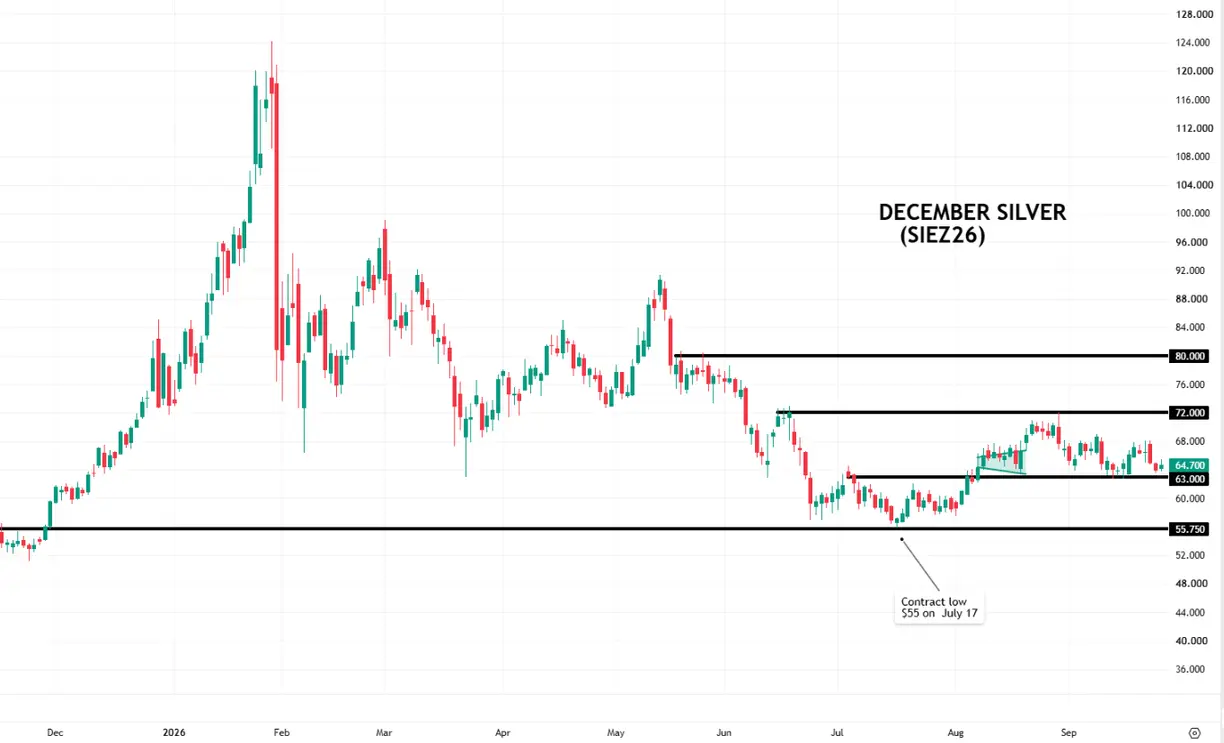
In December 2015, the Federal Reserve raised interest rates for the first time in nearly a decade. Most traders expected metals to keep falling. Instead, gold bottomed right around that hike, and silver went on to rally roughly 50% over the next seven months. Earlier this month, the Fed delivered its first hike of this cycle, and silver is sitting right at the level we said it needed to hold. In August, we wrote here on Kitco that $63 to $60 was silver's pocket support.
Every Sunday in our Navigating the Week Ahead report, we map the key levels and setups in gold and silver before the trading week opens. If you want the roadmap for next week in both markets, Sign up here.
The question we keep getting is simple: is this where silver turns? We believe it may be, and 2015 explains why. The hike itself was not bullish. What changed was that the uncertainty was gone. Once the market stopped guessing about the Fed, money came back into metals. Gold rallied 31%, and silver did even better.
This year's pressure started on March 2nd, when the US and Iran conflict began and crude oil gapped higher. The market priced in a hawkish Fed, ten-year yields climbed to their highest levels since 2007, and silver gave back roughly 47% from its highs. None of that changed silver's sixth consecutive annual supply deficit, and we believe the longer-term case remains intact.
Daily Silver Chart
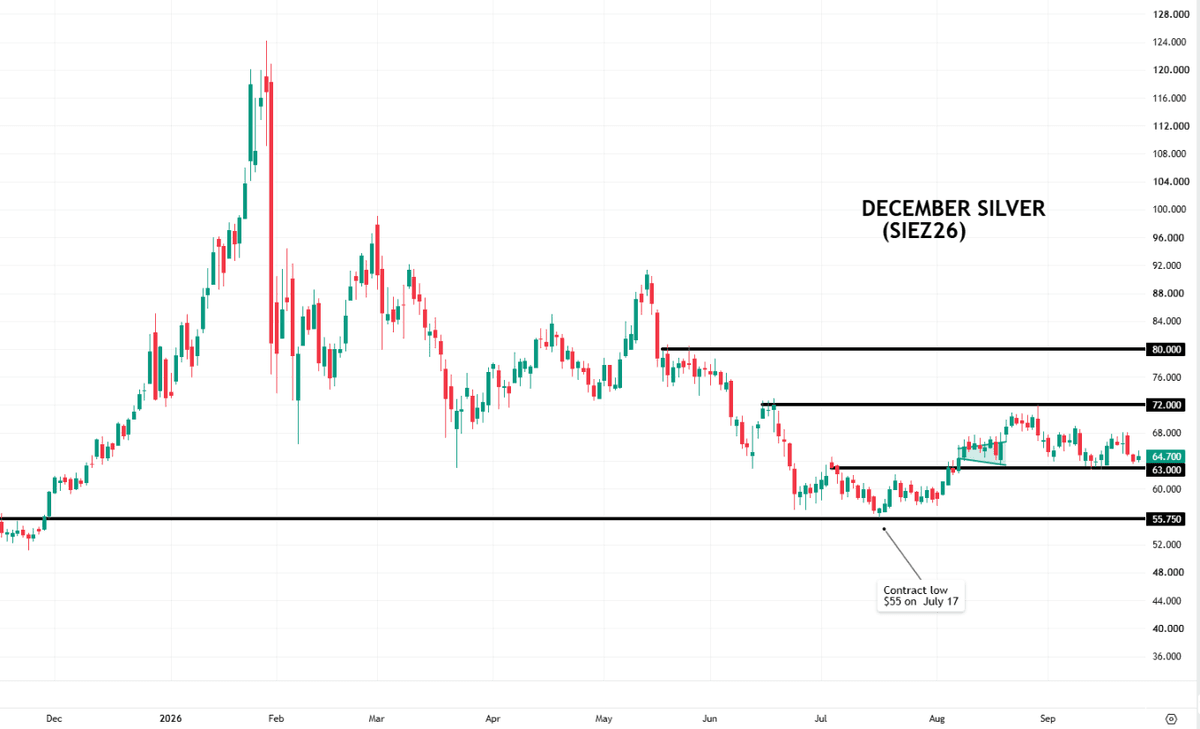
The technicals line up with that view. The $63 to $60 pocket support is holding so far. A move back above $72 could open the door to $80, with $100 still in view over the longer term.
For those looking to get involved, there are a few ways to participate depending on your experience and risk tolerance.
Two Example 5,000-Ounce Silver Call Spreads
For traders who want defined-risk exposure, here are two bull call spreads on COMEX silver futures, for example purposes only. Each option controls 5,000 ounces, so every $1 between the strikes is worth $5,000.
The Faster Move: January 80/82. One could purchase a January silver 80 call while selling the January 82 call against it. The approximate cost is $1,000 per spread plus any transaction fees, and that is the most you can lose. If silver closes above $82 at expiration on December 28, the spread pays $10,000 less the cost of the spread and transaction fees. Breakeven at expiration is approximately $80.20. Silver would need to rally roughly 25% in about three months for this spread to pay in full.
The Longer Runway: March 78/83. One could purchase a March silver 78 call while selling the March 83 call against it. The approximate cost is $3,500 per spread plus any transaction fees, and that is the most you can lose. If silver closes above $83 at expiration on February 23, 2027, the spread pays $25,000 less the cost of the spread and transaction fees. Breakeven at expiration is approximately $78.70. Silver would need to rally roughly 26% for this spread to pay in full, but it gives the move about five months, closer to the 2016 timeline.
For active traders comfortable with futures margin, the standard 1,000-ounce COMEX silver contract offers direct exposure to every dollar move in the silver price. For those newer to futures, the 100-ounce Micro Silver contract lets you participate with a fraction of the margin. To receive more information on trading the 100-ounce Micro Silver futures, sign up here.
Performance Disclaimer
Hypothetical performance results have many inherent limitations, some of which are described below. No representation is being made that any account will or is likely to achieve profits or losses similar to those shown. In fact, there are frequently sharp differences between hypothetical performance results and the actual results subsequently achieved by any particular trading program.
One of the limitations of hypothetical performance results is that they are generally prepared with the benefit of hindsight. In addition, hypothetical trading does not involve financial risk, and no hypothetical trading record can completely account for the impact of financial risk in actual trading.
For example, the ability to withstand losses or to adhere to a particular trading program in spite of trading losses are material points that can also adversely affect actual trading results. There are numerous other factors related to the markets in general or to the implementation of any specific trading program that cannot be fully accounted for in the preparation of hypothetical performance results all of which can adversely affect actual trading results.
