

(Kitco NewsWire) - Spot gold and silver prices are sharply higher in early U.S. trading Friday, as a surprise decline in July payrolls pulled Treasury yields lower and reduced near-term Fed hike expectations. At the time of writing, spot gold was trading near $4,352.60 an ounce, up 2.67%, while spot silver was trading at $63.970, up 4.20% on the session.
The latest positioning shift is now centered on whether the Fed can keep a hawkish bias after softer labor data. The FOMC held the target range at 3.50% to 3.75% on July 29 in a 9-3 vote. The chair’s press conference leaned against renewed forward guidance and emphasized that nominal and real yields had already moved materially higher between meetings. Friday’s payrolls print reversed part of that rate pressure: nonfarm payrolls fell by 23,000 in July, the unemployment rate was 4.1%, the 10-year Treasury yield dropped to about 4.60% from 4.67% just before the release and Fed funds futures cut the implied probability of a September hike to 44.0% from 54.7%.
The Strait of Hormuz remains a two-sided macro input for gold. A deal between Iran and Oman is being discussed, but the unresolved issue is control over traffic and fees, with Washington rejecting Iranian charges on ships while Tehran insists the waterway will not revert to a fully international operating model. The strait previously handled roughly one-fifth of traded oil and natural gas, and Brent crude has traded as high as $113 during the conflict. The immediate market effect Friday was mixed: crude eased after Thursday’s rally as traders weighed deal headlines, but the unresolved U.S.-Iran framework is still supporting a geopolitical premium in gold and keeping energy-led inflation risk in the Fed discussion.
This week’s U.S.-Japan yen intervention also remains a key cross-asset factor. The coordinated yen-buying operation was the first joint U.S.-Japan move of that kind since 1998 and followed a slide in the yen to a 40-year low. The intervention briefly pressured the dollar and helped gold through the FX channel, but the broader dollar reaction has since been uneven: DXY was softer after the payrolls miss, while traders assessed whether official yen support changes reserve-market behavior or simply slows one leg of dollar strength.
Global markets were mixed after the jobs data. S&P 500 futures rose 0.5%, Dow futures gained 0.33%, Germany’s DAX was up 1.0% in midday European trade, Japan’s Nikkei 225 slipped 0.1%, South Korea’s Kospi fell 0.6% and Taiwan’s Taiex lost 0.4%. The key outside markets see Nymex WTI crude oil prices weaker and trading around $76.78 a barrel, while Brent crude was lower after Thursday’s rally. The U.S. dollar index is weaker. The yield on the benchmark 10-year U.S. Treasury note is trading near the 4.6% area.
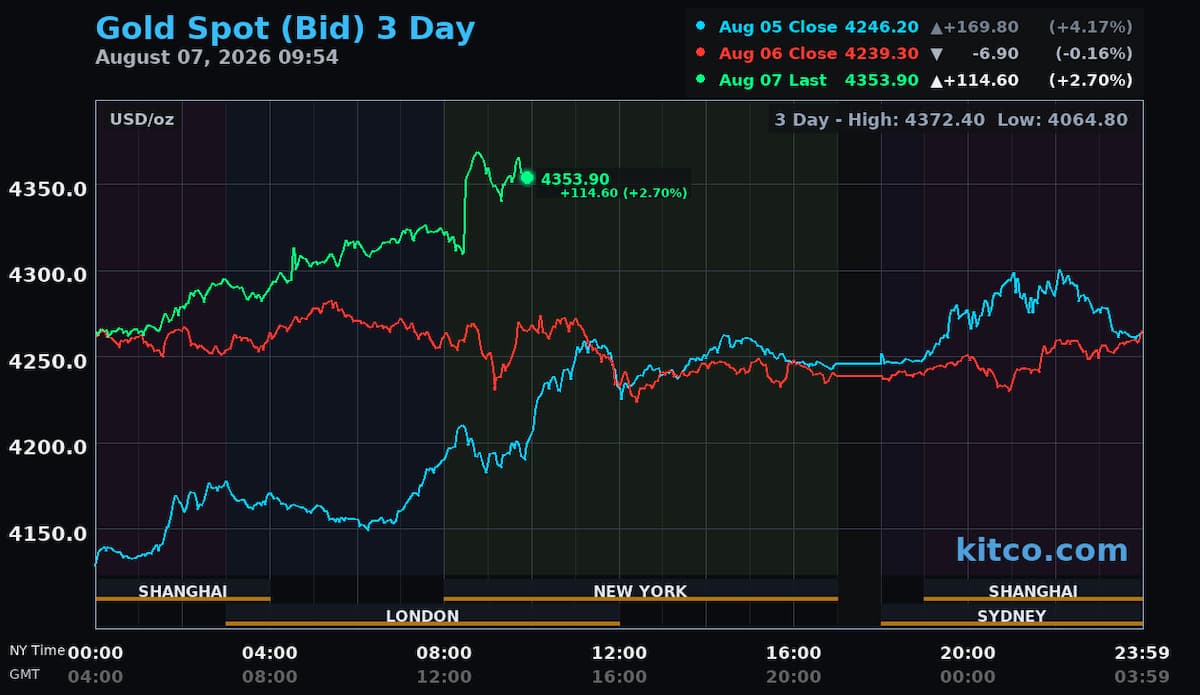
Technically, spot gold bulls' next upside price objective is to push prices back above the $4,372.40 to $4,450.00 resistance zone, with a sustained move targeting $4,500.00 and then $4,494.00. Bears' next near-term downside price objective is a break below $4,228.90, with deeper downside targets at $4,120.00 and then $4,000.00. First resistance is seen at $4,372.40 and then at $4,450.00. First support is seen at $4,228.90 and then at $4,120.00.
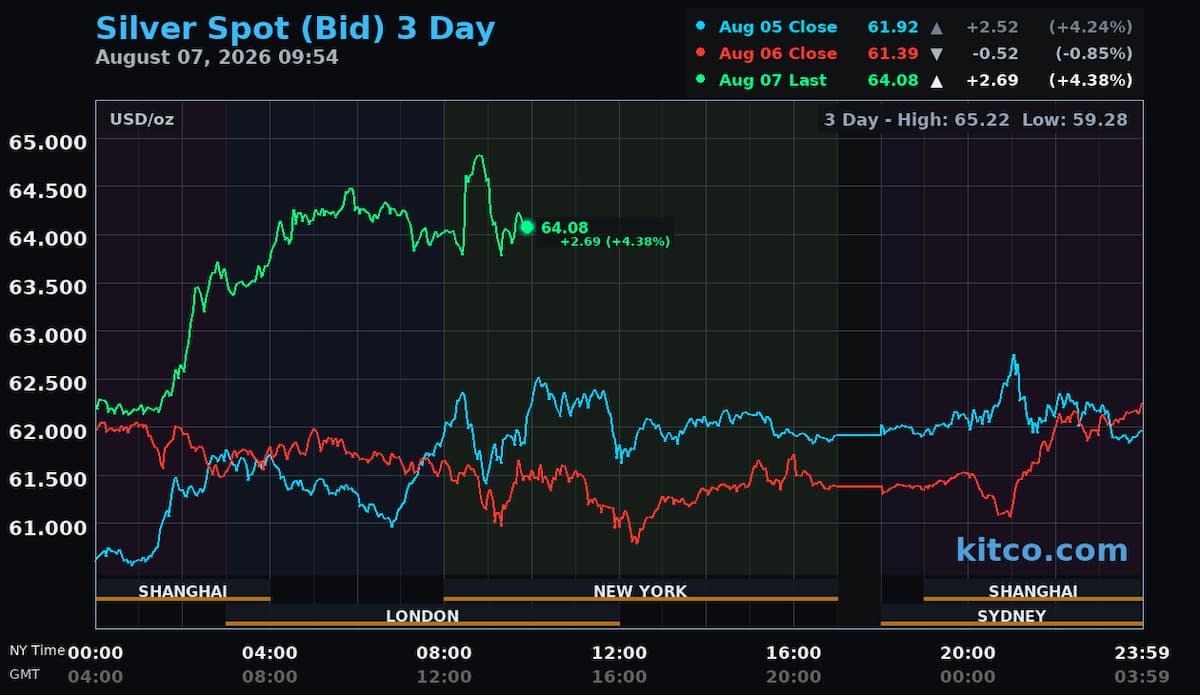
Spot silver bulls' next upside price objective is to drive prices back above the $65.22 to $70.00 area, with a move above that zone targeting $72.00 and then $70.00 to $72.00. The next downside price objective for the bears is a break below $61.05, with deeper downside targets at $55.00 and then $45.00 to $50.00. First resistance is seen at $65.22 and then at $70.00. Next support is seen at $61.05 and then at $55.00.

