
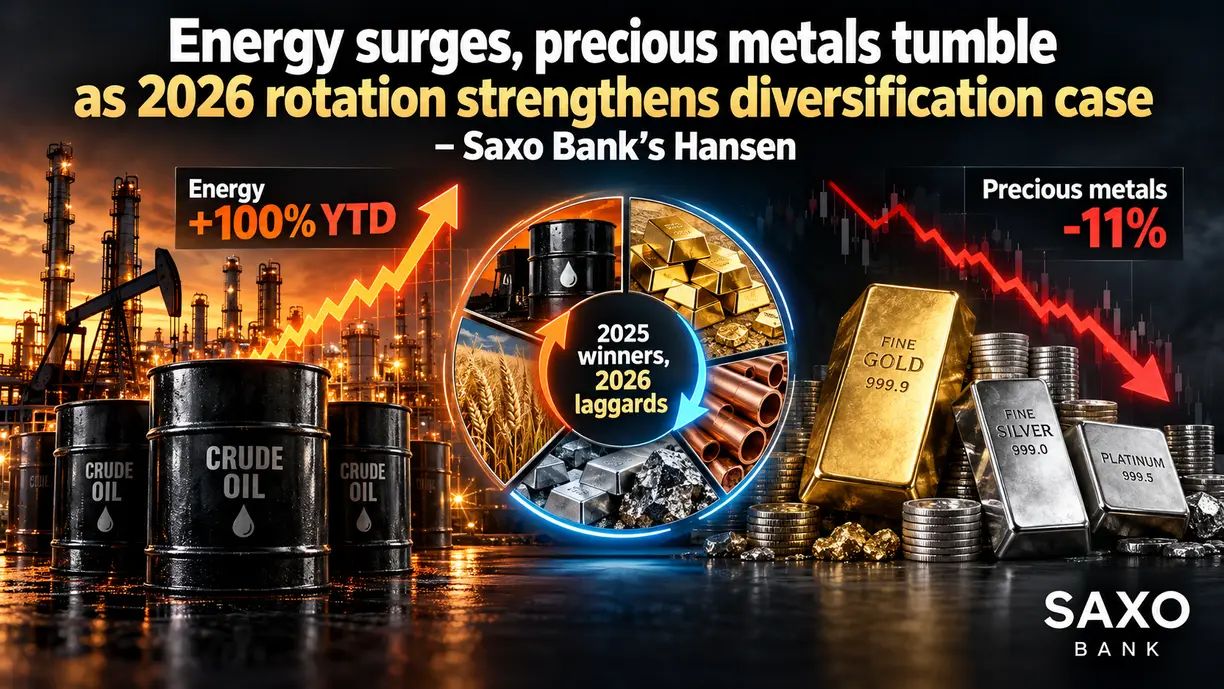
(Kitco News) – The surge in energy prices and the decline in precious metals in 2026 reinforces the case for diversification within the commodities sector rather than simply attempting to pick winners and losers, according to Ole Hansen, head of commodity strategy at Saxo Bank.
In his latest commodities analysis, Hansen wrote that this month has seen seismic shifts in the space.
“The Bloomberg Commodity Total Return (BCOM TR) Index, which tracks a diversified basket of 25 major commodity futures across energy, metals and agriculture, is heading for a nearly unchanged October,” he said. “Beneath the subdued headline performance, however, the month has been characterised by a significant rotation between sectors, with strong gains in energy and, to a lesser extent, soft commodities offsetting losses across grains and precious metals, while industrial metals have recorded a small decline.”
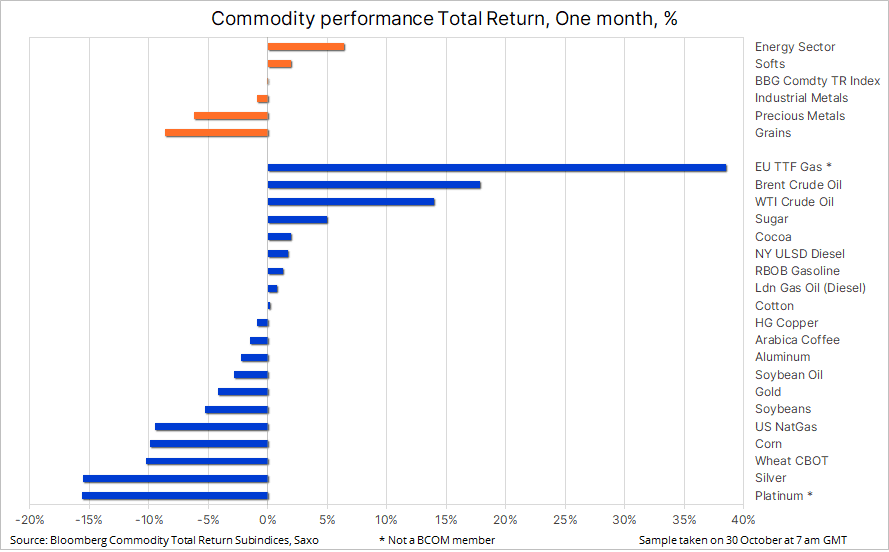
Hansen noted that Middle East tensions, supply disruptions and elevated risk premiums drove energy’s outperformance this month. “Brent and WTI crude have led the gains, alongside US diesel, where tight inventories, constrained export availability and deferred refinery maintenance have compounded supply concerns,” he said, while the performance of agricultural commodities was mixed.
“Precious metals have experienced an ongoing sharp reversal, with silver and platinum among October's biggest losers, while gold has also weakened,” Hansen noted. “The sector has faced pressure from spikes in bond yields and shifting interest-rate expectations, which have increased the opportunity cost of holding non-yielding assets. At the same time, concerns about global growth and the sustainability of AI-related investment have weighed disproportionately on silver and platinum, given their industrial demand exposure.”
“Elevated speculative positioning following earlier rallies has amplified the correction, with technical breaks triggering additional long liquidation and momentum-driven selling,” he added.
Turning to industrial metals, Hansen pointed out that these have held up relatively well amid concerns about slowing growth, softer Chinese demand and U.S. trade policy uncertainty. “Copper has been particularly influenced by rising exchange-monitored inventories and speculation over potential US tariffs on refined imports, while longer-term demand expectations linked to electrification and infrastructure investment continue to provide some underlying support,” he said.
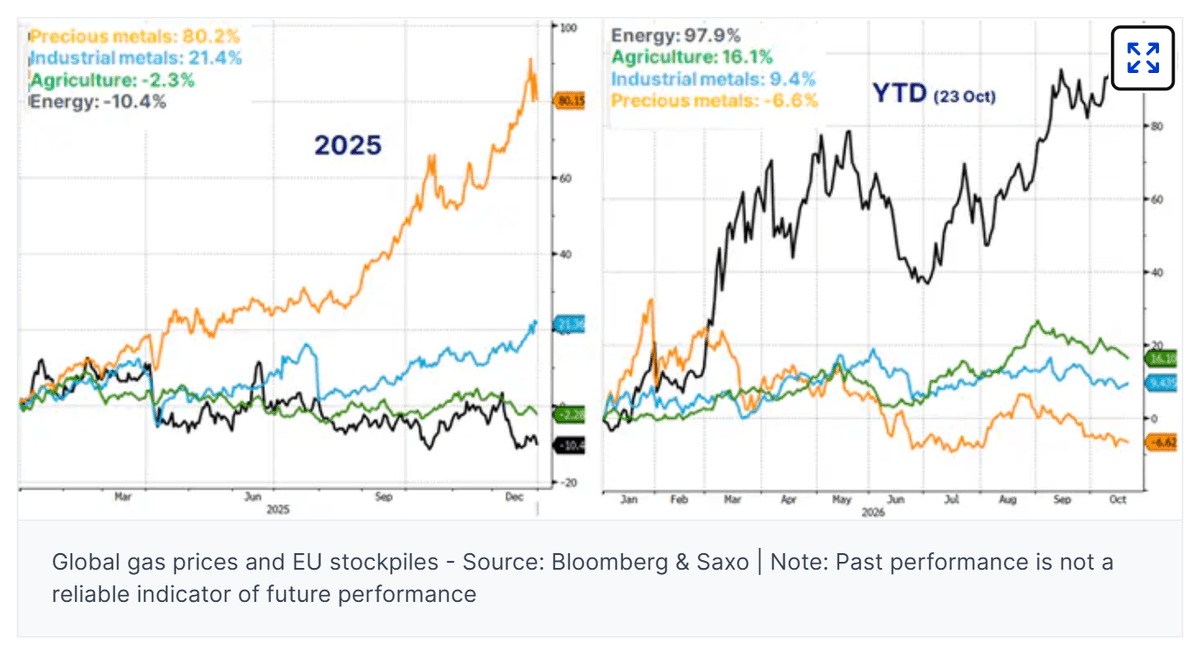
“The scale of this year's rotation is even more striking when viewed against last year's performance,” Hansen wrote. “Precious metals, which topped the commodity rankings in 2025 with gains of around 80%, have become this year's laggard, currently down approximately 11%. Conversely, energy, which lost around 10% last year, has surged by almost 100% year-to-date, driven primarily by war-related supply disruptions and sharply higher prices for crude oil and refined products.”
Hansen said the dramatic shift within the commodities sector “strengthens the case for broad commodity exposure rather than relying on a narrow selection of markets, as diversification can help smooth the impact of sharp sector-specific reversals, even though it cannot eliminate the risk of losses across the asset class.”
“The broader lesson from 2026 is that commodity performance is rarely uniform,” he concluded. “War has reshaped energy markets, weather and harvest cycles have influenced agriculture, while inflation, bond yields, growth expectations and speculative positioning have driven sharp adjustments in metals. With these forces likely to remain influential, sector rotation may continue to be as important as the overall direction of the commodity market.”
See live precious metals prices for gold, silver, platinum and palladium — in USD, CAD and 12 more currencies.
