
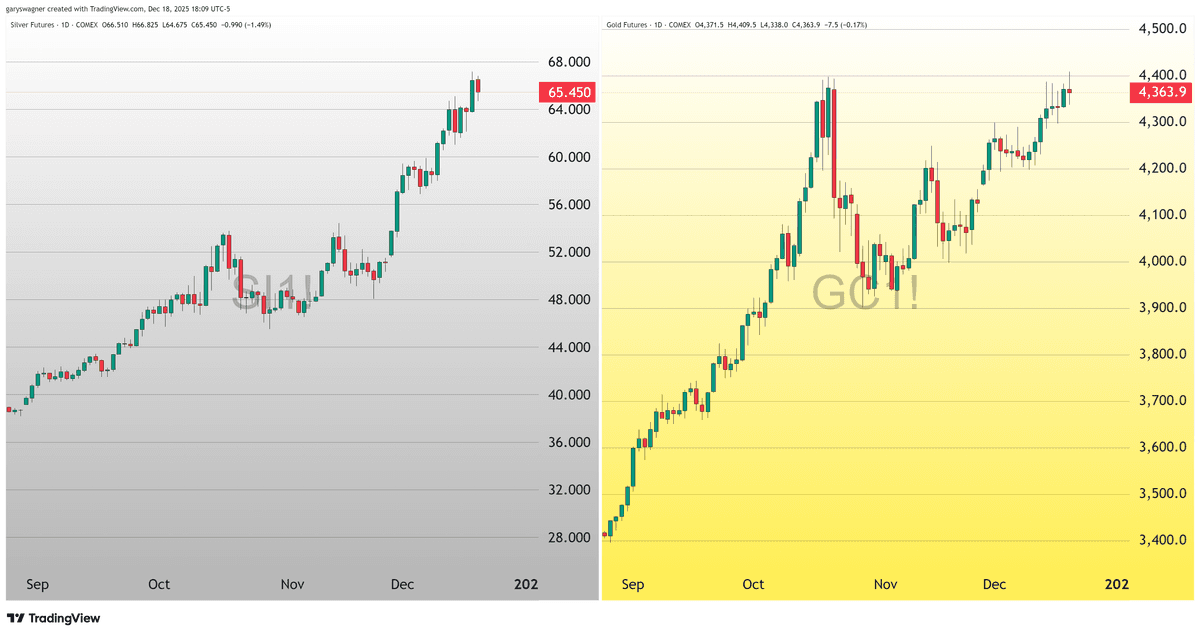
Gold futures settled slightly lower in Wednesday trading, shedding $7.50 or 0.17% to close at $4,364.50 per ounce, after establishing a fresh intraday record high of $4,409.50 earlier in the session. The modest pullback came as market participants digested cooler-than-anticipated U.S. inflation figures that momentarily dampened safe-haven demand.
The Labor Department reported that consumer prices rose 2.7% year-over-year in November, a deceleration that surprised economists who had forecast a 3.1% increase according to the Reuters consensus. The softer inflation print initially pressured gold prices as investors recalibrated expectations for Federal Reserve monetary policy in the near term.
Federal funds futures reflected a marginally increased probability of an interest rate reduction at the central bank's January meeting following the release. However, the shift proved relatively modest, with the CME FedWatch tool indicating a 73.4% likelihood of rates remaining unchanged in January, barely altered from pre-report levels. The muted policy reaction helped limit gold's downside despite the inflation surprise.
Market analysts noted that losses remained contained due to several countervailing factors that continue to underpin precious metals demand. Chief among these is the escalating diplomatic standoff between the United States and Venezuela, which has intensified geopolitical risk premiums across global markets. Gold has historically benefited from such international tensions as investors seek assets perceived as stores of value during periods of uncertainty.
The resilience in gold pricing was particularly evident in the session's closing levels. Despite the cooling inflation data that would traditionally weigh on non-yielding assets, gold secured the third-highest settlement price in its trading history. This performance underscores the complex interplay of factors currently supporting precious metals, including persistent geopolitical risks, accommodative global monetary conditions, and structural demand from both institutional and retail investors.
Technical analysts observe that gold's ability to maintain elevated levels near record highs, even in the face of data that reduces immediate rate cut expectations, demonstrates considerable underlying strength in the market. The minor 0.17% decline represents normal profit-taking behavior following a test of new highs rather than any fundamental shift in the bullish trend that has characterized gold's performance throughout 2025.
Looking ahead, market participants remain positioned for gold to challenge and potentially exceed the $4,409.50 intraday peak in coming sessions. The combination of geopolitical uncertainty, questions surrounding the pace of Federal Reserve policy normalization, and sustained demand from central banks and investors suggests the path of least resistance for gold remains upward despite periodic consolidation phases.
The interplay between inflation dynamics and geopolitical developments will likely continue to drive day-to-day volatility in precious metals markets, though the broader trajectory appears supportive for further appreciation as 2025 draws to a close.
For those that would like more information about our services click here.
Wishing you as always good trading,
