
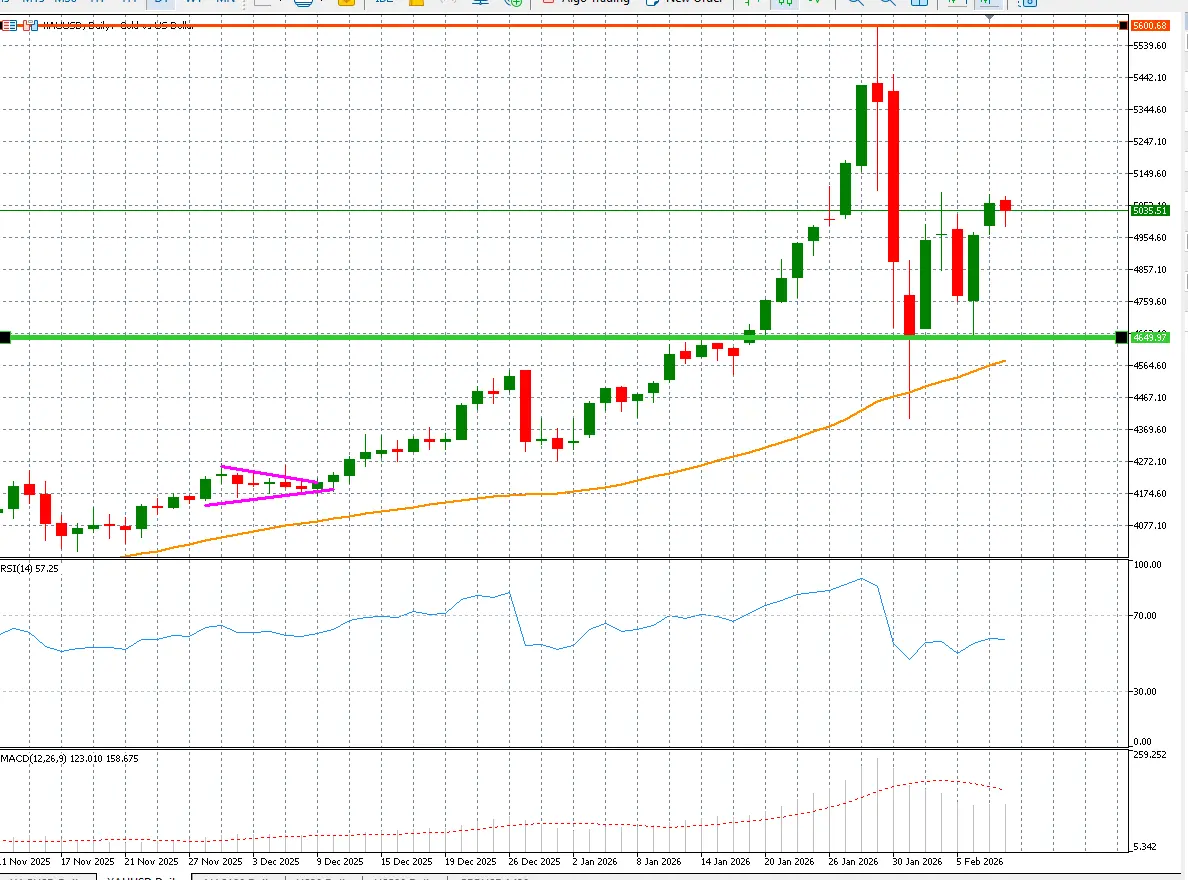
Gold prices have remained flat in early trading on Tuesday, holding their ground near the highs as macro forces counterbalance each other. Spot gold has traded near the $5,070 area per ounce as the precious metal consolidated recent gains following an impressive move that took it to fresh record highs. The current trading of gold does not imply weakness in the precious metal but rather the fact that the macro environment is balancing between improving risk appetite and macroeconomic data uncertainty.
Gold is trading at current levels and appears to be accepting the recent gains as the macro environment continues to balance between improving risk appetite and macroeconomic data uncertainty. This is not an indication of gold being overbought but rather the fact that the precious metal has matured as a macro asset and is accepting the recent gains as the macro environment continues to balance between improving risk appetite and macroeconomic data uncertainty.
Risk appetite returns, but only marginally
The start of the week has seen an improvement in global equities, particularly in Asian markets, as investors responded to the clarity of the political environment. This has resulted in an improvement in risk appetite, which has seen some of the short-term flows being taken away from gold as investors take on more risk. This does not, however, imply that gold has come under selling pressure but rather the fact that the precious metal has consolidated recent gains as the macro environment balances between improving risk appetite and macroeconomic data uncertainty.
A stronger dollar prevents gold from advancing further
The U.S. dollar has also made some marginal gains in line with rising risk appetite. This is another factor that is likely to act as a constraint in gold prices in the near term. By definition, gold is a dollar-denominated asset. Therefore, gold is likely to face headwinds in periods when the dollar is rising.
However, the U.S. dollar has made marginal gains. The gains in the dollar are not accompanied by significant momentum. Therefore, they do not suggest that there is a major change in monetary policy expectations. Therefore, gold prices can be seen as consolidating in the current period. The current price movement in gold is likely to be driven by consolidation rather than a trend change.
Data risk puts gold in wait and see mode
One of the major reasons behind the sideways movement in gold prices is that investors are in wait and see mode in anticipation of a large set of U.S. data that is to be released in the coming days. Employment and inflation data that is to be released in the coming days is likely to set the tone for future rate cut expectations.
Investors seem to be in no hurry to build large positions in gold. Therefore, until data is released and investors get clarity on future rate cut expectations, gold prices can be seen to be range-bound. Strong data is likely to act as a headwind to gold prices in the short term. On the other hand, weak data is likely to act as a positive factor in gold prices. Therefore, gold prices can be seen to be range-bound until data is released.
Rate expectations to remain supportive
Despite the sideways movement in gold prices in recent days, rate expectations can be seen to be supportive to gold prices. The overall rate expectations suggest that there is likely to be multiple rate cuts in the coming days. Therefore, investors can be seen to be optimistic about future rate cut expectations. Therefore, gold prices can be seen to be in a favorable position in the current period.
To this, one must add the early indications that labour market conditions may ease in the coming months as the impact of rising productivity and slower labour growth starts to feed into the headline jobs numbers. All these add to the impression that monetary conditions will ease further over time, regardless of the mixed data currently being posted.
Calm on the surface, uncertainty underneath
The cross-market data is also consistent with the idea that the current pause is more a function of digestion than distribution. For example, the price action in silver is consistent with a profit-taking move following a sharp rally, rather than a breakdown in precious metals markets as a whole. In short, the data is consistent with a technical pause rather than a fundamental shift in the macro story.
The below chart shows important price level which investors need to keep an eye on
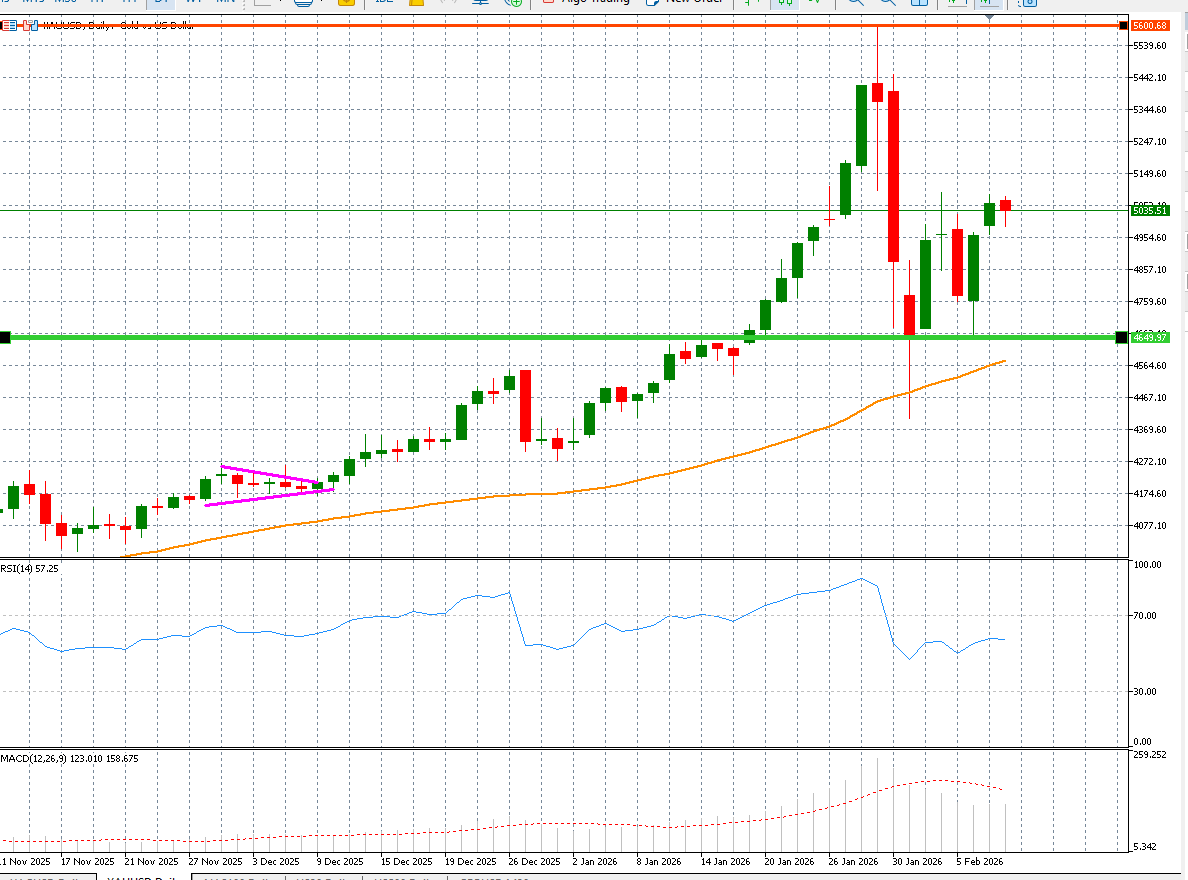
Gold price chart by MH Markets
Final word
The fact that gold is able to hold up so well to the improved risk tone and a stronger dollar is a reflection of the evolving role that the precious metal is now playing in the global macro landscape. Rather than reacting to the short-term shifts in macro sentiment with an impulsive reaction to the data, the price is consolidating as investors balance the short-term data against the long-term structural concerns that continue to plague the macro landscape.
Until the data improves and the macro clarity returns, the idea that rate cuts will be delivered is likely to keep gold well supported, even as the volatility subsides.