
Strengths
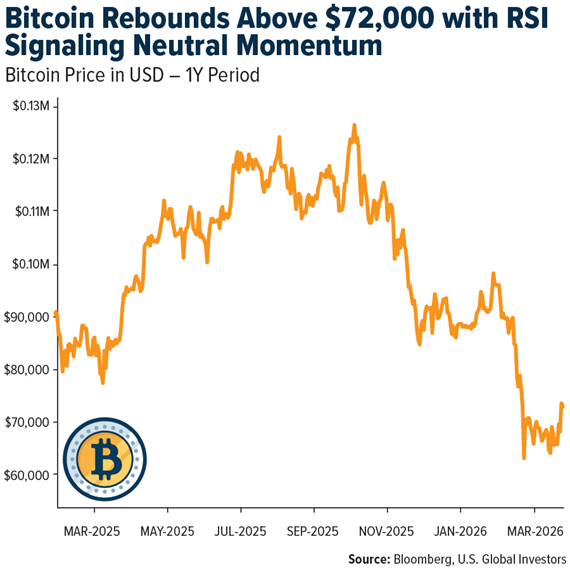
- Bitcoin surged above $72,000 amid heightened global market volatility following escalating tensions in the Middle East. While stocks, oil, and gold experienced sharp swings, the largest cryptocurrency gained more than 6% in a single day. This performance highlights the growing maturity of the crypto market and its resilience during periods of geopolitical uncertainty.
- Andreessen Horowitz, one of Silicon Valley’s most influential venture capital firms managing tens of billions in assets, is reportedly seeking to raise $2 billion for its fifth crypto-focused fund, targeting a close in the first half of 2026. This would follow the firm’s $4.5 billion crypto fund raised in 2023, one of the largest dedicated blockchain venture funds ever. Through its crypto division, a16z crypto, the firm has backed major projects such as Uniswap and Anchorage Digital.
- Major cryptocurrencies rallied sharply as improving market sentiment and institutional inflows boosted demand. Ethereum gained 7.5% to $2,114, while Solana and XRP advanced 5.3% and 4.2%, respectively. The rally was supported by roughly $700 million in inflows into U.S. spot Bitcoin ETFs since early March, highlighting continued institutional interest.
Weaknesses
- Several major Bitcoin mining companies, including MARA Holdings, CleanSpark, and Riot Platforms, are reconsidering their strategy of holding large Bitcoin reserves. Facing declining mining margins, rising energy costs, and pressure to improve returns, some miners have begun selling portions of their combined $8 billion in Bitcoin holdings. The shift reflects structural challenges in the mining business model following the halving cycle.
- A suspect accused of stealing more than $46 million in cryptocurrency from wallets managed by the U.S. Marshals Service was arrested in Saint Martin during a joint operation with the FBI and French authorities. The funds were allegedly taken from wallets holding assets seized from the 2016 Bitfinex hack and moved through multiple blockchain addresses and exchanges. The case highlights operational and security risks in managing large digital asset holdings.
- One year after the U.S. government established a strategic crypto stockpile and Bitcoin reserve, the initiative still lacks a clear acquisition strategy. The reserve, created under President Donald Trump, remains largely unchanged with about 328,272 BTC, while total crypto holdings dropped roughly 26% in value from over $30 billion to $22 billion. No additional purchases have been made, highlighting the uncertainty and lack of clear policy frameworks in managing sovereign crypto reserves.
Opportunities
- Exchange, the owner of the New York Stock Exchange, announced it is acquiring a stake in cryptocurrency exchange OKX in a deal valuing the company at $25 billion. ICE will join OKX’s board and collaborate on developing regulated crypto futures and tokenized securities. The partnership highlights how traditional financial institutions are increasingly integrating blockchain into capital markets.
- Nedbank, one of South Africa’s largest banks, has partnered with Crypto.com to deploy blockchain technology for payments, settlement, and liquidity solutions across Africa. The initiative allows clients to convert South African rand into on-chain dollars in real time, enabling faster and lower-cost cross-border transactions. The partnership illustrates how financial institutions are integrating digital assets into mainstream financial services, particularly in emerging markets.
- Core Scientific, a leading publicly traded Bitcoin mining and digital infrastructure provider in the U.S., has secured up to $1 billion in financing from Morgan Stanley to expand its data center infrastructure. The agreement includes an initial $500 million loan facility with the option to increase by another $500 million for equipment, land, and energy capacity. The funding supports the company’s pivot toward high-performance computing and AI infrastructure while maintaining large-scale mining operations.
Threats
- The ongoing conflict involving Iran has drawn attention to the country’s rapidly growing cryptocurrency market, estimated at $7.8 billion. Crypto outflows from Iranian exchanges surged as much as 873% above normal levels, with roughly $2.3 million leaving within an hour after airstrikes began, according to Chainalysis and Elliptic. Analysts suggest digital assets are being used both by citizens seeking financial security and potentially by government-linked entities to bypass sanctions, raising the risk of stricter global regulation.
- The U.S. Securities and Exchange Commission is urging ETF issuers to pause plans for highly leveraged funds, including proposals targeting up to 5x daily returns. Regulators warned these products may not comply with Rule 18f-4, which governs derivatives risk management. The leveraged ETF market has grown rapidly, with over 450 products launched since 2022 and roughly $150 billion in assets, highlighting potential regulatory risks for digital asset-linked investment products.
- Authorities in Singapore and Taiwan have identified more than $700 million in assets linked to an alleged global fraud and money-laundering network tied to Prince Holding Group. The scheme moved NT$10.7 billion ($337 million) through Taiwan between 2016 and 2025, while Singapore froze or seized roughly S$500 million ($391 million) in assets, and prosecutors previously seized about $1.5 billion in Bitcoin. These cases underscore how digital assets can be used for large-scale financial crime, increasing the risk of stricter regulatory scrutiny worldwide.
