
Strengths
- The best performing precious metal for the week was gold, still down 3.77%. The World Gold Council published results from its 2026 Central Bank Gold Reserves Survey, highlighting unanimous positive gold sentiment within the central bank community. Among a total of 76 central bank participants, 89% expect total global central bank gold reserves to increase over the next 12 months, while 45% believe their own institution will add to reserves.
- China’s monthly gold imports reached their highest in more than two years in May, showing the world’s biggest buyer’s appetite for bullion remained resilient as prices remained under pressure. Imports were around 163 tons last month, the highest since March 2024, according to customs data released on Saturday.
- According to Scotia, SSR Mining announced the successful completion of the sale of its 80% ownership stake in the Çöpler mine and related properties in Türkiye to Cengiz Holding A.S. and affiliates. At closing, SSR Mining received approximately $1.49 billion in cash consideration, which is expected to be used for reinvestment in the business, capital returns, and accretive growth initiatives. The closing of the Çöpler sale comes ahead of previous expectations targeting the third quarter of 2026.
Weaknesses
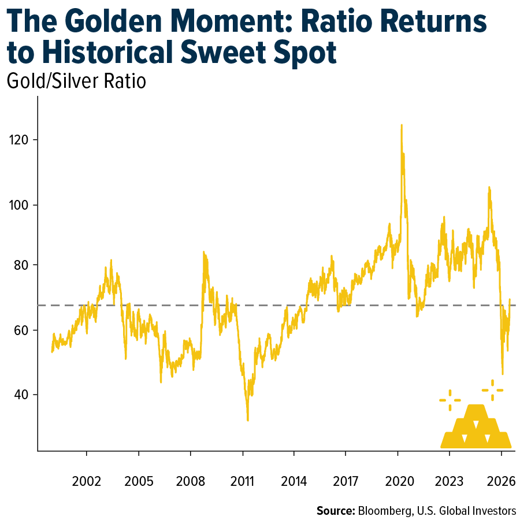
- The worst performing precious metal for the week was silver, down 11.19%. Silver has dropped sharply from its earlier peak, bringing the gold-silver ratio back to around its historical median, and suggesting the move in silver could be cooling off. However, with the Fed's hawkish stance raising the opportunity cost of holding metals, and silver still trading at a mild premium to its gold-correlated value, further losses cannot be ruled out.
- Macquarie Group Ltd. pared its outlook for gold for the third and fourth quarters, echoing similar moves from Deutsche Bank AG and Goldman Sachs Group Inc. Gold is now seen at $4,450 an ounce in the third quarter, down by 3.3% on the prior outlook, and $4,300 an ounce in the fourth, 2.3% lower, analysts including Peter Taylor said in a note.
- First quarter GDP came in at 2.1%, exceeding expectations of just 1.6%, and further exacerbating any expectations for an interest rate cut by the Fed in the near term. Gold extended losses to trade below $4,000 an ounce as interest rates climbed. The price of gold “is increasingly recoupling with real yields,” said Christopher Wong, a strategist at Oversea-Chinese Banking Corp.
Opportunities
- For Bank of America’s coverage, they determine the implied gold price that causes each company's share price-to-net asset value (P/NAV) multiple to equal its 15-year historical average. The group finds that companies in its coverage are, on average, pricing gold at $3,354 per ounce, 19% below spot at $4,156 per ounce, suggesting that precious metal equities are attractively valued.
- According to Scotia, the three companies with the best geopolitical risk profiles (i.e., the highest scores) are Agnico Eagle, IAMGOLD and Kinross. Of the streamers, OR Royalties has the best geopolitical risk profile, in their view. Barrick’s risk profile shows an improvement year-over-year as Fourmile valuation increased relative to value in higher risk jurisdictions.
- According to RBC, Alamos’ outlined exploration results have the potential to support higher-grade mill feed for the expanded Magino mill, which could result in higher production rates. Specifically, a new zone of mineralization was defined at the Island Gold West Extension, which is located near-surface and could be mined via ramp.
Threats
- Media reports suggest the government of Ghana is considering cancelling Gold Fields' mine lease at Tarkwa (due to expire April 2027) but is also weighing an extension. The decision will depend on Gold Fields’ proposal for further local employment, infrastructure, and environmental rehab contribution. On Bank of America estimates, Tarkwa makes up 14% of NAV and 16% of fiscal year 2027 production.
- Guinean President Mamadi Doumbouya announced a ban on raw gold exports, to boost local processing of the metal and help the domestic economy. Doumbouya made the announcement during a meeting with industrial and artisanal gold producers as well as gold buying offices operating in the West African nation, according to Bloomberg.
- According to Scotia, Mexico remains a higher-risk jurisdiction given ongoing concerns around mining law changes, concession uncertainty, security, and policy direction. Colombia and Ecuador remain higher risk, with security, political stability, and regulatory uncertainty continuing to weigh on mining investment. DRC, Mali, South Africa, and Guinea remain higher-risk African jurisdictions, reflecting issues such as security, fiscal/regulatory uncertainty, legal-system concerns, and policy instability.
