
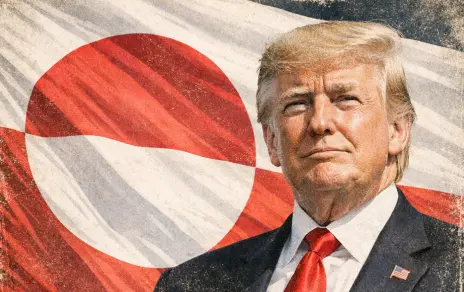
The fact that Trump was not awarded the Nobel Peace Prize appears to have substantially changed his foreign policy stance. After a successful operation in Venezuela, which led to the capture of the country’s president and his wife, he has now turned his attention to Greenland, pushing for it to become a U.S. state.
To pressure the “disobedient” (Denmark, Norway, Sweden, France, Germany, the United Kingdom, the Netherlands, and Finland), Trump threatened to increase tariffs starting February 1, initially by 10%, and up to 25% in June. And some seemed to give in. For instance, the German military reconnaissance team that arrived in Greenland on Friday returned home after only 44 hours of deployment in the Arctic.
How can the EU respond to the U.S.?
One option is economic retaliation, such as imposing tariffs on American goods or restricting U.S. companies’ access to European markets, which could hit U.S. exports and corporate profits. Another factor is financial leverage: Europe holds around $8 trillion in U.S. bonds and stocks, so coordinated moves could put pressure on U.S. financial markets, potentially triggering historic drops in the S&P 500, Nasdaq, etc.
By the way, threats like the latter aren’t unprecedented — though they’ve gone in the opposite direction. During the 1956 Suez Crisis, at a moment of extreme tension with the U.K. over its military intervention in Egypt, President Dwight D. Eisenhower instructed Treasury Secretary George M. Humphrey to prepare to sell U.S. holdings in pound-denominated bonds.
If carried out, this could have sharply weakened the British pound and worsened London’s economic troubles. In the end, the U.K. surprised its allies by declaring a ceasefire on November 6, 1956, prompting France to withdraw as well, underscoring the role financial leverage can play in international diplomacy.
Could something similar happen today in reverse, with Europe putting pressure on the U.S.?
It is unlikely that Europe will take such a step, but if Trump decides to go ahead this time and Europe decides not to look the other way — by introducing countermeasures — it could put additional pressure on markets. The good news is that last year showed that whenever the markets encountered one of Trump's initiatives, whether tariffs or attacks on the Federal Reserve chairman, he tended to back down.
As for markets, European stocks opened lower on Monday, while Dow Jones, S&P 500, and Nasdaq futures fell by more than 1% and U.S. Treasury yields rose. Markets are getting more nervous, but there is still no sign of panic.