
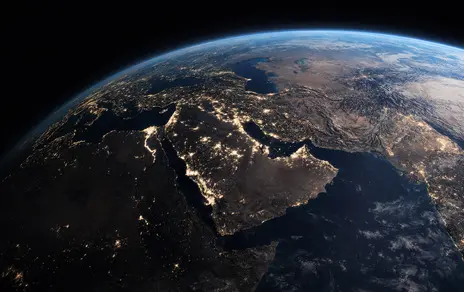
Amid growing tensions in the Middle East, gas prices in Europe have already risen by more than 40%, and Goldman Sachs warns that prices could more than double if shipping through the Strait of Hormuz is disrupted for just one month. For comparison, in the first two weeks after Russia invaded Ukraine, European gas prices surged by about 180%. Shortly after that, wholesale electricity prices across the euro area also spiked, adding further volatility to currency markets, including the EURUSD pair.
If this situation drags on, European industry would once again be the first casualty, and the broader eurozone economy would inevitably feel the strain. By the way, according to the European Commission, the eurozone's overall economic confidence indicator fell in February to 98.3, down from 99.3 previously and below expectations of 99.8. Data on the industrial business climate also deteriorated further, remaining in negative territory at -7.1 compared to -6.8 previously (forecasts were -6.1). In addition, inflation expectations have risen again and remain high at 25.8, compared to 24.2 previously. No wonder European equities are under pressure.
As for the crude oil price chart, prices opened the week with a sharp jump of more than 8%, adding to Friday’s 3% gain. The outlook here isn’t exactly reassuring either. If the conflict continues and tanker traffic through the Strait of Hormuz is restricted for several weeks, oil prices could easily climb above $100 per barrel and potentially much higher. Even an increase in OPEC production quotas would do little to offset the impact if the physical flow through the strait is disrupted. And if Iran were to deliberately target production and refining infrastructure in the Persian Gulf — something that is already beginning to happen — prices could spike even further.
That said, there’s still a chance that the parties return to negotiations sooner rather than later. In the U.S., midterm elections are approaching, and heading into them amid an open-ended conflict would be politically risky. For Iran, the economic and humanitarian costs are clearly mounting as well. For now, markets don’t seem to be pricing in the worst-case scenario and are holding back from full-blown panic.
As for whether we will see another “TACO” from the U.S. president if the markets fall, investors seem to remain hopeful that such a scenario will occur or that the situation will be resolved quickly, although it should be noted that, on this occasion, the stakes appear to be much higher.
The problem is that even if the conflict in Iran eventually subsides, the risk of a major conflict in Asia still looms.