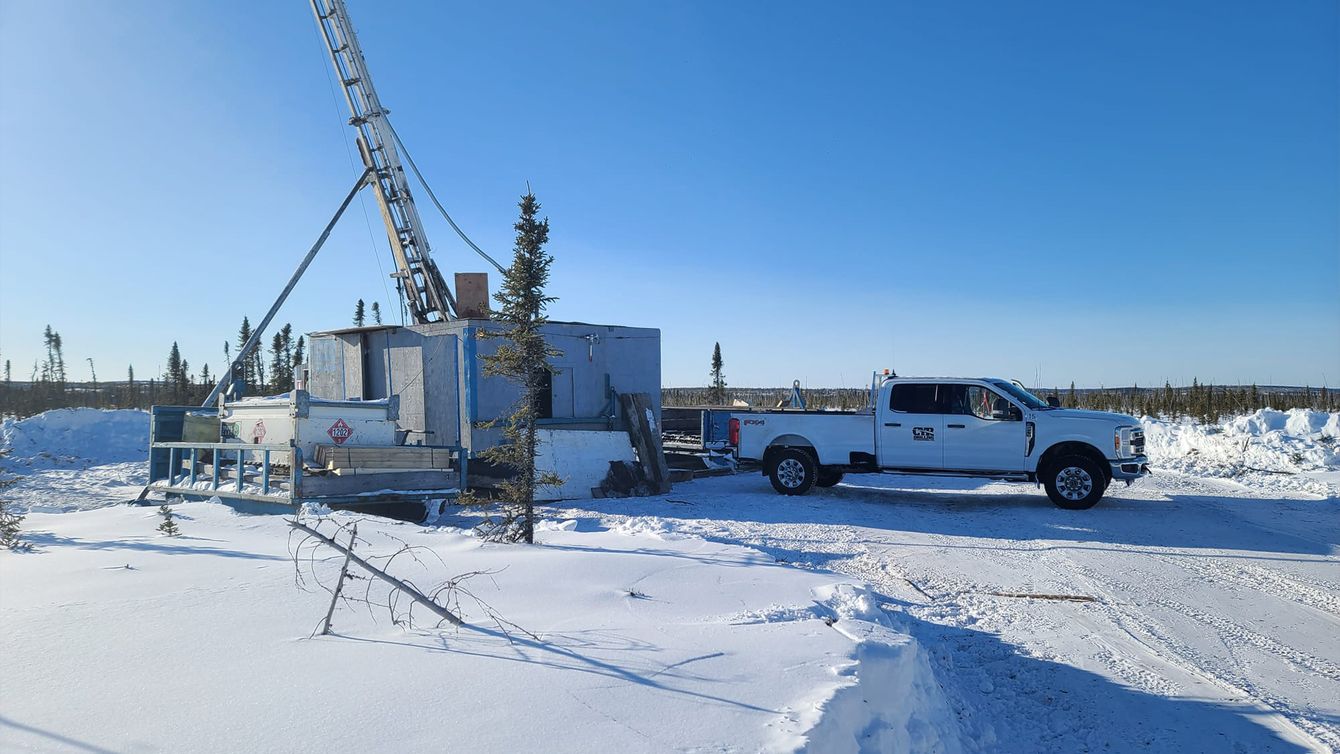
Drill Rig at Russell Lake Uranium Property, Northern Saskatchewan.
- Global uranium supply is struggling to keep pace with renewed nuclear reactor demand, pushing attention toward reliable jurisdictions with high-grade uranium deposits and room for new discoveries.
- Skyharbour has built a significant footprint in Canada’s Athabasca Basin, one of the world’s premier uranium districts, anchored by two flagship projects and backed by a wider partner-funded exploration platform.
- With several drilling programs underway, a CAD$61.5 million Denison-backed JV at one of its projects, and substantial partner-funded spending across its broader portfolio, 2026 is shaping up to be a pivotal year for Skyharbour.
Disseminated on Behalf of: Skyharbour Resources Ltd.
By Market One Media
The uranium story has moved beyond the push for cleaner power. The real issue now is whether the world can line up enough dependable supply from reliable jurisdictions to support a new wave of nuclear growth.
Multiple industry outlooks indicate the uranium market is structurally tight, with annual primary supply shortfalls commonly estimated at roughly 25 million to 50 million pounds, while primary mine production supplies only about 85% of reactor requirements.
Analysts at Sprott estimate a cumulative shortfall of roughly 1.3 billion pounds through the 2040s, rising to about 3.1 billion pounds under scenarios where global nuclear capacity roughly triples.
The demand picture is becoming much more urgent. Japan has brought 14 reactors back online, Europe is operating 168, and China and India account for a large share of the roughly 65 reactors being built around the world. In the United States, the world’s largest consumer of uranium, utilities purchased 55.9 million pounds in 2024, but domestic mines produced only 677,000 pounds, exposing a large supply gap.
Nuclear is moving back to the centre of the energy mix ⚛️
The IEA expects nuclear and renewables to generate ~50% of global electricity by 2030, up from 42% today, with nuclear output hitting record levels in 2025.
Rising demand from AI, data centres, and electrification is… pic.twitter.com/h3f86uKbTs— Skyharbour Resources (@Skyharbour_SYH) April 10, 2026
Against this backdrop, the latest Energy Report from RBC concludes that Canada’s world-class uranium deposits give it a rare strategic edge in an undersupplied market, making it one of the few jurisdictions capable of helping close a deepening global uranium shortfall.
At the centre of that Canadian atomic advantage is Skyharbour Resources Ltd. (TSXV: SYH | OTCQX: SYHBF | FSE: SC1P), which has assembled an extensive portfolio of uranium exploration projects in Canada’s high-grade Athabasca Basin, one of the world’s key sources of current and future nuclear fuel for Western markets.
“With 43 properties covering more than 1.6 million acres in the Athabasca Basin, we have one of the largest project portfolios in a premium uranium district that has multiple avenues for discovery and value creation,” said Jordan Trimble, Skyharbour’s Director, President and CEO.
The company, he said, offers investors “the full spectrum of uranium exploration properties from earlier-stage grassroots exploration properties right through to more advanced-stage exploration assets.”
Flagship assets in a wide portfolio
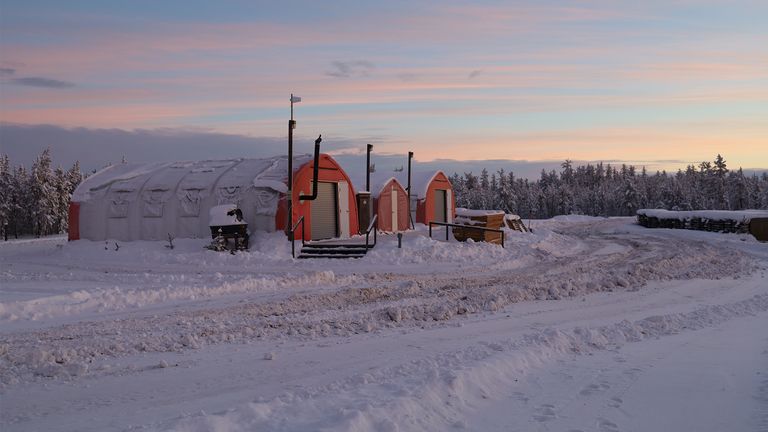
Russell Lake Camp.
“Skyharbour is a multi-project story[JL2] ,” Trimble said.
The company’s near-term focus rests on two co-flagship assets, Moore Lake and Russell Lake, while its broader prospect generator model adds partner-funded work across the rest of its portfolio in the Basin.
Moore Lake stands out as Skyharbour’s most advanced 100%-owned asset, combining a 35,705-hectare footprint with a growing inventory of high-grade zones along the Maverick corridor, the main mineralized trend at the project.
Historic drilling has already outlined multiple high-grade lenses at Moore with grades over 20% U3O8, while recent work expanded the Main Maverick zone, opened up the new regional Nomad zone, and is advancing the asset towards the resource delineation and expansion phase.
With an 8,000 to 10,000 metre drill program now underway across four targets, Skyharbour is aiming to widen the discovery footprint and unlock more value at[JL3] Moore, providing some of the company’s strongest near-term catalysts.
The Russell Lake Project further anchors Skyharbour’s long-standing partnership with Denison Mines, the company’s largest shareholder. The recent project transaction at Russell also provides Skyharbour with expanded, non-dilutive exploration programs at the large, strategically located land package in the eastern portion of the Athabasca Basin.
Spanning over 181,000 acres and adjoining Denison’s Wheeler River project, Russell Lake combines strong infrastructure, an extensive historical drill database, and multiple priority targets, including 35 kilometres of untested trends that could host high-grade mineralization.
Following the December 2025 strategic agreement with Denison, the property was reorganized into the Russell Lake joint ventures, a four-part structure designed to accelerate the discovery process across the broader land package.
With Denison potentially committing up to CAD$61.5 million in cash, shares, and exploration spending, and more than 15,000 metres of drilling planned in 2026, the new JV structure is expected to move work forward faster without forcing Skyharbour to fund the full program on its own.
The transaction also highlights the significant exploration upside at Russell Lake, which shares a 55-kilometre border with Denison's flagship Wheeler River Project, host to the high-grade Phoenix and Gryphon uranium deposits. Wheeler River stands as the largest undeveloped uranium project in the eastern Athabasca Basin, with feasibility studies confirming both deposits have the potential to rank among the lowest-cost uranium mining operations in the world. Russell Lake's adjacency to such a well-defined, high-grade system de-risks the exploration model and improves the potential for new discoveries on shared geological corridors.
“2026 is set to be a transformative year for Skyharbour and the drilling at the recently formed Russell Lake joint ventures represents a key near-term catalyst,” said Trimble.
Prospect generator model adds optionality
Beyond Moore and Russell, the rest of the portfolio gives Skyharbour another layer of upside. The company’s prospect generator model is built around bringing in outside partners to fund work on secondary assets while Skyharbour keeps exposure through retained interests, royalties, share positions, and future payments.
Skyharbour reports 14 projects are now under joint venture or option agreements with 10 partners, who could commit up to CAD$76 million in exploration expenditures and up to CAD$42 million in combined cash and share payments if all earn-ins are completed.
“Skyharbour is a multi-project story.” — Jordan Trimble, Director, President and CEO, Skyharbour Resources Ltd.
The other partner companies, including Orano, are expected to add another 5,000 to 10,000 metres of drilling this year, on top of the company’s programs at Moore and Russell Lake. This brings the total combined drilling campaign to over 30,000 metres across Skyharbour’s portfolio in 2026.
“Skyharbour offers a very unique and compelling risk-reward profile with notable upside potential while mitigating project-specific risk,” Trimble said, adding that the company’s structure also creates a steadier stream of catalysts and embeds optionality value across a portfolio the market may not fully value today.
“This gives investors more shots at discovery and more ways for value to surface over time than a typical single-asset junior can offer.”
What investors should watch next
For investors, the Skyharbour story now comes down to execution.
One co-flagship asset is moving toward a maiden resource estimate after recent drilling expanded known high-grade zones and discovered new targets, with additional drilling underway this year. Another is entering a more aggressive exploration phase under its new joint venture structure with Denison. The broader portfolio is also benefiting from partner-funded work, fresh data, and more ways for value creation across the Basin.
Trimble pointed to three signposts ahead: drilling, continued growth in the prospect generator business, and rising uranium prices.
Uranium analysts struck a similar note, highlighting the Denison-backed exploration push at Russell, the ongoing advancement at Moore, and the broader partner-funded activity at other properties as the main catalysts that could shape Skyharbour’s next phase.
“With an expanded portfolio, partner-funded exploration, and key drilling programs at Moore and Russell Lake, we believe Skyharbour is well positioned to benefit from a potential upswing in sector sentiment,” a recent analyst report said.
To learn more about Skyharbour Resources, visit its website. For the latest updates, follow Skyharbour online: X and LinkedIn.
The scientific and technical information contained within this article has been reviewed and approved by Serdar Donmez, P.Geo., Skyharbour Resources Ltd.’s VP of Exploration, who is a Qualified Person, as defined under the terms in National Instrument 43-101.
[JL1]This will be an embed of this post (https://x.com/Skyharbour_SYH/status/2042633983972852140) to add media variety to the article and showcase your social presence.
[JL2]Changing this to be consistent with the pull quote later in the article
[JL3]Changing wording for better flow

Market One
Market One is a collaborative content marketing, strategy and creation agency with a stable of award winning journalists and videographers focused on providing robust solutions for Canada's capital markets.
