
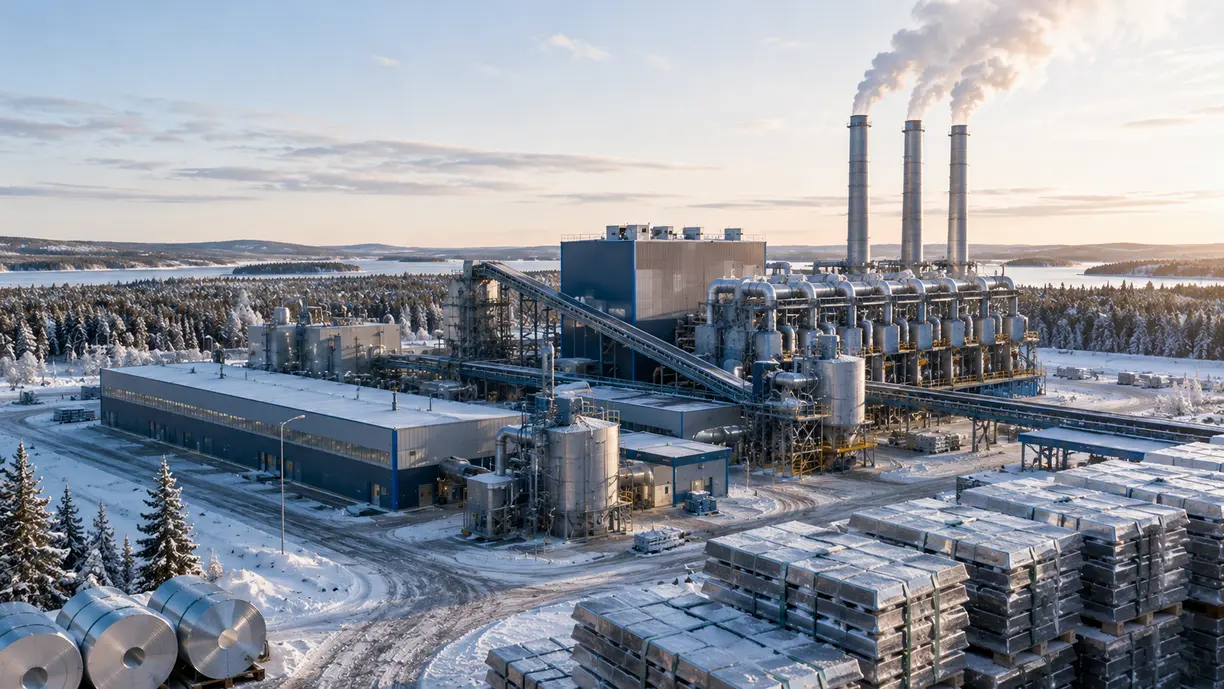
The Rio Tinto-backed Arctial aluminum smelter in Finland, which could help to boost capacity in Europe, is targeting first hot metal production in the second half of 2029, Arctial chief commercial officer Maxime Vandersmissen said on Tuesday.
The project, subject to a final investment decision in 2027, is more than three years away from the production stage but is in the spotlight already as the Iran war has tightened the availability of aluminum in import-dependent Europe.
Speaking at the CRU World Aluminium Conference in London, Vandersmissen said the project is targeting production of 610,000 metric tons of aluminum per year.
“That’s increasing European production levels by 20%,” Vandersmissen said.
Europe produced 7.1 million tons in 2025, according to the International Aluminium Institute, an industry body. Its data includes Russia, where Rusal produced 3.9 million tons last year, leaving roughly 3.2 million tons for the rest of Europe.
Exports from the Gulf region, a key supplier of primary aluminum and alloys to Europe, have been curbed after the Middle East conflict all but suspended bulk shipping through the Strait of Hormuz.
Reduced supply from the Middle East, which accounts for 9% of global supply with its 7 million metric tons of annual capacity, led to a sharp rise in European aluminum premiums.
The physical premium European buyers pay above the LME price for primary aluminum, to cover freight, taxes and handling costs, is at $599 a ton – up 67% since the US and Israel started the war with Iran in late February.
In Rotterdam, the premium for aluminum extrusion billet over the benchmark price, according to Fastmarkets, has more than doubled to $1,152.5 a metric ton by Friday from the pre-war level of $530.
Arctial would be the first primary aluminum development in continental Europe for over 30 years, although it will not be able to fully cover the European import needs.
For instance, Europe imported around 1.2 million tons, or 20% of its primary and alloyed aluminum, from the Middle East and Egypt last year, according to information provider Trade Data Monitor.
(By Tom Daly, Polina Devitt and Eric Onstad; Editing by Mark Potter and Emelia Sithole-Matarise)
