
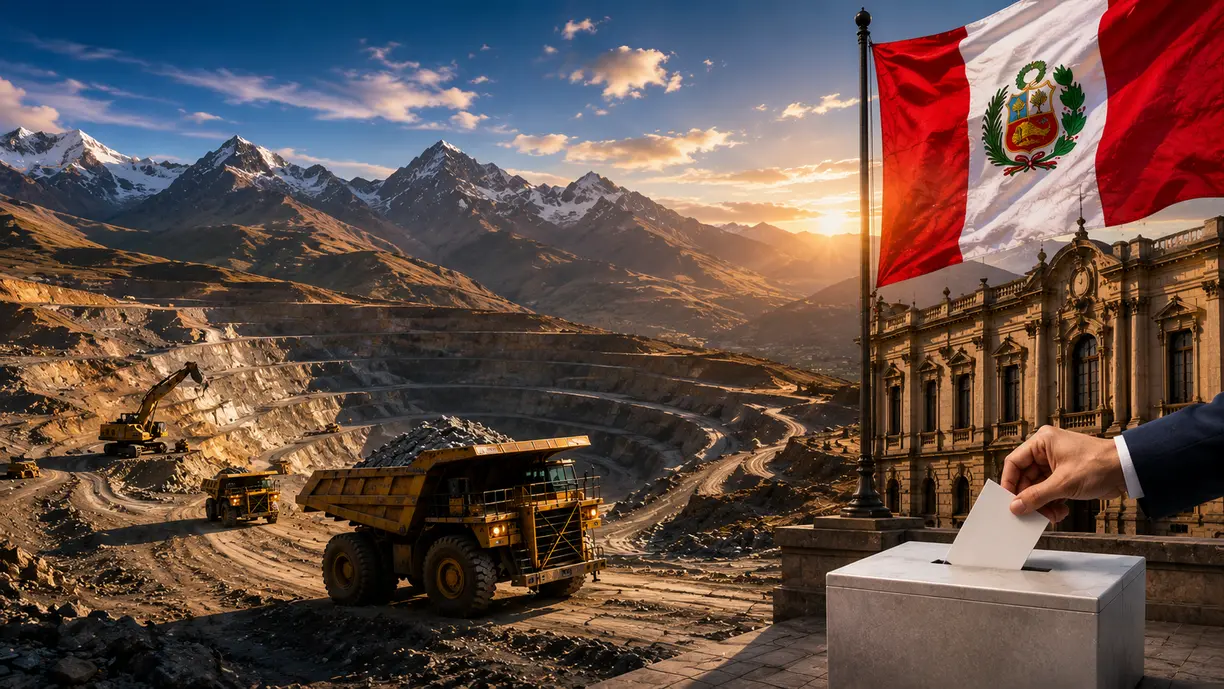
The president of Peru’s National Society of Mining, Petroleum and Energy (SNMPE), on Tuesday warned that opposing mining policies from the two presidential candidates heading into the June 7 runoff vote may jeopardize billions of dollars in investment.
Julia Torreblance, SNMPE president, told Reuters that neither candidate’s proposals for the mining industry are sustainable.
Right-wing candidate Keiko Fujimori and left-wing candidate Roberto Sanchez prepare to face off in a vote that could reshape the outlook for one of Latin America’s most important resource economies.
Torreblanca said neither candidate’s proposal “works or is sustainable in the long term.”
Fujimori proposes distributing 40% of mining royalties directly to communities near mines and creating a “fast track” for strategic mining projects with tax incentives for reinvesting profits.
Sanchez has proposed raising taxes and royalties, reviewing large mining companies’ contracts, and seeking a referendum to draft a new constitution to expand the state’s role in the economy.
Torreblanca said a higher tax burden could deter investment in Peruvian mining projects totaling some $63 billion, 70% of which is in copper projects in the country’s southern Andean regions.
Total mining tax revenue reached approximately 26 billion soles ($7.59 billion) last year, a record high driven by elevated gold and copper prices, according to official data.
Last year, the government transferred the equivalent of $2.93 billion to authorities in mining-affected regions for community development from income tax and royalties, official data showed.
Torreblanca called instead for strengthening the state to ensure mining revenues are spent efficiently, citing more than 2,000 stalled public works projects.
Moody’s Ratings said that a victory for Sanchez would be more likely to trigger policy changes which could weaken investor confidence and fiscal strength, whereas a Fujimori victory would likely preserve the country’s current macroeconomic framework and credit stability.
However, it noted that regardless of who is elected president, the lack of a majority coalition in Congress will complicate efforts to push through change.
($1= 3.426 soles)
(By Marco Aquino; Editing by Iñigo Alexander)
