

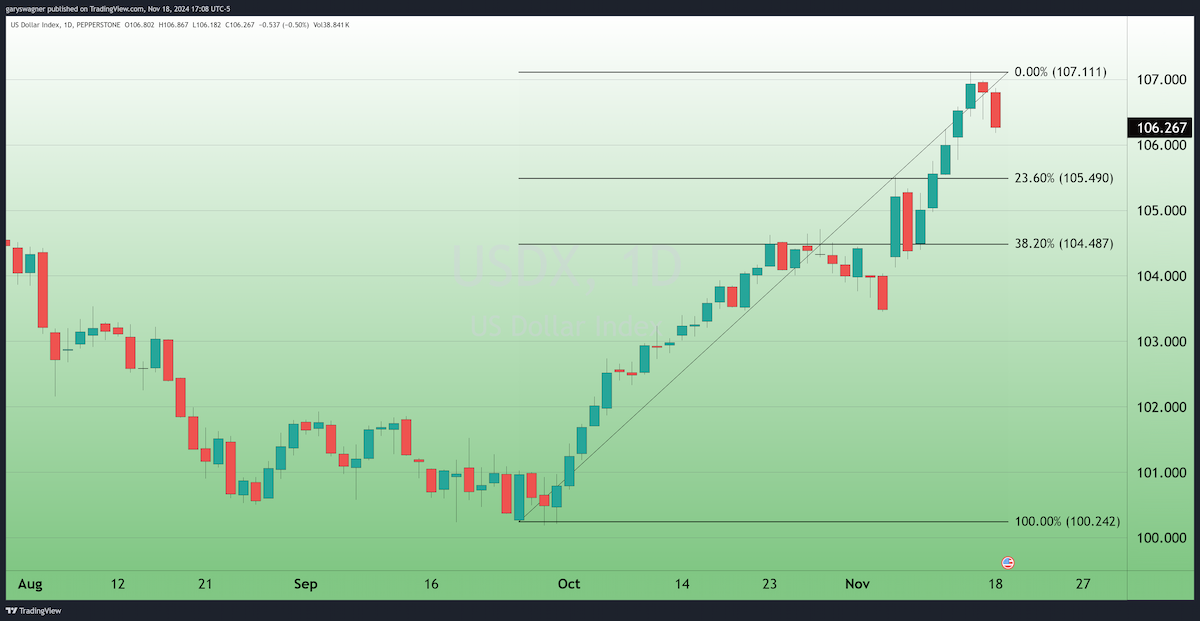
Gold prices demonstrated remarkable strength in New York trading, surging $47.40 to reach $2,615.20 for December futures, marking a 1.85% daily gain. While dollar weakness contributed to the precious metal's ascent, with the dollar index falling 0.51% to 106.257, market analysis reveals that robust bullish sentiment drove approximately 1.36% of the day's gains independently of currency movements.
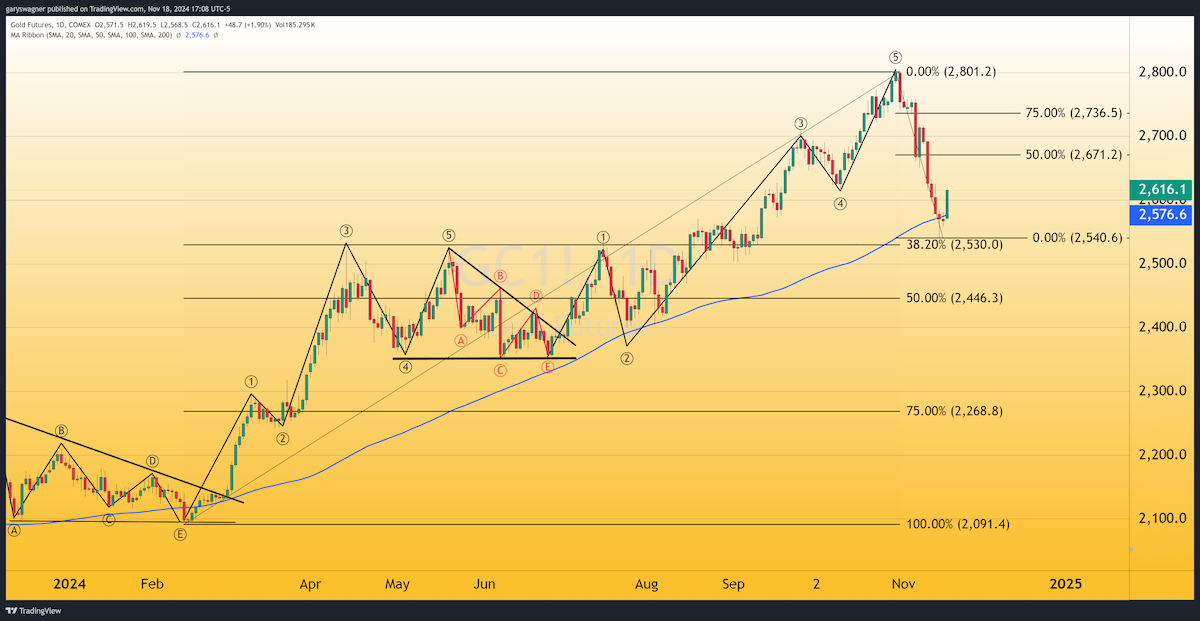
This significant upward movement appears to have halted a six-day losing streak and potentially marks the end of a substantial price correction that began on October 31, when gold futures peaked above $2,800 per ounce. The correction had seen prices decline by roughly $261, reaching an intraday low of $2,541.50 last Thursday.
J.P. Morgan Global Commodity Research provides context to the recent market dynamics, noting that gold futures experienced a 7% reduction in open interest last week, largely attributed to substantial outflows of $6.8 billion from gold ETFs. The front-month gold futures contract had retreated 6.4% from its October 30 record close of $2,788.50.
Market sentiment received a considerable boost from Goldman Sachs' ambitious forecast, reported by Bloomberg News, projecting gold prices to reach $3,000 per ounce in the coming year. Supporting this bullish outlook, Treasury yields showed weakness across the board, with the two-year note yield declining 3.4 basis points to 4.297% and the 10-year yield dropping 2.5 basis points to 4.419%.
The precious metal's sharp rise reflects broader macroeconomic concerns, including potential trade war escalations under a possible Trump administration and ongoing geopolitical tensions in Ukraine and the Middle East. These factors had previously contributed to gold's historic peak at $2,800.
XS.com market analyst Samer Hasn offers a nuanced perspective, highlighting skepticism over political claims regarding swift conflict resolution. Hasn notes that while immediate geopolitical tensions support gold prices, near-term pressures exist due to accelerating U.S. inflation and the Federal Reserve's cautious stance, which has reduced expectations for a January interest rate cut.
Technical analysis suggests the recent correction to $2,541.50 represents a 38.2% Fibonacci retracement of the impressive rally from mid-February, which saw gold gain over $700. This correction level, widely considered healthy rather than excessive, likely signals the end of the current downward phase. Market technicians anticipate a relief rally potentially taking gold to between $2,670 and $2,725 in the short term.
For those who want more information on our premium service, please click the link Premium Service
Wishing you, as always good trading,
