
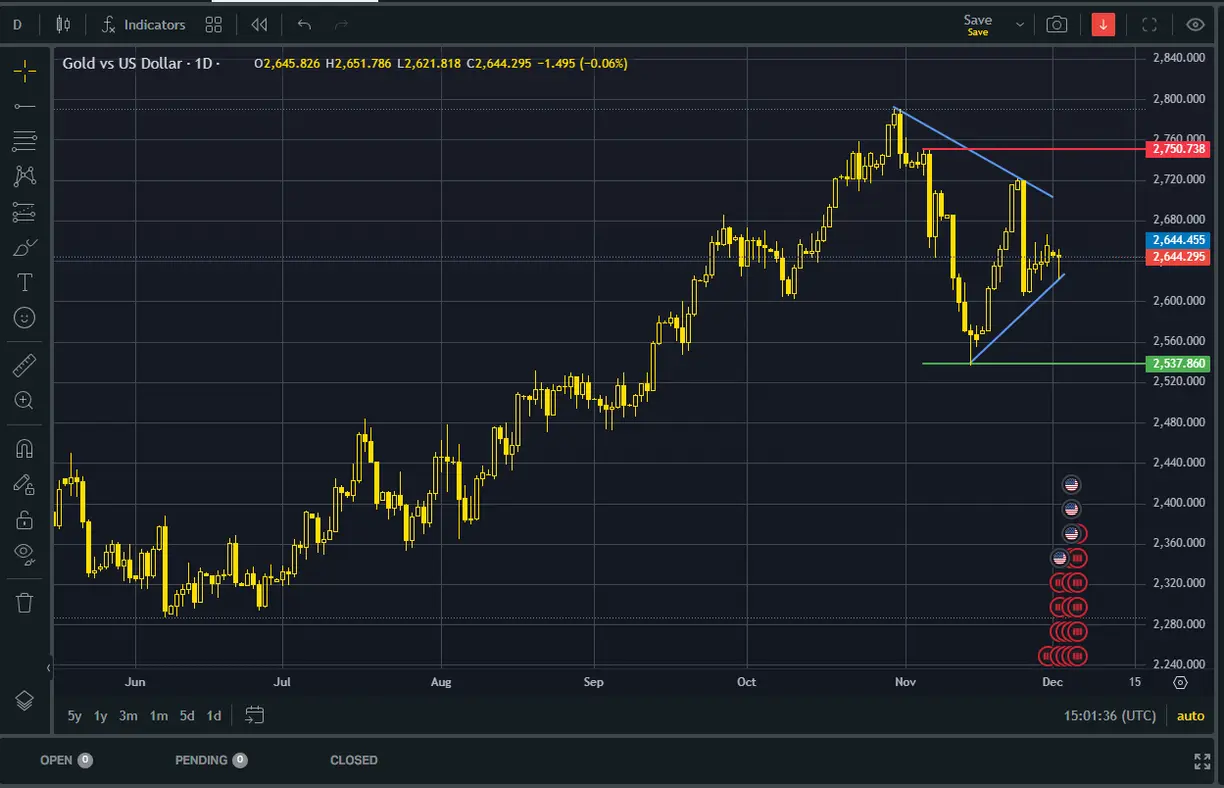
Gold prices are retracing from their recent highs once again as the strength in the dollar index is very much weighing on the yellow metal's price. Investors and traders have become cautious again in terms of backing the recent rally in the shining metal's price amid a confluence of macroeconomic factors, resulting in a 1.1% decline in spot gold to $2,625.69 per ounce.
With a new month starting, traders know that it is best not to jump the gun or make any hasty decision as as a plethora of economic data is on the horizon, which could have a substantial impact on the near-term volatility of gold. The first week of December is full of important U.S. labour data, such as the ADP employment report and non-farm payrolls, which will provide crucial insights into the economy's current state. These reports will significantly influence the Federal Reserve's forthcoming rate decision, a critical factor in determining gold prices. Any indications from the labour market about a declining economy could enhance the metal's allure, as reduced interest rates make non-yielding assets like gold more attractive. On the other hand, unexpectedly strong data could further support the dollar, thereby intensifying the pressure on gold.
The recent FOMC minutes left traders in a state of uncertainty, adding yet another layer of uncertainty to their assessment of the Fed's next monetary policy move. The minutes, which were released last week, provided the market with limited clarity on the Federal Reserve's upcoming actions with respect to interest rates. Consequently, the market is significantly reliant on incoming data to determine the direction of future policy. This week's economic schedule will be crucial, as markets are presently predicting a 67.1% likelihood of a 25-basis-point rate cut in December. In addition to labor data, the agenda includes inflation-related indicators and the Job Openings and Labor Turnover Survey (JOLTS), which will collectively influence expectations regarding the Federal Reserve's actions. In the days ahead, gold's susceptibility to economic releases is further exacerbated by this increased reliance on data.
Gold's recent surge, which has resulted in a 28% year-to-date increase, emphasises its status as a preferred safe-haven asset in the face of geopolitical and macroeconomic uncertainties. However, today's pullback highlights the interplay between short-term market dynamics and long-term favourable sentiment. Profit-taking has been a natural reaction to the significant increase in gold prices in recent weeks, particularly as prices approach significant psychological resistance levels. This pattern indicates that interim corrections are probable as investors balance optimism with caution, despite the fact that the broader trend remains unaltered.
Despite the current volatility, the medium-to-long-term outlook for gold remains compelling. Robust fundamentals, such as persistent central bank purchasing, bolster the metal as institutions diversify their dollar holdings and prepare for potential economic disruptions. Furthermore, the prospective U.S. administration's protectionist policies and ongoing trade disputes are shaping the geopolitical environment, further reinforcing the safe-haven appeal of gold.
The market's attention to the Federal Reserve adds an additional element of intrigue, despite the fact that the short-term outlook is contingent upon the forthcoming economic data. Gold prices may experience an additional surge, with the potential to test the $2,700 threshold, should the Federal Reserve adopt a more accommodating posture on rates in response to subdued economic indicators.
Gold price chart by Exness

In contrast, the Federal Reserve may delay rate cuts in response to robust data that bolsters economic resilience, which could temporarily impede gold's momentum.
In the absence of unambiguous signals from the FOMC minutes, traders and investors should anticipate increased volatility in gold prices in the upcoming weeks. The interaction of critical labour data, inflation metrics, and trade policy developments will be the determining factor in the direction of both gold and the larger market sentiment. At present, the current decline in gold's price should be perceived as a natural interval in its upward trajectory, rather than a reversal. Given the potential for significant market-moving events, gold remains at the core of investor strategies, poised to capitalise on its dual function as a refuge in uncertain times and a safeguard against inflation.