
Gold futures reached a peak above $2,750 per troy ounce on Wednesday, December 11, marking the beginning of a significant price decline that would persist over the following six trading days. The selling pressure in gold pricing continued following yesterday's Federal Reserve announcement.
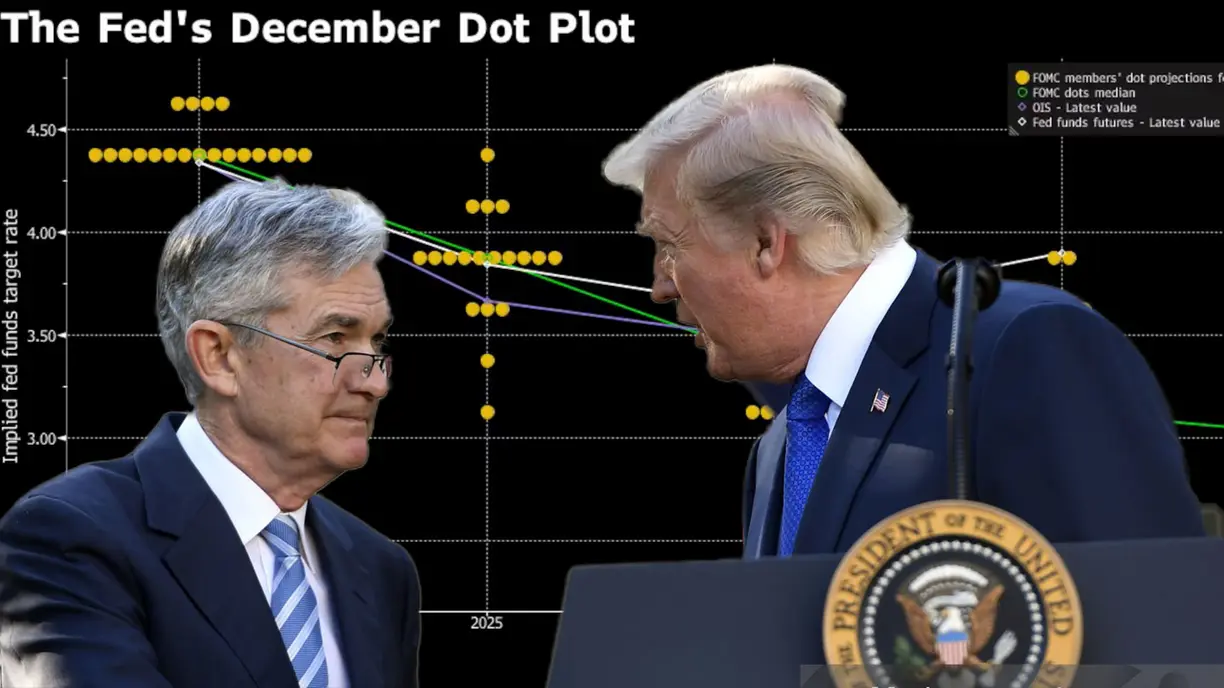
The Federal Reserve implemented its anticipated 25-basis point rate cut, yet the real surprise emerged in the latest Summary of Economic Projections (SEP). This document, which includes the updated "dot plot," revealed revised interest rate projections spanning from 2024 through 2027. The dot plot, released quarterly during alternate FOMC meetings, provides an anonymous forecast from 19 Federal Reserve committee members regarding their future Fed funds rate projections.
Yesterday's dot plot demonstrated substantial changes compared to September's projections. Most notably, it indicated the Federal Reserve's intention to reduce the number of interest rate cuts next year from four to just one quarter-percent reduction. This stance proved significantly more hawkish than market expectations, though Chairman Powell had hinted at this policy shift in several speeches before the pre-meeting blackout period.

The announcement triggered widespread impacts across U.S. financial markets. As equities plummeted, gold prices experienced a dramatic decline exceeding $60 per ounce. The most active February gold contract, which opened yesterday at $2,663.30, closed at $2,599 after a $63.90 decline per troy ounce. Today's trading showed modest recovery, with gold opening at $2,600.60 and closing at $2,610, representing a net gain of $10.40 or 0.40%.
In related developments, President-elect Donald Trump announced a breakthrough regarding government funding and debt ceiling negotiations, just one day before a potential government shutdown. The proposed bill would extend government funding for three months and authorize additional borrowing through January 30, 2027. Trump also advocated for Congress to consider eliminating or lifting the debt ceiling entirely.
However, the bill's passage remains uncertain, requiring bipartisan support from both Democrats and Republicans in Congress. A vote could occur as early as this evening. A particularly contentious aspect of the proposal involves Trump's provision to suspend the nation's debt limit from January 1 of next year until January 30, 2027 – a measure widely considered challenging to implement.
For those who want more information on our premium service, please click the link Premium Service
Wishing you, as always good trading,
