

(Kitco Commentary) - Gold prices experienced a significant decline in New York trading on Thursday, with the most active April futures contract settling at $2,887.80, down $43.90 or 1.50%. The precious metal touched a two-day low of $2,879 before slightly recovering. This marks the third instance in recent weeks where gold has lost $40 or more in a single session, following the $63 price decline recorded on Friday, February 14.
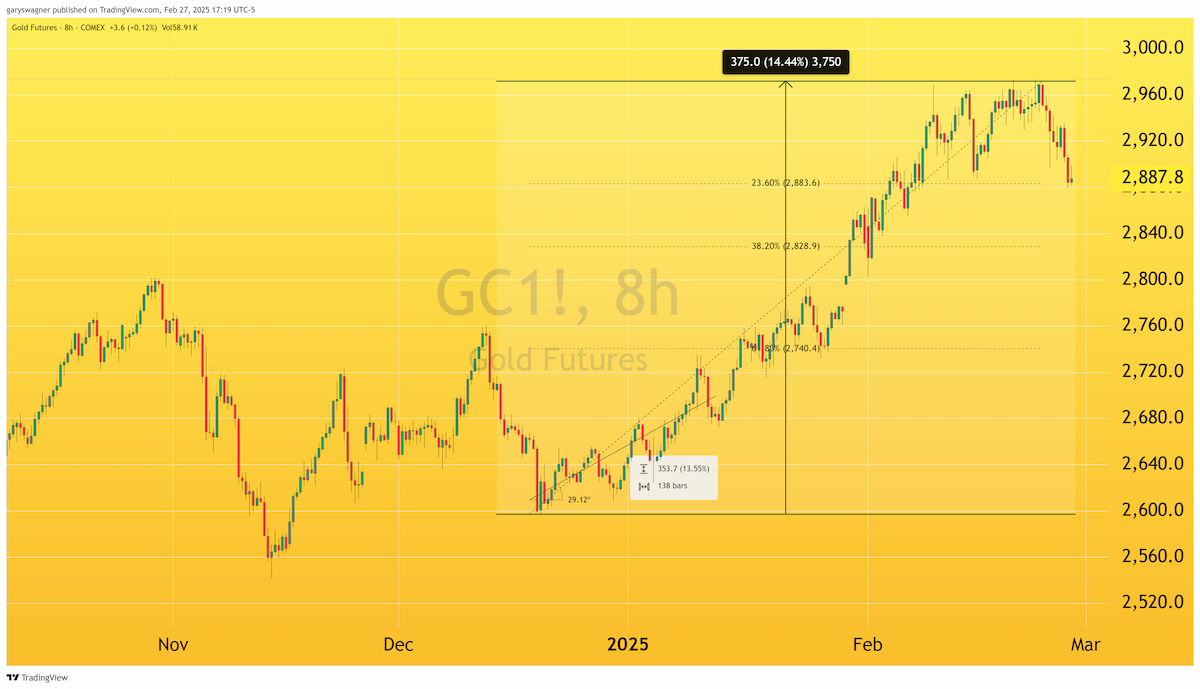
A strengthening U.S. dollar contributed substantially to gold's retreat, with the dollar index climbing 0.74% to 107.22. Analysts note that approximately half of gold's price decline today can be attributed to dollar strength, with the remainder resulting from direct selling pressure in the gold market.
The selloff came in the wake of unexpected tariff announcements from President Donald Trump, creating a counterintuitive market reaction. Investors have recently been allocating capital to safe-haven assets like gold to hedge against uncertainties surrounding the impact of tariffs on global trade flows. Initially, Trump had promised to delay implementing tariffs on both Canada and Mexico until April 2.
However, the President announced today that 25% tariffs on goods imported from Canada and Mexico would take effect next Tuesday, alongside the 10% tariff already imposed on Chinese imports, which was implemented earlier this month.
"We cannot allow this scourge to continue to harm the USA. Tariffs would be imposed until it stops, or is seriously limited," Trump stated on his Truth Social media platform.
Both Mexico and Canada have indicated they would impose reciprocal tariffs on U.S. imports if Trump follows through with his threats. Economic analysts warn that these escalating trade tensions could lead to slower economic growth and potentially higher inflation across all three North American countries.
Market attention now shifts to tomorrow's Personal Consumption Expenditures (PCE) Price Index report. According to FactSet's consensus estimates, January's PCE inflation is expected to have risen by 0.3% month-over-month and 2.5% year-over-year. These figures suggest inflation remains stubbornly higher than Federal Reserve officials and investors had hoped for.
Persistently elevated inflation would likely force the Federal Reserve to maintain its benchmark fed funds rate at current levels rather than initiating the rate cuts many had anticipated to normalize interest rates.
For those who want more information on our premium service, please click the link Premium Service
Wishing you, as always good trading,
