
When the latest U.S. ADP National Employment Report came out, investors were looking at the state of the U.S. job market and how it might affect Federal Reserve policy. This led to interesting market reactions, such as big changes in the price of gold. The data makes things even more complicated in a market that is already sensitive to changes in the economy as a whole. Investors are becoming more careful as a result.
The ADP employment numbers were better than expected, showing that the U.S. private sector added 155,000 jobs in March, compared to the 115,000 jobs that experts thought would be created. Usually, these numbers come before the more important Non-Farm Payrolls (NFP) numbers. This bigger-than-expected rise in jobs shows that the job market is still strong, even though prices are still going up and the economy as a whole is unsure.
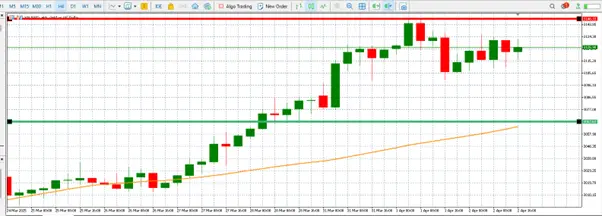
Right after the ADP report came out, gold prices changed a bit. When the U.S. dollar got stronger, gold prices went down a little at first. This is because good data from the job market usually backs up the Federal Reserve's predictions that interest rates will keep going up. But the drop didn't last long because traders quickly changed their positions and turned their attention back to global problems and general market instability. Soon, though, spot gold was able to get back on track, and by midday, it was selling about 0.3% higher at $3,118 an ounce.

Gold Trading Chart by Exness
The complicated nature of this price action shows how fragile the balance is in the financial markets right now. For example, good economic data may have both positive and negative effects on gold. Job growth is usually a sign of a healthy economy, but it also makes it more likely that the Federal Reserve will stay "hawkish" for longer, which means that interest rates will stay high. Higher interest rates tend to make the dollar stronger, which pushes down the price of gold. However, the risk of an economic slump may make gold more appealing as a safe investment, which can cause market stress.
Plus, investors are still wary because of the current global situation, which is marked by rising trade tensions and price instability between the US and its trading partners. These things still make people afraid of taking risks and steer market participants towards investments seen as safe havens of value, like gold.
All eyes are on the next U.S. non-farm payroll data.
As buyers look over the ADP numbers, their attention quickly went to the more important U.S. Non-Farm Payrolls report, which is due out this Friday. This monthly employment data, which is one of the most important economic measures, will give us a better idea of how healthy the U.S. job market really is.
Market experts think that the NFP numbers will show that about 140,000 jobs were created in March. Whether these predictions come true or fail, they would show how strong the American economy is and give the Federal Reserve more reasons to keep interest rates high, which could make gold prices go down. If, on the other hand, the NFP report is lower than expected, it could make people even more worried about a recession and cause gold prices to rise as buyers try to avoid possible market instability.
Given how unclear things are right now, the reaction to the NFP release is likely to be strong. Traders and investors will carefully look at underlying signs like jobless rates and pay growth numbers along with the reported number of jobs created. These numbers have a direct effect on monetary policy decisions and price predictions.
What this means for gold buyers' strategies
Gold sellers need a plan to get through this unstable terrain. When job numbers go up, the market quickly shifts its views towards more monetary tightening, which has an immediate effect on gold. Still, ongoing global issues, possible economic changes from trade disputes, and general financial instability could make gold prices rise, cancelling out any negative effects.
Traders should be on the lookout and pay close attention to what the central bank says and when economic data comes out. To be successful in gold buying in this situation, you will need to understand how economic growth factors, such as job numbers, relate to the overall market mood and financial risks.
In the end, the most recent ADP job report has made the NFP data release on Friday even more important, which has caused the gold markets to become even more volatile. Traders should be ready for price changes that could be very big as the market continues to weigh the strength of the economy against the uncertainty in geopolitics and changes in Federal Reserve policy.