


Gold has been trading with whipsaw volatility this week as two powerful and competing forces collide: a fast-escalating military conflict in the Middle East and a string of pivotal U.S. economic reports that could reshape the Federal Reserve’s rate path for the remainder of the year.
Joint U.S.-Israeli strikes on Iran, which killed Supreme Leader Ayatollah Ali Khamenei and targeted nuclear facilities and military command centers, sent gold surging to an all-time high of $5,594.82 on January 29. This week alone, spot gold has swung from a session high above $5,400 on Monday to a sharp 4% sell-off on Tuesday before clawing back 1.6% on Wednesday and rising a further 0.8% on Thursday, bringing April futures to approximately $5,186. The Strait of Hormuz, through which an estimated 20% of the world’s oil supply flows, now sits under threat, raising the specter of an energy shock that could simultaneously lift inflation and suppress global growth — a toxic combination for conventional assets and a historically favorable backdrop for gold.
Analysts at J.P. Morgan have maintained a bullish stance, forecasting gold could reach $6,300 by year-end, citing durable geopolitical risk, continued central bank accumulation — the World Gold Council reported net central bank purchases of 230 tonnes in Q4 2025 — and record ETF inflows of $18.7 billion in January alone. “As long as the war with Iran is ongoing, that’s going to remain supportive,” said Peter Grant, senior metals strategist at Zaner Metals, though he cautioned that volatility would remain elevated until signs of peak escalation emerge.
Tuesday’s reversal illustrated the tension between gold’s safe-haven role and the macro headwinds created by the conflict itself. Rising oil prices are stoking inflation fears, which in turn are pushing bond yields higher and strengthening the dollar — a competing safe-haven asset. A stronger dollar makes gold more expensive for non-dollar buyers, creating a natural ceiling on rallies even amid genuine fear. Markets are now widely expecting the Fed to hold rates steady at its March 17–18 meeting.
Three catalysts sit on the immediate horizon. Today’s February non-farm payrolls report will set the tone entering the weekend, with traders watching for signs that surging energy costs are beginning to bite employment. The February CPI print follows on March 11, and with the Bureau of Economic Analysis having rescheduled the PCE inflation report to April 9, CPI and jobs data carry unusual weight this cycle — the Fed will have less data than normal when it deliberates next week. Compounding the uncertainty, President Trump’s nomination of former Fed Governor Kevin Warsh as the next Fed chair has reinforced market expectations of a more rate-cut-friendly central bank over the medium term, which would structurally support gold.
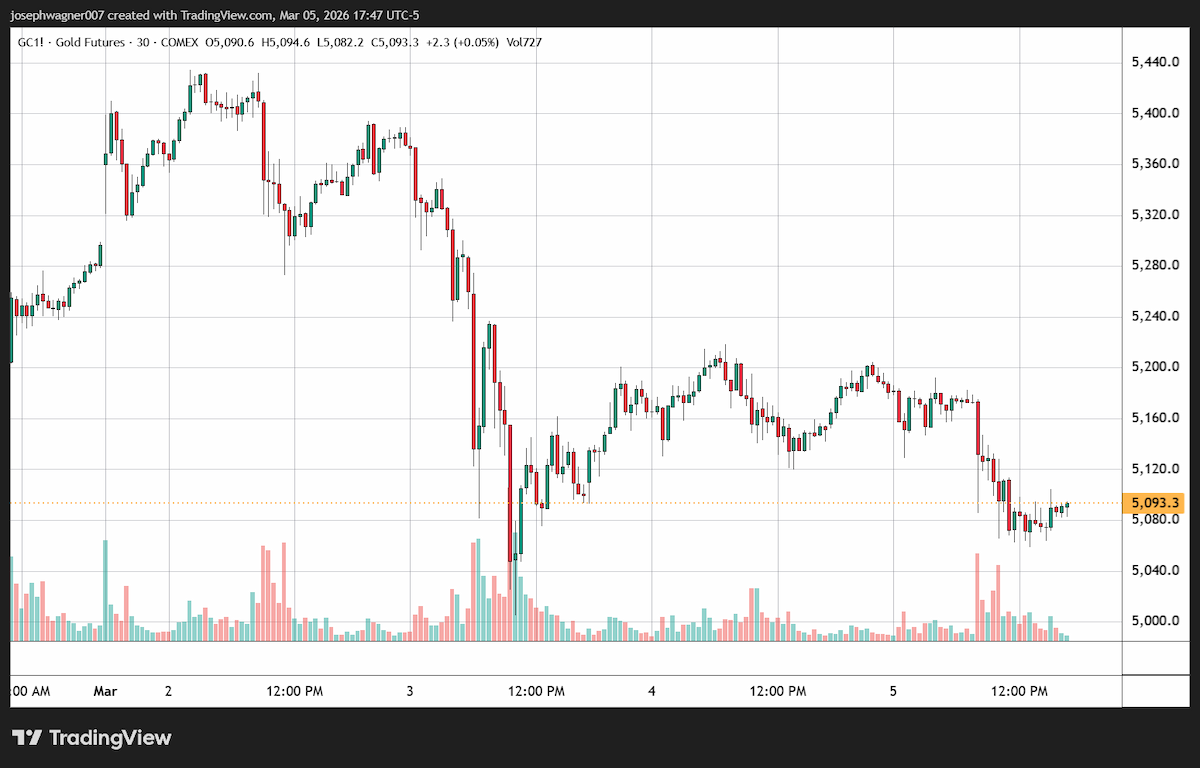
Gold’s chart remains technically constructive: the metal is trading above its 50-day and 200-day moving averages, and pullbacks have thus far attracted buyers. Key support sits near $5,160; a sustained close above $5,298 re-opens the path toward the record high. The base case is continued headline-driven volatility through the Fed meeting, with geopolitical risk providing a structural floor. A hot CPI print or a materially stronger-than-expected jobs number could temporarily pressure prices as rate-cut timelines are pushed back, but the broader trend — war, central bank buying, and a de-dollarization impulse across emerging-market reserve managers — argues that any significant dip is likely to be bought.
For those that would like more information about our services click here.
Wishing you as always good trading,
