

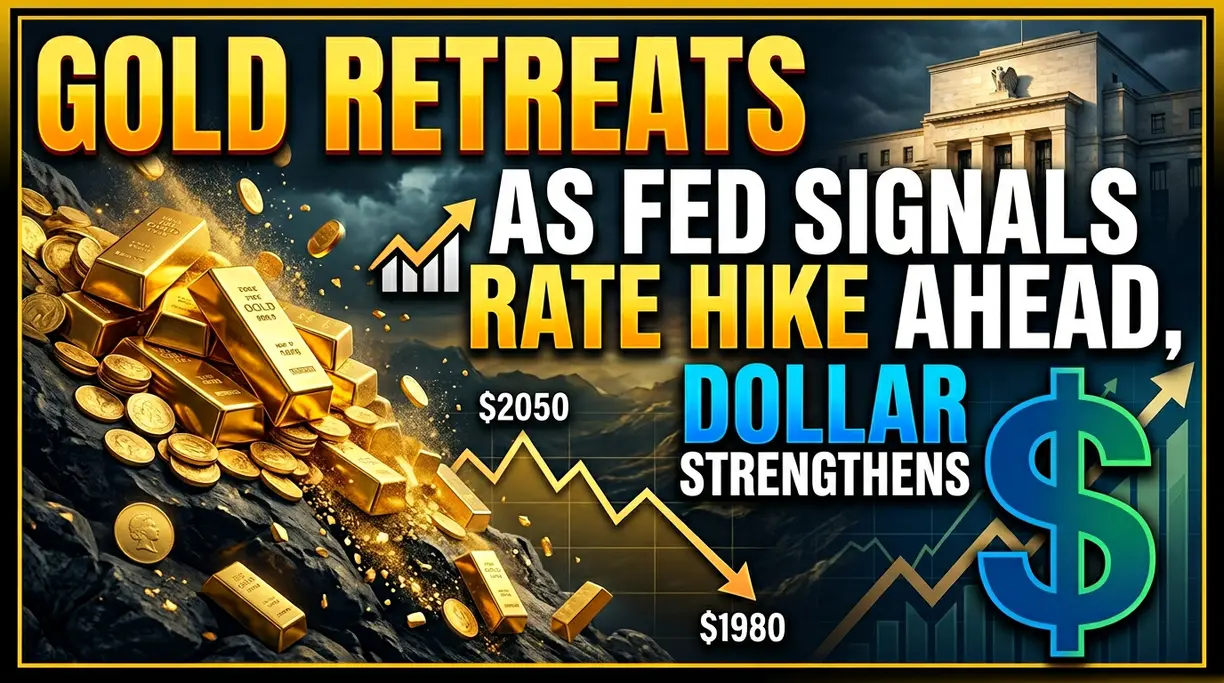
Gold futures edged higher Wednesday before surrendering their gains after the Federal Reserve held interest rates steady but signaled that further tightening remains on the table for later this year. The reversal sent the dollar climbing and left precious metals traders on edge, as the market reassessed the trajectory of monetary policy under a new central bank chief.
The Fed voted unanimously to leave the benchmark federal funds rate in its current target range of 3.5% to 3.75%, a decision widely expected by markets. However, the accompanying Summary of Economic Projections — the so-called dot plot — revealed a more aggressive outlook than many investors had anticipated. Nine of the Fed’s 19 policymakers now expect the benchmark rate to need to rise before the year is out, a shift that caught markets off guard and pushed gold firmly into negative territory by the close of New York trading.
Warsh Sets a Hawkish Tone
Much of the market’s attention fell on Kevin Warsh, who chaired his first Federal Open Market Committee meeting since succeeding Jerome Powell earlier this year. In his inaugural post-meeting press conference, Warsh indicated that he views current policy as restrictive only in the housing sector — a notably narrow read that analysts interpreted as a signal of his readiness to tighten further. Independent metals trader Tai Wong told Reuters that Warsh’s framing made him “more hawkish than Powell,” and that the statement and dot plot together offered no pushback against a tighter policy path.
The reaction in interest rate futures was swift. According to the CME FedWatch Tool, markets now assign a 78% probability to a rate increase at the Fed’s December meeting, up sharply from 61% before the announcement. Higher rates tend to weigh on non-yielding assets like gold by raising the opportunity cost of holding them and strengthening the dollar, which makes dollar-priced commodities more expensive for buyers using other currencies.
Competing Forces Keep Gold in a Holding Pattern
Despite Wednesday’s losses, some analysts argue that gold remains underpinned by a complex mix of global uncertainties that prevents a more decisive selloff. Antonio Di Giacomo, market analyst at XS.com, described gold as being “caught between opposing forces.” On one side, easing geopolitical tensions and falling crude oil prices have reduced the immediate demand for safe-haven assets and reinforced expectations that inflation will continue to cool. On the other, persistent uncertainty over the Fed’s ultimate rate path, unresolved negotiations between the United States and Iran, and broader global economic fragility continue to attract buyers.
Gold has staged a strong rally over the past year, buoyed by central bank buying, investor demand for inflation protection, and recurring bouts of geopolitical risk. But the metal has struggled to extend gains convincingly in recent weeks as the macroeconomic backdrop has grown more nuanced. A stronger dollar, moderating inflation data, and a Fed that appears less inclined to cut rates than markets had hoped have all conspired to cap the upside.
Looking ahead, traders will be watching a series of key economic releases for clues about whether the Fed’s hawkish tilt will harden into an actual rate increase. U.S. inflation data, labor market figures, and any further commentary from Fed officials will be closely scrutinized. For now, gold appears likely to remain range-bound, pulled in one direction by macro headwinds and in the other by a geopolitical backdrop that, for all its recent improvements, has not fully resolved.
For those that would like more information about our services click here.
Wishing you as always good trading,
