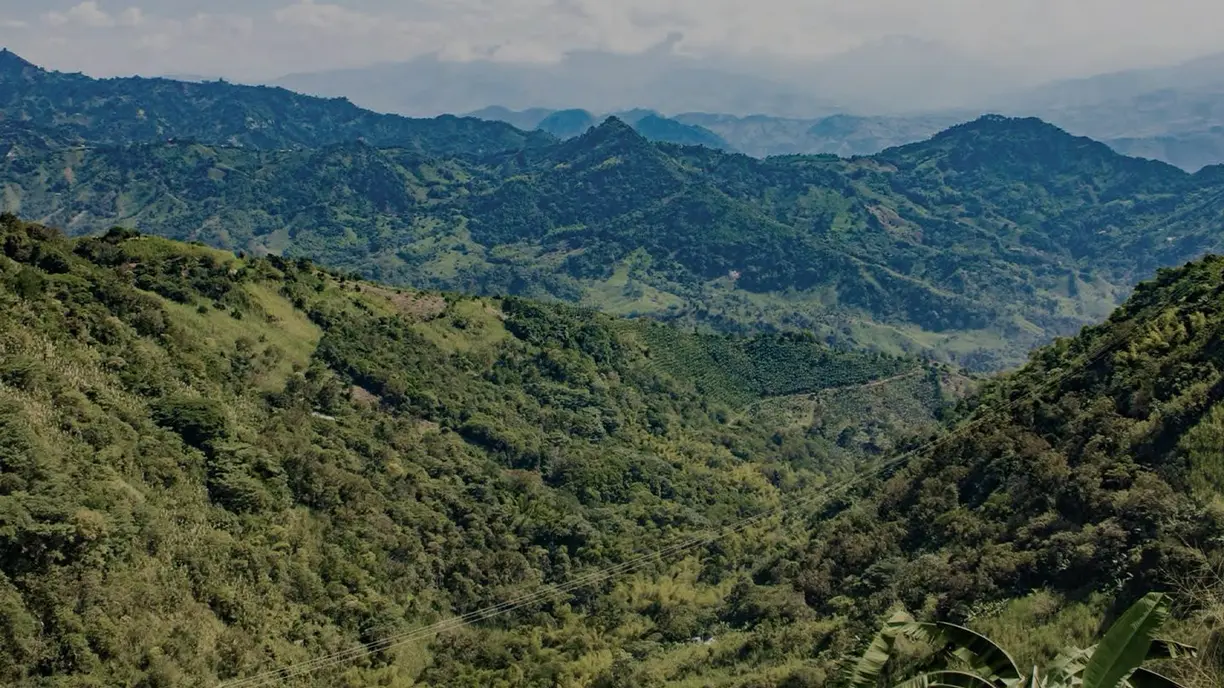
Tiger Gold’s Quinchia Project
[Disseminated on Behalf of: Tiger Gold Corp.]
- With 2.1 million ounces already delineated, Tiger Gold’s multi-deposit gold system in Colombia continues to offer expansion potential beyond the current resource footprint.
- The company has an experienced leadership team, led by former Barrick and Yamana executives, with decades of experience advancing projects from exploration through construction and operations.
- Recently listed on the TSX Venture Exchange, Tiger Gold is executing a focused 2026 drill program designed to grow and upgrade resources and generate the data needed to move forward to a PFS and construction decision.
In a precious metals market that is once again rewarding scale, discipline, and execution, Tiger Gold Corp. (TSXV: TIGR) is standing out as a company that knows what it has and is drilling to define just how much larger the opportunity could be.
And if the company’s recent exploration results are any indication, Tiger Gold’s potential may be significantly greater than what is currently captured in its resource model.
At the centre of the Tiger Gold story is the Quinchía Project, located in Colombia’s Mid-Cauca belt, a region that has quietly become one of the most prolific gold districts in the Americas. The belt hosts several multi-million-ounce deposits and operating mines, and Quinchía sits within trucking distance of projects controlled by established producers and emerging success stories.
“This asset checked every box that describes the ideal project DNA. I’ve spent more than 15 years working to identify projects of extraordinary value … not just from the deposit side, but also location, infrastructure, and jurisdiction,” said Robert Vallis, Tiger Gold’s President and CEO.
A system, not a single deposit
One of the clearest differentiators for Tiger Gold is that Quinchía is not a single-deposit project. Instead, it is a multi-deposit gold system spanning surface and underground mineralization that can be developed through a centralized processing hub.
“Quinchía is a cluster of near-surface and underground gold deposits,” said Vallis, a 28-year veteran of the mining sector, who has worked with some of the most successful companies, including Barrick Gold and Yamana.
The backbone of the project consists of two deposits, Miraflores and Tesorito, which are already incorporated into a 2025 NI 43-101 technical report and preliminary economic assessment.
Miraflores, hosting 510,000 ounces of measured and indicated gold resources, is already fully permitted for underground construction and operation. Adjacent to it is a newer discovery, Tesorito, an open-pittable deposit that contains approximately 1.57 million ounces of gold in inferred mineral resources and accounts for the majority of the project’s ounces.
“Those two deposits alone form the backbone of the project, with over two million ounces already delineated,” Vallis said.
A third deposit, Dos Quebradas, lies just a few kilometres away. While it hosts a historical resource estimate of roughly 500,000 ounces, Tiger Gold is treating it as upside rather than booked value.
“It wasn’t drilled in a way we could stand behind,” Vallis said. “We’re rebooting that now.”
Beyond those deposits, the Ceibal target adds another layer of potential which sits directly adjacent to Tesorito. Historical drilling to date has identified mineralization from surface to a depth of over 500m extending to depth of consistent mineralization, with both gold and copper intercepts ranging in grade from 0.8g/t to over 1.4g/t, reinforcing management’s view that Quinchía sits above a much larger mineral system and remains open to meaningful expansion beyond the current resource footprint.
What the economics already show
Using only Miraflores and Tesorito, Tiger Gold’s 2025 PEA outlines a project capable of producing approximately 140,000 ounces of gold per year during ten years of operation. At a gold price of US$2,650 per ounce, the study delivers an after-tax net present value of roughly US$534 million, an internal rate of return of just over 21%, and a payback period under four years. At closer to long term consensus gold prices now ($3,650 Au), NPV is over $1B with 36.5% IRR and 2.6 year payback.
Initial capital is estimated at about US$480 million, with all-in sustaining costs projected at roughly US$1,340 per ounce over the life of mine.
“There’s nothing unusual about the metallurgy,” Vallis said. “It’s straightforward, conventional processing.”
For investors, that simplicity matters because in a sector where technical complexity often erodes returns, conventional processing and staged development reduce execution risk.
Why drilling at depth is the hidden upside
While the current economics on what is already defined and the opportunity to grow resources from known mineralized targets already discovered, and Tiger Gold’s near-term focus is squarely on expanding and derisking what they have, what lies beneath presents an exciting upside.
“What’s feeding this mineralization at depth is what really excites us,” Vallis said. “We know there’s something significant beneath these surface deposits, and we’re finally drilling into it.”
The company is running a multi-rig drill program that combines infill and extension drilling at Tesorito, exploration drilling at Dos Quebradas, and deeper holes beneath Tesorito designed to test potential feeder structures beneath the known mineralization.
“This isn’t a shotgun approach,” Vallis said. “Every metre drilled brings back value.”
The presence of copper in deeper zones is giving the company additional confidence in its drill targeting, supporting continued drilling beneath the existing resource envelope.
“Copper showing up tells us we’re in the right place,” Vallis said. “It points to the possibility of a much larger feeder system.”
Comparable projects nearby have followed a similar trajectory, where early surface ounces were later underpinned by higher-grade discoveries at depth, said Vallis.
Colombia, reconsidered
Colombia still carries a perception discount among some investors, but Vallis argues that view is increasingly outdated.
“Colombia is what I would call an emerging tier-one jurisdiction for gold,” he said. “It’s geologically rich, it has skilled labour, improving infrastructure, and it’s delivering real discoveries at a rate that is outpacing most other gold jurisdictions.”
Importantly, Tiger Gold inherited a project with a strong foundation in community engagement. Previous operators at Miraflores earned national recognition for their programs, which helped secure permitting. Tiger Gold has reactivated and expanded those initiatives, including healthcare access, education support, and local infrastructure investment.
“The communities understand who we are and what we’re focused on,” Vallis said. “That matters.”
Why producers care about projects like Quinchía
From a strategic perspective, Quinchía fits the profile of assets that mid-tier and senior producers actively track.
“When you have multiple deposits discovered close together, discovered in rapid succession, that allows you to scale production development in stages,” Vallis said. “You centralize infrastructure, keep capital under control, and expand production efficiently while maximizing returns on investment.”
That hub-and-spoke model allows for smaller initial capital commitments, high early returns, and the ability to self-fund future expansions, a combination that becomes increasingly attractive as capital discipline tightens across the sector.
A valuation gap still to close
Despite its scale and economics, Tiger Gold currently trades at a significant discount to comparable Latin American development projects on both EV-per-ounce and price-to-NAV metrics.
“I think it’s simply early days,” Vallis said. “We just listed, and we’re still fairly unknown for now.”
Analyst coverage from SCP Resource Finance highlights the disconnect, citing the size of the existing resource base, the presence of permits, and the upside tied to drilling beneath the current deposits. The firm has published a $2.60 price target.
Why investors are watching now
For generalist investors, Tiger Gold’s appeal lies less in speculation and more in execution. The company already controls a sizeable, economic gold project and is drilling with a clear objective to define its full scale before committing to the next stage of engineering and development.
That execution-first approach extends beyond Vallis and is reinforced by a leadership team with deep experience advancing projects from concept through construction and into operation.
Chief Operating Officer Rickardo Welyhorsky, a metallurgical engineer, brings more than 30 years of experience across exploration, project design, commissioning, and operations, while Jeremy Link, Vice-President of Corporate Development, adds a blend of technical and capital markets expertise, having helped secure more than $200 million in mining financings across producer and exploration-stage companies.
“When you combine a capable team, a valuable project already delineated, and the growth potential we’re just beginning to unlock, this is a very compelling opportunity,” said Vallis.
“This year we are dedicated to really drilling the heck out of this thing and understanding where the drivers are.”
The resulting drill data will serve as confidence-building milestones that determine what comes next for Tiger Gold, added Vallis.
To learn more about Tiger Gold, visit their website here.
For the latest updates, follow Tiger Gold on social media: LinkedIn, Facebook, X, and Instagram
The scientific and technical information contained within this article has been reviewed and approved by Tiger’s CEO Robert Vallis, who is a Qualified Person, as defined under the terms in National Instrument 43-101.

Market One
Market One is a collaborative content marketing, strategy and creation agency with a stable of award winning journalists and videographers focused on providing robust solutions for Canada's capital markets.
