


Gold demonstrated remarkable resilience in Tuesday's trading session, staging a significant recovery after experiencing substantial intraday pressure that tested investor resolve. The yellow metal saw futures contracts decline by as much as $75 during the session, representing a meaningful pullback that initially raised concerns about the sustainability of recent gains. Technical analysis revealed the formation of a three-river evening star candlestick pattern on the daily chart—typically considered a bearish reversal signal that often precedes periods of weakness. However, defying these technical warning signs, gold managed to reclaim more than half of these losses by the close of trading, ultimately settling down just $23.80, or 0.54%. This recovery demonstrates the underlying strength and buying interest that continues to support precious metals at current price levels.
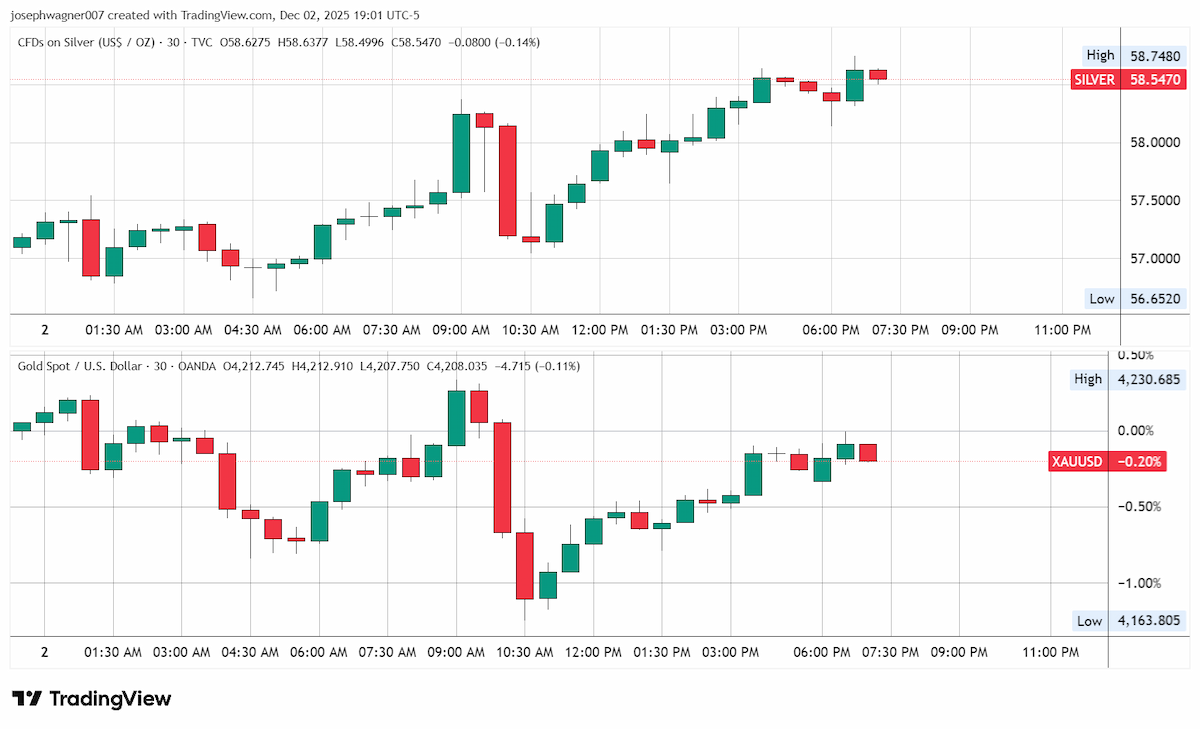
Silver mirrored gold's volatile trajectory throughout the session, experiencing an equally dramatic selloff that proved both swift and short-lived. The synchronicity between the two metals' price action suggests broader market forces were at work rather than fundamental factors specific to either commodity. Notably, the bulk of the declines in both precious metals occurred within a concentrated ninety-minute period beginning at 9:30 AM Eastern time, precisely coinciding with the opening of New York markets. This timing suggests coordinated selling pressure concentrated at the start of U.S. trading, possibly driven by algorithmic trading systems or institutional repositioning ahead of key economic data releases.
The compressed timeframe of the selloff and the subsequent rapid recovery provide important clues about market sentiment and the nature of the decline. The rapid rebound from intraday lows suggests the decline was driven primarily by profit-taking rather than signaling the onset of a broader correction or fundamental shift in the precious metals outlook. Investors who had accumulated positions during recent rallies likely took advantage of elevated prices to lock in gains, creating temporary selling pressure that quickly exhausted itself as bargain hunters and momentum traders stepped in at lower levels.
This interpretation is particularly compelling in silver, where Tuesday's green candle confirmed the three white soldiers pattern that emerged in previous sessions—a technical formation consisting of three consecutive bullish candlesticks that indicates strong buying momentum and often precedes extended upward moves. The pattern's confirmation adds credibility to the bullish case for silver and suggests that the current rally has room to run despite already reaching record territory.
The divergence between gold and silver's performance is becoming increasingly pronounced and represents one of the most significant developments in precious metals markets currently. Silver is transitioning from a very bullish posture to an extremely bullish one, characterized by persistent buying pressure, strong technical formations, and an ability to absorb profit-taking without surrendering recent gains. Meanwhile, gold is beginning to exhibit signs of fatigue, struggling to maintain momentum and showing vulnerability to intraday selling pressure. The emergence of potentially bearish technical patterns in gold, combined with its inability to fully recover from Tuesday's losses, suggests the metal may be entering a period of consolidation after its own impressive rally.
This shift is underscored by their respective daily performances and highlights the changing dynamics within the precious metals complex. Silver advanced $0.73, or 1.26%, posting solid gains even as gold posted a fractional loss. While the magnitude of gold's decline was minimal, the directional divergence between the two metals is significant from both a technical and fundamental perspective. Silver has now recorded substantial gains across four consecutive sessions, repeatedly establishing new record highs and demonstrating exceptional strength that has caught many market participants by surprise.
The sustained outperformance of silver relative to gold is likely to attract greater investor attention to the white metal as it continues to distinguish itself from its more established counterpart. Historically, silver has been more volatile than gold, offering both greater risk and greater reward potential for investors willing to accept wider price swings. The current rally appears to be drawing in a broader base of investors, including those who may have previously focused exclusively on gold as their preferred precious metals exposure.
Several factors may be contributing to silver's exceptional performance. Industrial demand for silver remains robust, supported by its critical role in solar panel production, electronics manufacturing, and emerging technologies. Additionally, silver's smaller market size relative to gold means that capital inflows can have a more pronounced impact on prices. The investment community appears to be recognizing silver's dual nature as both an industrial metal and a monetary asset, creating a compelling case for allocation at a time when both industrial activity and safe-haven demand remain elevated.
As the precious metals market continues to evolve, the relationship between gold and silver will bear close watching. If silver continues to outperform, it may signal a broadening of the precious metals rally and increased risk appetite among investors. Conversely, any significant weakness in silver could suggest the recent gains were unsustainable and prompt a reassessment of positions across the sector. For now, however, the technical and fundamental backdrop for silver appears increasingly constructive, while gold may require a period of rest before resuming its own advance.
