


(Kitco News) - Both gold and silver opened December with a bang as silver surged to a new nominal all-time high above $58 per ounce, while gold recovered from profit-taking to consolidate near $4,232 positioning both metals for potential further gains ahead of next week's Federal Reserve meeting.
Gold spot prices hit a six-week high of $4,265 on Monday before Tuesday profit-taking pulled prices down to $4,164, triggering a roughly 1% decline. By Wednesday, gold had recovered to around $4,200, maintaining its year-to-date gain of approximately 60% on track for its best annual performance since 1979.
Silver stole the spotlight, printing a fresh all-time high of $58.39 on December 2 before consolidating around $57.60-$58.00. The white metal has now doubled since January, dramatically compressing the gold/silver ratio to 73:1 from elevated levels earlier in the year. We had been anticipating a decline in the gold/silver ratio for months and still believe it has further to fall. The first area of support is at 72. Our target for the ratio in the current market environment has got to be 65, which has marked the last two bottoms in Feb. 2021 and July 2016.
Both metals trade well above their major moving averages, with gold holding $200 above its 50-day SMA and more than $650 above its 200-day. The 14-day RSI for gold sits at a neutral 58-61, leaving room for further upside without triggering overbought concerns.
Silver's technicals are more extended, with RSI readings of around 74 puts it in overbought territory. Silver is forming a "higher-low structure" on the 4-hour chart, while the daily shows a bullish "Three White Soldiers" pattern. An ascending triangle has formed on gold's weekly chart since October, suggesting a potential breakout toward the $4,381 all-time high if resistance gives way.
The fundamental backdrop strongly supports precious metals. Wednesday's ADP employment report shocked markets with a 32,000-job loss—the largest since March 2023—versus expectations for a 40,000 gain. The ISM Manufacturing PMI contracted for the ninth consecutive month at 48.2, reinforcing concerns about economic softening.
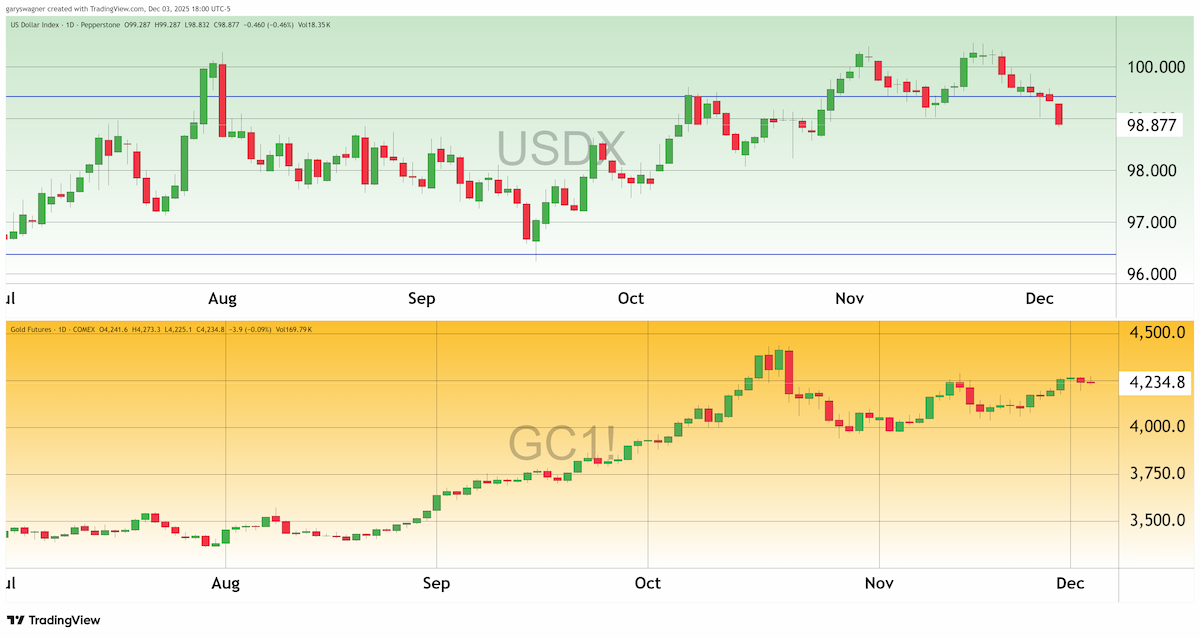
These data points pushed the probability of a **25-basis-point Fed cut** at the December 9-10 FOMC meeting to approximately 89% on the CME FedWatch tool. The dollar index fell to **98.88**, down 7% year-over-year, while the 10-year Treasury yield eased to 4.06% supportive of non-yielding assets like gold and silver.
Institutional flows remain robust. Gold ETFs have absorbed $32.7 billion (about $100 per person in the US) year-to-date in the U.S. alone, with SPDR Gold Shares (GLD) recording its largest single-day inflow ever at $2.2 billion (about $6.8 per person in the US). Silver-backed ETFs added approximately 200 tonnes on Tuesday, with Shanghai warehouse inventories at decade lows.
Major banks continue raising targets. Goldman Sachs projects $4,900 gold by Q4 2026, while UBS sees $4,500 by mid-year. TD Securities warns silver is approaching a potential supply crisis as the market faces its fifth consecutive supply deficit.
The near-term path depends heavily on Friday's jobs data and the Fed's December guidance. A dovish outcome could propel gold toward record territory and silver toward $65, though profit-taking risks remain elevated after such extraordinary gains.
For those that want a more in-depth analysis including our daily video report click here.
Wishing you as always, good trading,
