
Artificial intelligence continues to dominate conversations across the market. Investors are hunting for the next big opportunities, while company executives are eager to show they’re “in” on AI. It’s no surprise, then, that FactSet found “AI” mentioned in 306 S&P 500 earnings calls between September 15 and December 4, far above the five-year average of 136 and the ten-year average of 86. In fact, it’s the most references to AI in earnings calls over the past decade, topping the previous record of 292 in Q2 2025.
At first glance, everyone appears to be happy. But the enthusiasm for AI is starting to generate some serious side effects. First, the AI fever has led to overvaluation: a handful of stocks now account for more than 30% of the S&P 500. That's a recipe for market contagion: if Nvidia stock, for example, stumbles, the consequences could spread throughout the S&P 500 index.
The second problem is hardware shortages. Developing AI is not only expensive in economic terms, but also requires a large amount of physical resources. Memory chips, GPUs, and other components are currently in short supply, resulting in skyrocketing prices. Major retailers in the US are even asking customers to confirm prices at checkout. AMD has already announced a 10% price increase for graphics cards, and rumors suggest that both AMD and Nvidia may reduce the supply of mid-range and low-end models. This will lead to higher prices not only for computer components, but also for laptops, smartphones, tablets, and game consoles.
Who may benefit? Among the potential winners could be DRAM and HBM manufacturers, as well as chip manufacturing equipment suppliers such as ASML.
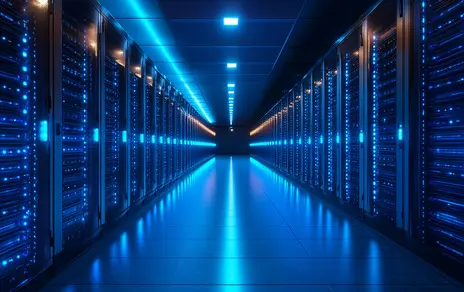
Then there is another hidden cost: electricity. The development of AI and data centers requires enormous amounts of energy. According to the Financial Times, US data centers already consume a combined capacity of around 51 GW, approximately 5% of the country's peak demand. By 2028, S&P Global Energy estimates that new data centers will require an additional 44 GW. However, due to grid constraints, only about 25 GW of new energy capacity is expected to come online in the next three years. This mismatch could drive up electricity prices and stimulate more investment in nuclear power.
In conclusion, while the rise of AI promises significant benefits, it’s also creating scarcity, driving up prices, and raising systemic risks, with everyday consumers likely to feel the impact the most. Beyond potential job losses, they may face higher costs not only for technology but also for essential resources, such as electricity.