
Introduction
Gold’s price is set to close the week on a high note as the shinning metal continues to command attention as a premier safe-haven asset, with spot prices stabilizing near $4,215 per troy ounce. This level reflects a broader market narrative where investors are gravitating toward the yellow metal amid escalating global tensions and a wave of monetary policy adjustments.
The Federal Open Market Committee (FOMC) meeting held yesterday (December 10) marked a pivotal moment, with the Fed delivering a widely anticipated 25-basis-point rate cut, reinforcing easing expectations despite internal divisions on future policy. Far from a fleeting rally, gold's ascent—surpassing 60% year-to-date—signals a profound shift in its role, evolving from a mere crisis buffer to a strategic hedge against multifaceted economic and geopolitical risks.
Monetary policy dynamics further propel the rally.
The FOMC's decision yesterday to lower the federal funds rate by 25 basis points has extended the global easing cycle, making non-yielding assets like gold more attractive amid suppressed real yields. While the cut was expected, the Summary of Economic Projections revealed the Fed's most divided outlook of the year, with hawks signalling caution on 2026 cuts due to sticky inflation and tariff uncertainties.
This "dovish cut with a hawkish tone" initially tempered gains, but the overall liquidity boost—coupled with a softer U.S. dollar—has sustained bullish momentum, pushing gold up over 0.5% post-announcement before stabilizing.
A corrective pullback in bond yields, alongside a stock market increasingly dominated by volatile technology sectors—bolstered by substantial investments in AI infrastructure—has reintroduced liquidity but also amplified uncertainty. As long as inflation expectations remain anchored and real rates stay suppressed, gold positions itself as a high-conviction alternative to traditional investments.
Moving forward
The fact that so far we have limited inflation data, traders and policy makers continue to remain highly concerned about elevated inflation reading. The FOMC's action yesterday underscored this dynamic, with the rate cut signalling continued support for growth amid elevated inflation, though projections for only one additional cut in 2026 introduced some caution.
Trump remains an important part of the equation. Trump’s fresh attack on the Fed for cutting rates “too little, too late” boosts gold because it signals more political pressure for easier money, weaker dollar, and higher inflation risk from tariffs. This erodes faith in the Fed’s independence and drives safe-haven buying; gold has already gained 26%+ in 2025 on similar rhetoric and could push higher fast if the pressure intensifies. Gold traders should watch:
- January Fed meeting & dot plot for signs of capitulation or resistance
- Trump’s Fed chair pick (dovish names = bullish gold)
- Tariff rollout timeline
- DXY breaking below 100
- Upcoming PCE inflation and payroll numbers
Any dovish shift or dollar drop will fuel the next leg up in gold.
Technical Analysis
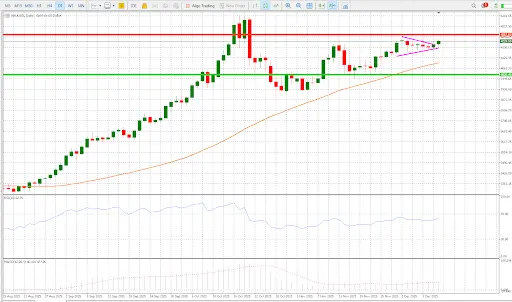
Technical price action on the daily time frame for the shinning metal once again looks highly bullish as the price has broken out of the symmetrical triangle to the upside which indicates that the gold price is ready to re-test the all time highs again.
The price is also trading above the 50-day SMA on the daily time frame which further confirms the fact the bulls are in the driving seat. The below chart shows the important price levels for the shinning metal

Gold trading chart: MH Markets Dubai
Final Word
Gold's commanding performance in 2025, culminating in prices above $4,200, underscores its pivotal role in navigating a landscape riddled with geopolitical strife, policy easing, and structural shifts. The FOMC's rate cut yesterday, amid a divided committee, has cemented the low-yield environment supporting the metal, amplifying its appeal as a macro hedge. The interplay of these drivers—amplified by economic data signalling prolonged low rates and technicals affirming upward momentum—positions the metal for continued strength.