
Brazilian rare earths miner Serra Verde has slashed the contract periods of its Chinese processing deals, opening up the potential to supply Western companies when their separation capacity becomes available in coming years, its CEO said.
The West has been racing to develop alternative sources of rare earths, vital for defence, electronics, electric vehicles and wind turbines, since China controls 90% of processed global supply.
When Serra Verde’s mine was being developed, it agreed 10-year offtake deals with Chinese companies to buy its concentrate for processing since no other options were available.
The Serra Verde mine is rich in heavy rare earths, unlike many other Western deposits, but only now are plants gearing up in the West to process them.
“In a couple of years we’ll have some options to separate the heavies outside of China,” CEO Thras Moraitis told Reuters.
Privately-held Serra Verde renegotiated the Chinese deals and now they conclude at the end of next year, giving the company multiple options to diversify its customer base, Moraitis said.
“The Chinese, the Americans, the Japanese, the Europeans, the Canadians all have approached us, given that we are the only supplier of heavy rare earths, at least for the foreseeable future.”
Forecast shortages of heavy rare earths dysprosium and terbium could be a stumbling block in the West’s drive to create domestic supply chains of rare earths and permanent magnets.
Price floor essential
Moraitis, formerly an executive of Xstrata, which was acquired by commodity group Glencore, said a price floor guaranteed by governments was key for the development of the rare earths sector outside of China.
The US provided a guaranteed minimum price to rare earths group MP Materials in July as part of a multibillion-dollar investment by the Pentagon and sources told Reuters the mechanism would likely be extended to other firms.
Group of Seven members and the European Union are also considering price floors to promote rare earth production.
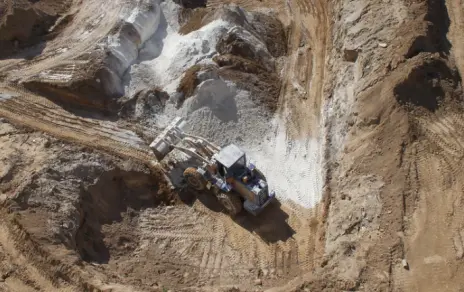
Serra Verde’s Brazilian mine is an ionic clay mine deposit. The standard extraction technique for such deposits in China and Myanmar has involved flushing the deposit with chemicals, which has caused contamination of water supplies and deforestation.
Serra Verde has spent several hundred million dollars building a plant that does not discharge toxic waste.
The company launched commercial production in early 2024, but has been optimizing output so it has not yet hit full output, which is expected to be about 6,500 metric tons of total rare earth oxides a year by 2027.
The US Development Finance Corporation approved a $465 million loan earlier this year.
Serra Verde is owned by private equity groups Denham Capital, Energy and Minerals Group and Vision Blue, which is led by the former head of Xstrata, Mick Davis.
(By Eric Onstad; Editing by Mark Potter)
