Kitco Spotlight
Sponsored Content
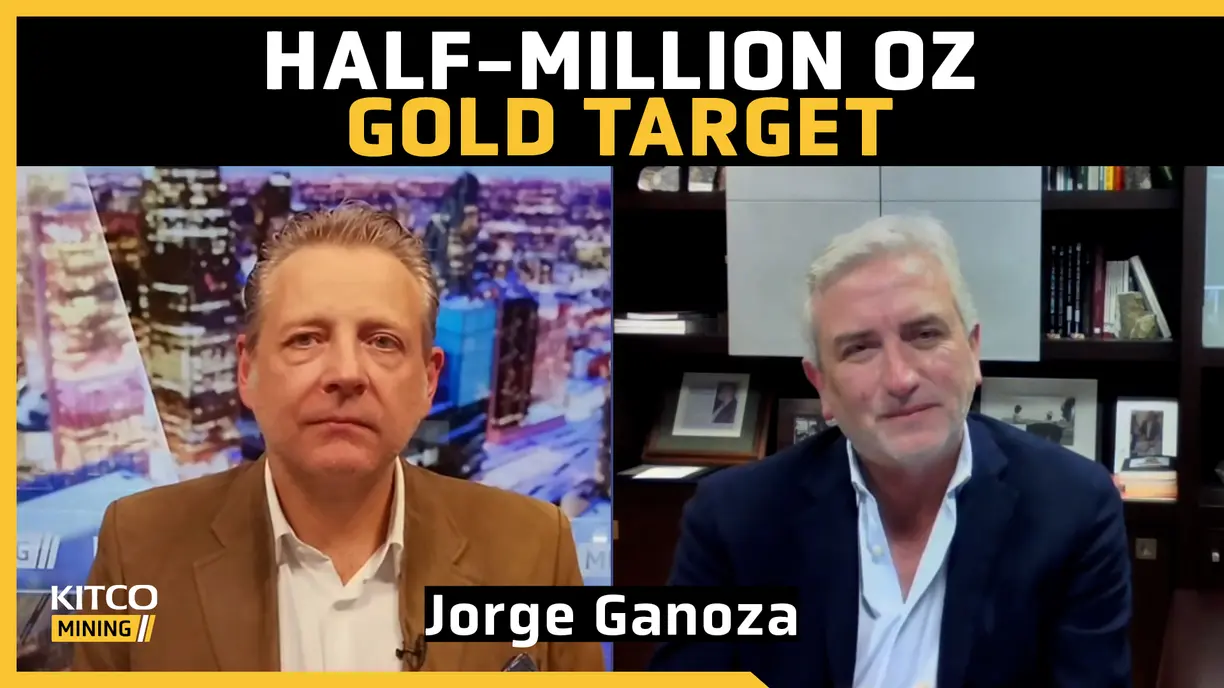
Fortuna Mining is using record quarterly cash flow to fund its next phase of growth, with President and CEO Jorge Ganoza saying the company can advance toward 500,000 oz of annual gold production without issuing new shares.
The comments came one day after Fortuna reported its first-quarter 2026 results on May 6. The company generated record free cash flow from ongoing operations of $174.0 million, adjusted attributable net income of $111.0 million, and production of 72,872 gold equivalent ounces.
Speaking with Kitco Mining on May 7, Ganoza said the quarter reflected both stronger metals prices and improved financial flexibility as the company prepares to make key investment decisions on two West African growth projects.
“We’re truly capturing the benefit of this high-price environment,” Ganoza said.
Fortuna ended the quarter with $665.9 million in cash and a liquidity position of $815.9 million, up from $554.0 million and $704.0 million, respectively, at the end of 2025. The stronger balance sheet gives the company more room to advance the Séguéla expansion in Côte d’Ivoire and the Diamba Sud project in Senegal while maintaining capital discipline.
Ganoza said those two projects are expected to lift annual gold production by 60% over the next 24 months and move Fortuna toward its target of half a million ounces per year.
“We can deliver this growth without issuing any shares,” Ganoza said.
Fortuna said in its May 6 results that Diamba Sud and the Séguéla plant expansion remain on track for final investment decisions by mid-year, with first gold from both projects targeted in 2028.
Diamba Sud is the near-term execution test, with Ganoza noting that Fortuna submitted the project’s environmental and social impact assessment to Senegalese authorities in September and expected approval in the coming days as of the May 7 interview.
“Where in the world do you find that?” he asked, referring to the expected seven- to eight-month timeline from submission to permit approval.
The permitting timeline is central to Fortuna’s argument that frontier jurisdictions can come with development advantages when governments view mining as part of their economic agenda. Ganoza said Fortuna has budgeted $100 million for Diamba Sud in 2026 and has started early works, including camp construction and orders for power supply equipment and a SAG mill.
The aim is to reduce budget and schedule risk before a final investment decision, according to Ganoza.
Exploration remains a second pillar of the growth plan, with Fortuna reporting a 15% year-over-year increase in consolidated mineral reserves on April 23, supported by growth at the Sunbird underground deposit at Séguéla.
Ganoza said Séguéla’s total mineral inventory has grown from 1.4 million ounces of gold in 2021, when Fortuna acquired the asset through its Roxgold business combination, to about 3 million ounces across reserves and resources. He said Diamba Sud holds about 1.3 million ounces of gold, mostly in the indicated category, and is being drilled with six rigs.
“What underpins those expansions has been our exploration success,” Ganoza said.
The growth plan follows a year of portfolio pruning, with Fortuna selling two mines in the first quarter of 2025 because, while profitable, they had limited reserves and limited exploration upside. He said Fortuna is focused on assets capable of producing at least 100,000 oz per year, with a path toward 150,000 to 180,000 oz and at least a decade of mine life.
That framework also shapes how the company views political risk. Ganoza said the issue in Côte d’Ivoire and Senegal is not whether governments want mining, but how much value they want to capture from it.
“The governments want more, and that is a negotiation,” he said.
Ganoza said Fortuna is built to operate in developing nations and emerging democracies, accepting higher perceived geopolitical risk where permitting, exploration, and development conditions provide a clear tradeoff.
“For us, mining has always been a frontier business,” Ganoza said.
Fortuna is also returning capital to shareholders. On May 6, the company announced they had returned $40.0 million year-to-date through the repurchase of 4.2 million shares at an average price of $9.53 per share. Ganoza said buybacks are part of the company’s capital allocation approach, but the main source of near-term value remains delivering the growth already in front of it.
“The best value we can give to our shareholders is to achieve that growth,” he said.
The next stage of Fortuna’s growth plan will be defined by the Diamba Sud feasibility study, the Séguéla expansion study, and permitting progress in Senegal. The broader test is whether the company can turn record cash generation into new production while preserving balance sheet strength and limiting dilution.