
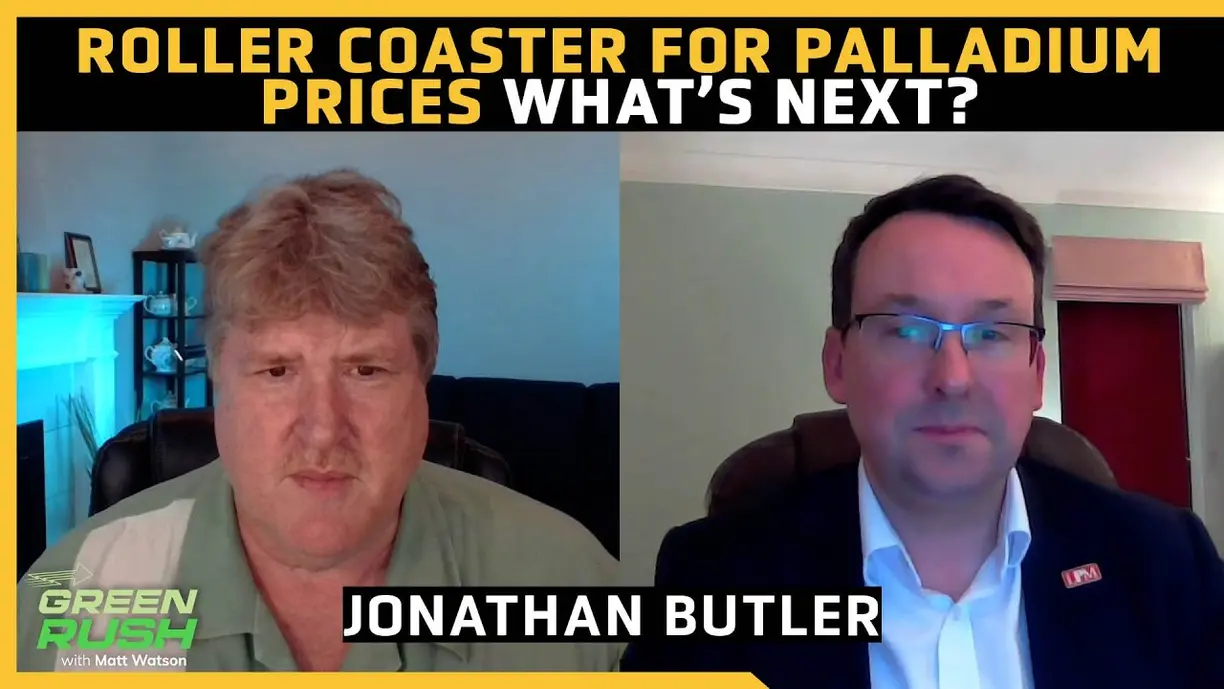
(Kitco News) - The price of palladium has experienced significant volatility in recent weeks, driven by speculation surrounding potential sanctions on Russian supply. Russia currently accounts for 40% of global palladium production. However, a structural oversupply of palladium is on the horizon, according to Matt Watson, host of Kitco News' Green Rush, and Jonathan Butler, head of Business Development at Mitsubishi Corporation International (Europe).
"It has certainly been a roller coaster [for palladium prices]," Butler told Watson. "Just these past couple of weeks, we've seen those highs of over $1,200 an ounce. We've come back to the downside of that. That's been accentuated following the U.S. election. We're now hovering just above the $1,000 level."
Butler pointed out that from the long-term perspective, the palladium market is heading into a structural oversupply at some point in time in the next couple of years. "That's by virtue of the fact of more auto catalyst recycling, less demand, particularly in the auto catalyst sector," he said. "And really crucial palladium lacks those demand growth areas that platinum, iridium, and ruthenium have in the hydrogen sector, any fuels, and some of those new exciting clean energy markets."
The oversupply fears are fueled by several factors:
Declining vehicle sales: Global light-duty vehicle sales peaked in 2017 and have been in decline ever since, exacerbated by the COVID-19 pandemic, chip shortages, and rising inflation and interest rates. The decline in vehicle sales directly impacts palladium demand, as the metal is primarily used in autocatalysts for emissions control.
Increased Recycling: As older vehicles reach the end of their life, the amount of palladium recovered through recycling is expected to rise significantly. The growth in recycling, combined with flat or even declining mine output, is contributing to the projected oversupply.
Lack of New Demand Drivers: Unlike platinum, which has found new applications in hydrogen technology, palladium currently lacks significant alternative demand sources. While the metal is used in applications like liquid organic hydrogen carriers and gas cleanup membranes, these sectors are not yet driving substantial demand.
For more insights on these factors, listen to the podcast above.
Despite the looming oversupply, optimism surrounds the development of new applications for palladium. The success of these applications will be crucial in determining the long-term viability of the palladium market.
To learn more about the future of palladium applications, listen to the podcast above.
If demand from these emerging sectors can offset the decline in automotive consumption and the rise in recycling, palladium may be able to avoid a prolonged period of oversupply and depressed prices, according to Watson and Butler.
For more on the longer-term outlook, listen to the podcast above.
The recent price volatility in palladium has also highlighted the influence of speculative trading on the market. The sharp price increase in October, sparked by rumors of potential G7 sanctions on Russian palladium, was primarily driven by short-covering rather than fundamental changes in supply or demand, noted Butler.
While such speculative movements can create short-term opportunities, Watson and Butler argue that the underlying fundamentals of the market remain the most important factor in determining the long-term price trajectory of palladium.
____________________________________________________________________
Green Rush is brought to you by Revival Gold. Revival Gold is one of the largest, pure gold, mine developers in the United States. The Company is advancing engineering and economic studies on the Mercur Gold Project in Utah and mine permitting preparations and ongoing exploration at the Beartrack-Arnett Gold Project located in Idaho.
Revival Gold is listed on the TSX Venture Exchange under the ticker symbol "RVG" and trades on the OTCQX Market under the ticker symbol "RVLGF". The Company is headquartered in Toronto, Canada, with its exploration and development office located in Salmon, Idaho.
____________________________________________________________________

Subscribe on Apple Podcasts, Amazon Music and Spotify. You can also add the RSS link to your favorite podcast player: LINK
