

(Kitco News) – Robust central bank demand supported gold prices through 2025, but the lack of clarity on the U.S. labor market is creating doubt about Fed rate cuts and complicating price projections this year, while silver’s high prices are attracting substantial secondary supply as people sell their heirloom jewelry and coin collections, according to precious metals analysts at Heraeus.
In the latest update, the analysts wrote that gold prices continued to benefit from sovereign demand.
“Central banks continued to purchase gold in December, buying 19 tonnes,” they said. “That took the total for 2025 to 328 tonnes (source: World Gold Council), a modest decline from 345 tonnes of net purchases in 2024. The National Bank of Poland acquired the most gold, adding 102 tonnes to its reserves. Other significant purchases were made by the central banks of Kazakhstan and Brazil. Not all central banks added gold to their reserves, with Singapore, Ghana and Russia being net sellers of gold last year.”
Turning to the latest U.S. jobs data, the analysts said the numbers are giving mixed messages on the Fed’s potential rate path.
“Non-farm payrolls rose by 130,000 in January, according to the Bureau of Labor Statistics,” they noted. “That was a much larger gain than expected, so on the face of it, there is less need for the Fed to support the economy with another interest rate cut. However, the revisions to prior months were negative once again, and job gains for 2025 were reduced by more than 1 million compared to earlier estimates, making the situation look much worse than the headline number suggests.”
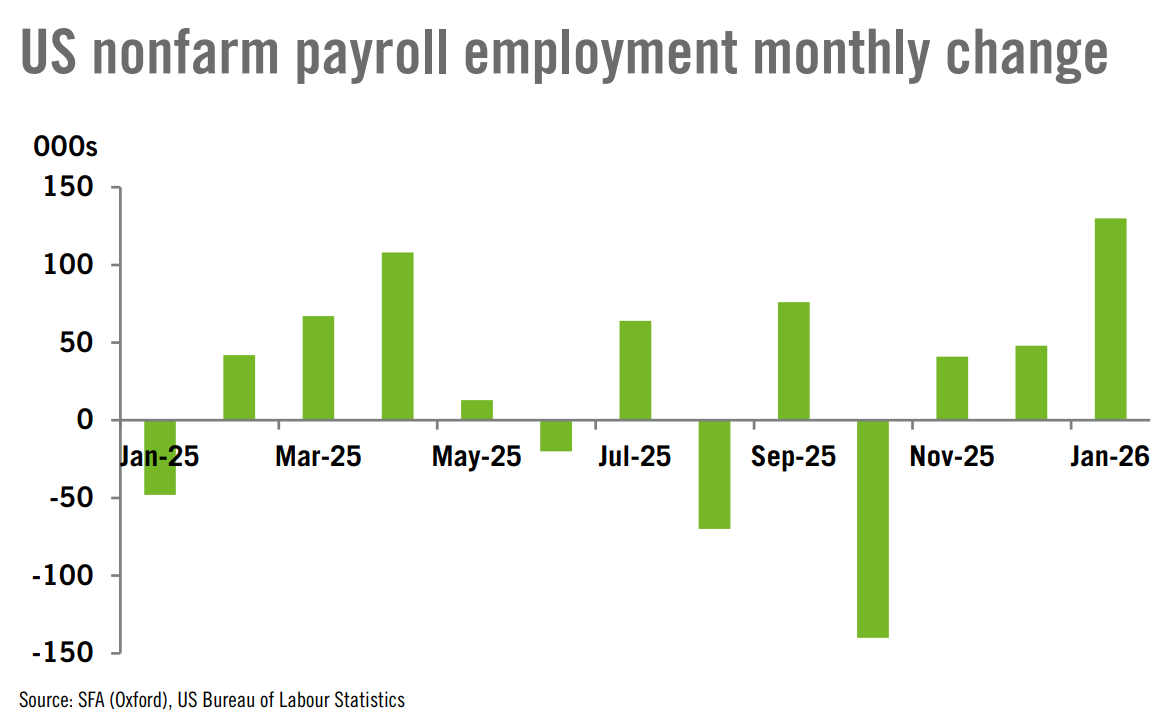
“However, with the 2-year Treasury yield close to 3.5%, which is currently the lower end of the Fed’s target range, the Fed is unlikely to change interest rates at its next meeting.”
Gold is trading near session lows below $5,000 per ounce in thin holiday trading on Monday morning.
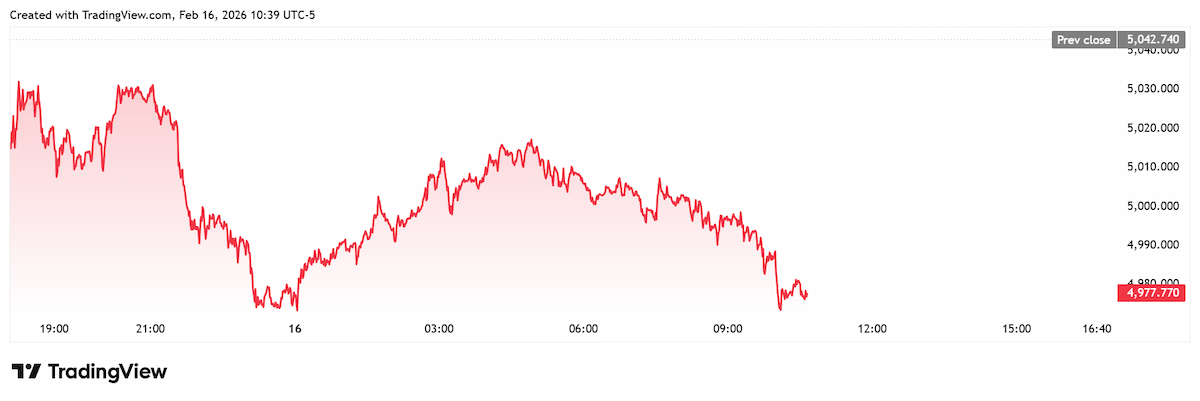
Spot gold last traded at $4,977.77 per ounce for a loss of 1.29% on the session.
Turning to silver, Heraeus analysts noted that the Chinese silver market is very tight, but the Lunar New Year will likely ease some of the pressure.
“The silver market is still showing tightness in China, with futures in Shanghai being in backwardation,” they wrote. “Domestic producers and traders are struggling to work through a backlog of orders, tightening availability. Reported declines in exchange inventories in Shanghai point to constrained availability of deliverable metal.”
“There are, however, tentative indications that speculative intensity is moderating, with SHFE open interest declining as investors reduce exposure into the holiday period as the Chinese New Year begins on 17 February,” they added. “The SHFE is also tightening position management ahead of delivery. The change should reduce the pace of inventory withdrawals from Chinese exchange warehouses and, by extension, limit the degree of domestic tightness.”
The analysts also noted that high silver prices are beginning to pull meaningful quantities of secondary supply into the market.
“In North America, dealers report a sharp increase in retail selling as higher prices prompt households to monetise coins, jewellery and sterling silverware that had effectively been treated as long-term ‘keepsakes,’” they said. “Pre-1965 US silver dollar coins have almost tripled in value year-on-year. That shift is already lifting scrap availability and bringing out material that would typically remain off-market.”
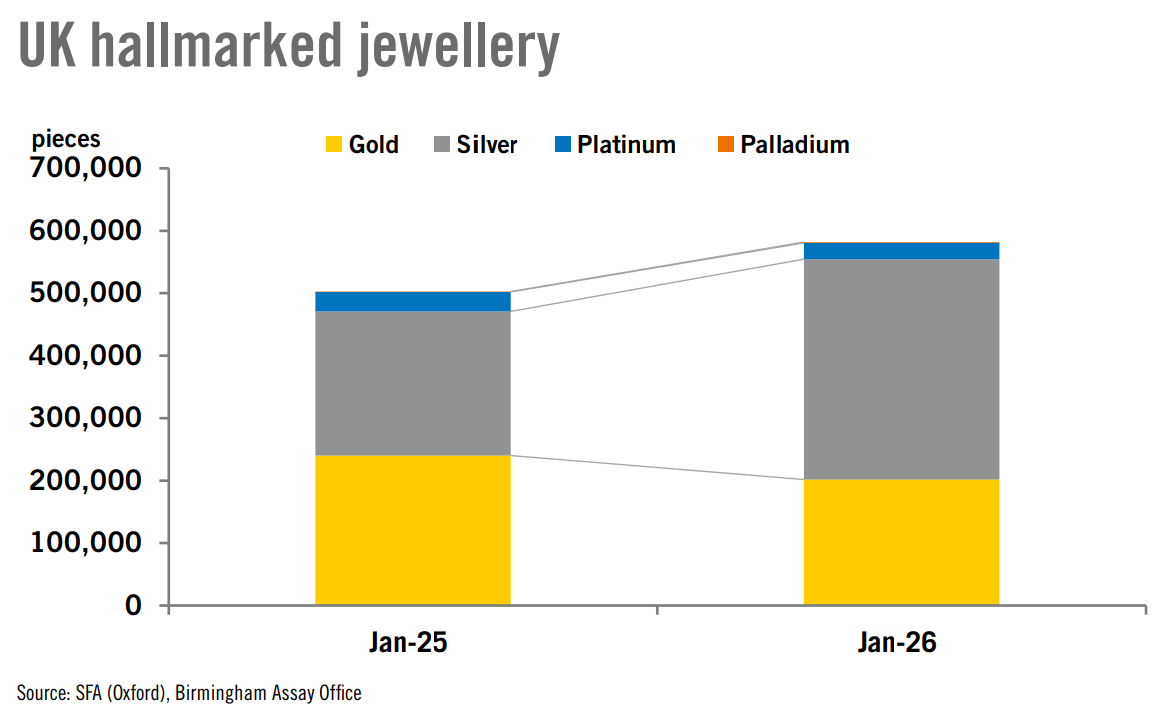
“It also highlights how quickly the flow can flip when prices become sufficiently high,” they added. “Recent price action has been shaped more by investment and liquidity conditions than by underlying end-use demand. In the short term, the silver price is consolidating after its dramatic rally and further price swings can be expected.”
Silver prices are trading in the middle of their daily range after executing a triple-bottom at $74.727 just before midnight Eastern time.
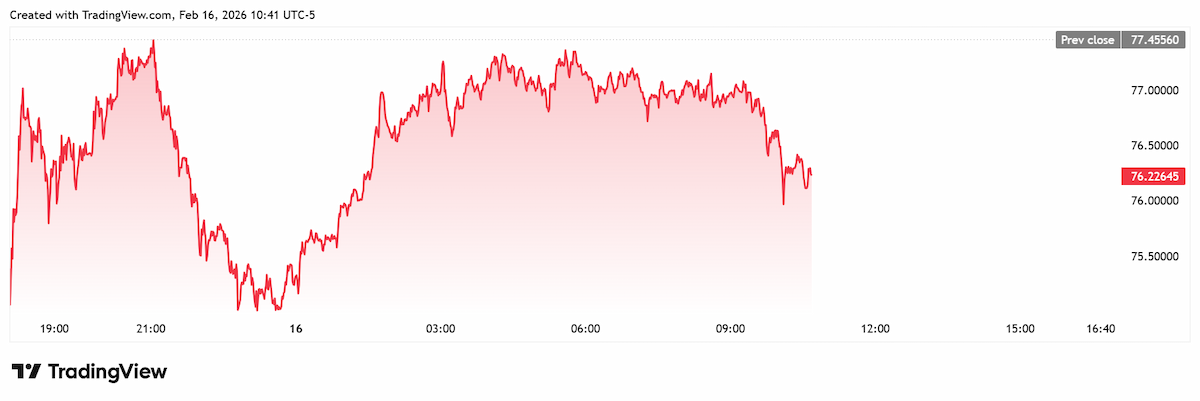
Spot silver last traded at $76.215 per ounce for a loss of 1.60% on the daily chart.
