The cryptocurrency ecosystem has been abuzz with speculation about the launch of the first spot Bitcoin (BTC) exchange-traded fund (ETF) since BlackRock filed its application with the Securities and Exchange Commission (SEC) in June, but similar products have already been launched in other countries, leading some to question how great an impact the launch of spot BTC ETF in the U.S. will have on the market.
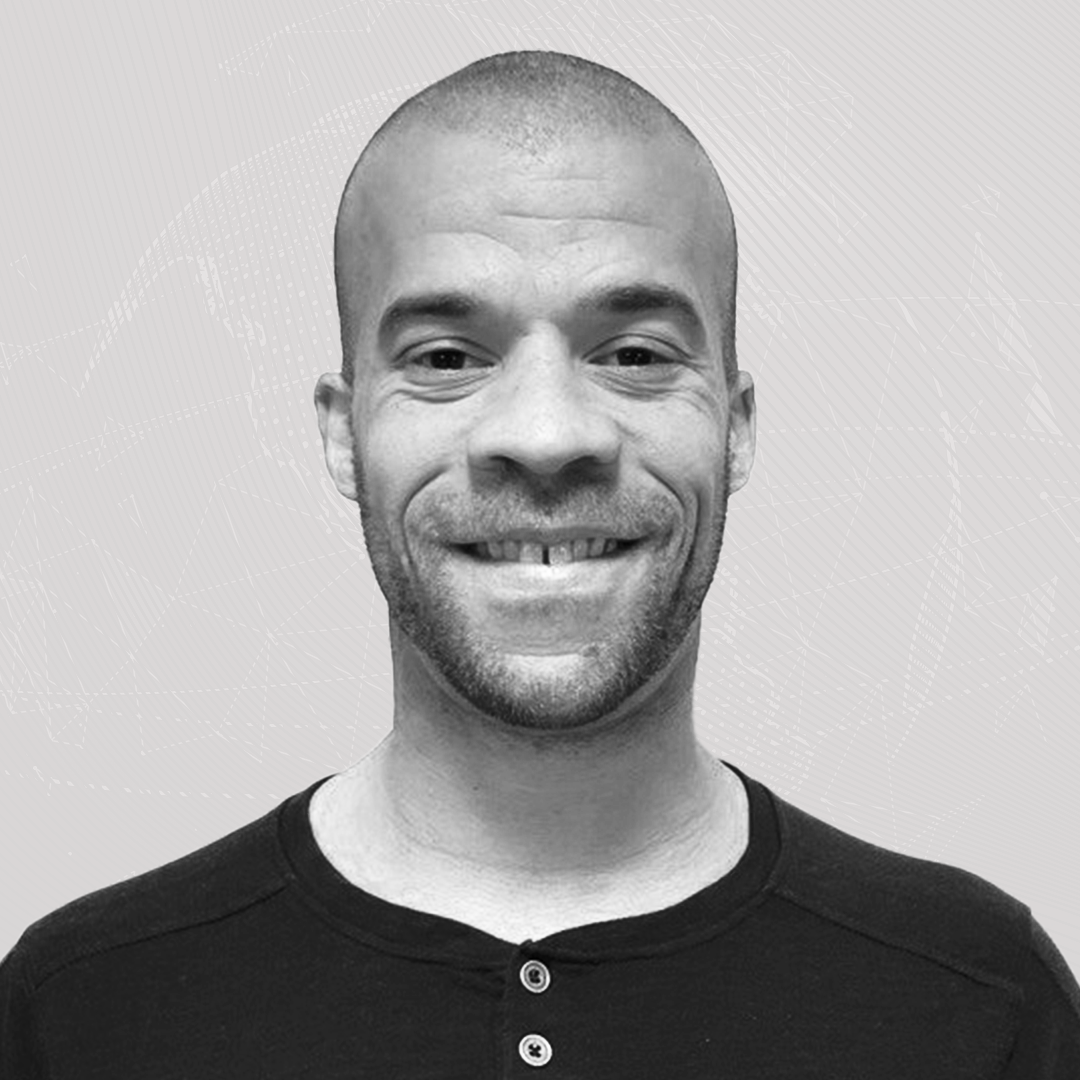
To gain a better understanding of the state of the global exchange-traded product (ETP) ecosystem, Kitco Crypto spoke with Hany Rashwan, co-founder and CEO of crypto ETP issuer 21.co.
“We just celebrated our fifth-year product anniversary listing the world’s first crypto ETP,” Rashwan said when asked about the current U.S. hype. “The more people that come into crypto, the better it is for everyone in crypto and we really do believe that. I think that drives us, first and foremost, so a great tide will lift all boats.”
He also said that being the first company to list a crypto ETP, “we've seen all sorts of competition and we're still the world's largest issuer of crypto ETP, so we feel pretty good about our standing.”
“Crypto is a very complicated field, and the more complex a field is, the more customers gravitate towards experts, and we happen to be the most crypto-native firm of any of the offerings, especially in Europe,” he said.
When asked if his firm has seen an increase in interest from institutional investors, Rashwan said there has been an uptick since the end of 2022, following the collapse of FTX.
“We've seen two very interesting shifts this year,” he said. “First, I think about 80 percent of our inflows have happened in the last 90 days. So there's a very clear shift in sentiment. In addition to that, the more regulatory clarity and the more regulatory action against bad actors in the space, the more interest there has been from institutional investors.”
He said the institutional crowd is “typically very slow in making decisions,” which has led to a slower rate of adoption, but his firm “thinks that with even more regulatory clarity, filings in jurisdictions, etc., some of these institutional investors who have been studying how to make an allocation for the last one to three years are going to be doing more than dipping their toes over the next year, year and a half.”
Rashwan said institutional investors see the enforcement actions taken against FTX and its former CEO Sam Bankman-Fried, and more recently Binance and its former CEO Changpeng Zhao, as positive developments that give more credibility to the asset class because they are finally putting regulations in place and enforcing new and existing financial laws within the crypto ecosystem.
That said, he noted that there have also been several good actors, such as Kraken, that have received fines for specific actions, and said, “that may not really be indicative of who they are or where they've been.”
“I think that is additional regulatory clarity though, and that has been quite helpful,” he said. “If you think about some of the Binance actions, it has taken existential risk off the table for crypto. And that's why the Binance news is very big for our space – because it has taken the existential risk off the table for crypto.”
“Everything else certainly makes investors more comfortable, knowing that scams and fraudsters are arrested, see a courtroom, and are ultimately stopped,” he said. “And I think that's been reflected in the price growth we've been seeing, as people feel more comfortable allocating.”
Rashwan said the growth seen over the past couple of years has made it “increasingly clear that crypto is here to stay and cannot be ignored,” and now regulated institutional investors are making sure they “have all the proper boxes checked to begin allocating, and additional regulatory clarity will help them achieve that.”
When asked if he thought that the SEC would approve one or multiple spot BTC ETF applications in early January, Rashwan said his position precludes him from discussing any active filings, but said their work on this matter for years leads them to “believe it’s a matter of when, not if.”
“As the days pass, we feel better and better, even with our interactions with regulators, both here and around the world,” he said. “If you look at crypto worldwide, it just operates in different ways. And if you look at crypto itself, it’s a bunch of different subsectors as well.”
“So if you were to follow the European model, we've had a lot of success with regulated products, and we've had a lot of success with ETFs and ETPs,” he said. “If you look at Asia, for example, they haven't had the same regulated product structure yet, but they've done a lot more on the crypto-native side of things in places like Japan and Singapore, Indonesia, Malaysia, and others.”
“Whether it’s MiCA [Europe’s Markets in Crypto Assets framework] or regulations in the U.S., whatever order it happens in, I would argue that additional regulatory clarity in any part of the world is going to lead to additional regulatory clarity in all of it,” he said. “That's what we're really seeking. The order doesn't matter too much.”
He noted that 21.co has “tokens for some geographies and products, while they have ETFs for others. So regardless of how things evolve, we will have products that are regulated in the U.S., and we look forward to that one way or another over the next few years.”
Artificial intelligence and blockchain
Shifting to the rise of both artificial intelligence (AI) and blockchain in 2023 – and whether there is any competition between the two sectors – Rashwan noted that those who were serious about investing in crypto and AI in 2016 and 2018 have enjoyed the most success so far, and most others have been experiencing FOMO.
“A lot of what's happening right now is FOMO, greed, envy, jealousy, and a whole slew of other things that should not be impacting financial decisions,” he said. “That said, it is very clear that regardless of when you invested in AI or when you invested in crypto, these are trend-transformational technological leaps and innovations that will touch us in all sorts of different ways.”
“If you compare to the dotcom era, there were many things that we predicted accurately, but there were many more things that we had no idea of even starting to guess where they would be twenty years down the road,” he said. “And that’s what made things so exciting.”
“AI solves very real problems, and crypto solves different problems than AI solves, so there are areas where you could see very real overlap between the two,” Rashwan said. “Some of the things that are happening on identity, and especially identity on the blockchain, and especially decentralized identity that maximizes your privacy – those are the kinds of things that could be very interesting for AI to incorporate and could have a blockchain angle.”
“The most obvious one is money,” he added. “And if you think about AI being computers plus humans being added to a similar mix, that looks a lot like a payment mechanism. And it is possible that an internet-based currency that is a digital currency from the ground up could lead to some very easy wins, especially if you combine it with smart contracts and the like.”
He said he sees “an opportunity for crypto and AI to be yin and yang, and there are a lot of fields where there are some tangible benefits, but it is currently unclear as to how that would work exactly.”
He also highlighted that while the dotcom era saw a big boom and bust, it also “led to the creation of some very good companies, some of which are still with us today, and it led to the many bull runs and bubbles that we have seen in tech, crypto, and AI.”
Effects of an ETF approval
When asked if the approval of a spot BTC ETF will result in an influx of new users to the crypto ecosystem, or if investors would be content to hold Bitcoin in their Schwab or Robinhood accounts, Rashwan said that will depend on the technology.
“I think the best technologies that you use on a daily basis, that impact you the most, are often things that you have no idea are actually working and just work seamlessly in the background,” he said. “In order for crypto to reach seven or eight billion people, it needs to be part of a system that works seamlessly. It’s not going to look like MetaMask. It’s not going to look like anything we are using today, and it will be much more efficient.”
“Companies like us exist in order to make crypto more approachable, and the more people want to onboard, and the bigger we want the industry to be, the more abstracted it will be in various ways,” Rashwan said. “And that is not unlike how the current system is built.”
He gave the example of buying stocks. “Many of us have bought stocks, but very few have actually looked at the settlement and clearing of any financial instruments, stocks, bonds, commodities, etc. Taking that into account, I think it will be the invisible infrastructural layer for crypto that is going to have the most profound effect on adoption.”
“You shouldn’t expect the average user to engage with crypto directly, on a daily basis,” he added. “And I don’t think that should be the goal. Many of the concepts covered and applications used are a challenge for tech-savvy people, let alone your mom, dad, and other relatives.”
“So the technology will need to evolve to become more user-friendly,” he said. “The technology should enable us to do new things, and if the applications are done in a way that is easy and scalable, the average user won’t need to deal with the finer details.”
Rashwan said that one of the motivating reasons he and his co-founder Ophelia Snyder created 21.co was “because our mothers wanted to buy Bitcoin, but struggled to buy it on exchange for many reasons, including trust and comfort and all of that.”
They saw ETPs and ETFs as “a way to get people like our mothers, who may not be technical, excited about being part of the crypto ecosystem,” he said.
Changes for crypto in the coming years
Rashwan said he expects the industry to undergo significant changes in the years ahead as greater regulatory clarity is established.
“More regulatory clarity is going to come in which is going to change crypto from a retail-dominated industry, which is what it is today, to something that is more integrated with the system and attractive to institutions,” he said. “If you think that the retail flows we’ve seen are significant, you haven’t seen institutional flows yet. And crypto has not yet seen any major institutional flows.”
“When it happens, we’re talking about trillions of dollars, not billions,” he said. “That is very exciting for everyone in the space.”
One trend that is likely to contribute to growth in the crypto market is the tokenization of real-world assets, he noted.
“We have seen currencies in the form of stablecoins, we've seen commodities in the form of gold and others on the blockchain,” he said. “Stablecoins have arguably been the best use case for crypto so far. People should expect that every possible thing that can be tokenized will be tokenized.”
Touching briefly on the time to adoption, Rashwan pointed to the dotcom craze and the rise of the internet. “Elon Musk’s first company was Zip2, which was like the Yellow Pages for the internet. A lot of people in the ’90s and 2000s talked about how every business will have a website. The process took a while, but it's a reality in 2023. So I think it always takes a little bit longer than what you would expect.”
Correcting the global financial system
When asked how the global financial system can course-correct from its current trajectory of non-stop money printing and growing debt, Rashwan said the solution is growth.
“You can think about inflation, corruption, and government revenues as different forms of taxation, one way or another,” he said. “If you look at it that way, then you'll realize that as much as you want to keep the tax rates as low as possible, growth fixes everything. So that’s my macro thesis.”
“I'm quite concerned about the levels of debt that we are piling up in many countries around the world. It does not seem sustainable, but it does seem manageable if things are done transparently,” he said. “Part of what I appreciate about crypto is that you just put things out in the open, whereas the current system doesn’t really allow observers to get the full picture. We aren’t able to understand the full ramifications of things being done behind closed doors.”
“It’s clear to me that I’m not the only one feeling discomfort around how much debt we are piling up, so I think there will be a high level of interest in things that we have not thought about for a very long time – full reserve banking comes to mind,” Rashwan said. “More investments in commodities like gold, gold-backed securities, and crypto-backed securities could also help. There will be renewed interest across all of these, especially if our growth does not fix our consumption levels.”
But with populations declining in many countries and people not spending as much, especially as inflation outpaces wage growth, he said we are in for an uphill battle.
“It’s going to take a focus on concepts that we haven’t seen in quite some time to try and fix the situation,” he said. “I think the concept of fractional reserve banking is very different from what crypto brings to the table. You could argue that crypto is full reserve banking in some ways, and is what people will end up wanting to do. I think we could see a shift in paradigm over the next five, ten, fifteen years, and it will take place country by country.”
“In any period in global history, there have been winners and there have been losers regardless of the situation that was going on,” Rashwan said. “In every war, in every crisis, there were some countries that played it well. So the same applies to currencies and the same applies to economies. We're going to start seeing a lot more choices around the world and a lot of different philosophies implemented.”
Trends to watch in 2024
Rashwan said the two main trends to watch in 2024 are developments related to ETFs and tokenization, but he also sees other emerging trends worth tracking.
“One is on-chain asset management,” he said. “No one wakes up in the morning and wants to buy an ETF. People wake up in the morning and they decide, maybe I want to get exposure to DeFi. So they buy one of our baskets in ETF form. But for another kind of customer, perhaps an ERC-20 token of the same product type providing access to DeFi tokens in a basket is more appropriate.”
21.co is focused on offering access to that underlying basket of DeFi tokens “in every wrapper available for all our different customers to choose from, whether it’s an ETF, ETP, ETN, private fund, mutual fund, ERC-token, Solana program token, etc.,” he said. “That is something we’ve been big believers in since we launched,” and could be a trend that other asset managers follow moving forward.
They are also focused on tokenization, both for on-chain asset management as well as tokenizing real-world assets, he said.
A multi-chain future
The topic of “Ethereum (ETH) Killers” also arose due to the notable gains recorded by Solana (SOL) over the final months of 2024.
“I love Python and Ruby as programming languages. I love Solana and Ethereum as blockchain networks. I think there are different use cases and reasons for both and more to exist,” Rashwan said. “If you think about it, the key feature in all of these protocols is smart contracts. And if you think about the differences in programming languages and the proliferation of programming languages, it may not be that different from smart contract platforms where, depending on what I’m doing, I can do it in many different ways.”
While he said we may not need all of the hundreds of protocols currently vying for users, “We can have dozens of smart contract platforms, just like we have dozens of programming languages, with a top five to ten that are very popular.”
“That’s how I feel about Solana and Ethereum. I like them both, equally,” he concluded. “I believe in Binance Chain, I believe in Avalanche. I think there are very clear reasons for all these to exist. The tribalism is so silly when the entire rest of the world is against us.”
