(Kitco News) - Investors’ appetite for gold in the United States has remained weak, but it could turn around later this year, while Chinese solar demand for silver could face a double-whammy of rising prices and limited installation space, according to the latest metals report from Heraeus.
“Globally, investors in gold ETFs reduced their holdings by 8.2 moz last year, mainly from June onwards,” they said. “Positive sentiment for gold investment seemed to fade in the US following the mini banking crisis in May as attractive money market yields again became the focus. Five straight months of negative fund flows over the summer and into the autumn followed.”
The analysts noted that investor sentiment turned positive towards the end of 2023 as markets became more certain that rates had peaked and cuts were on the horizon, which drove gold above $2,000 and to new all-time highs, but this hasn’t been reflected in the flows data.
“Gold ETFs have shed 897 koz of holdings so far in January, continuing the trend from late 2023,” they said. “Overall investor sentiment seems at odds with near record prices when assessed by January’s ETF outflows, declining physical bullion sales from the US Mint and relatively low open interest in the futures markets. Last week’s hotter than expected US inflation reading again dampened expectations of an interest rate cut in March. When the Fed does pivot to rate cuts, gold could receive a boost and investors’ attitudes may change.”
Outside of the United States and Europe, however, it’s a different story. “Chinese gold demand proxies are strong,” Heraeus wrote. “Trading volume for the SGE’s Au9999 contract reached a seven-year high last week. This contract has physical delivery and tends to be used by Chinese banks and gold wholesalers in the jewellery industry, and so can be used as a measure of industry sentiment. January volumes tend to be higher, as jewellers stock up prior to the Chinese New Year holiday, though last week’s volume is notable.”
The analysts also note the skyrocketing Chinese gold premiums, which have nearly doubled since the beginning of the year to $64 per ounce by Jan. 11, is another indicator of rising demand. “Chinese consumers appear to be favouring gold jewellery over alternatives such as platinum,” they said. “However, with yuan gold prices just 2% from all-time highs, it is possible that the robust wholesale demand will fail to immediately translate into robust retail demand.”
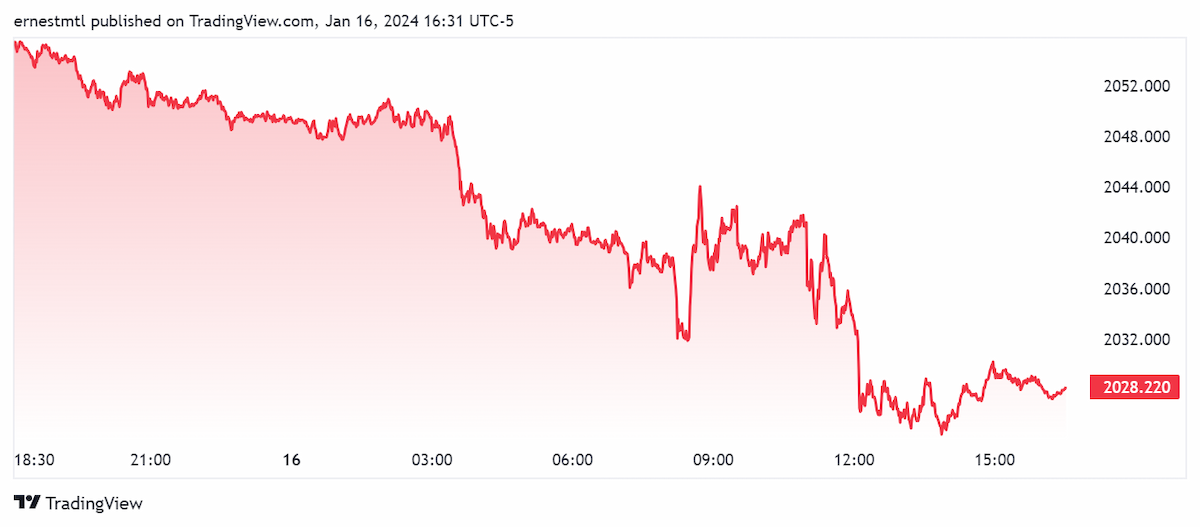
Spot gold set its high at the start of Tuesday’s trading session, and the yellow metal has declined steadily since, last trading at $2,028.22 per ounce for a 1.3% decline on the day at the time of writing.
Turning to silver, Heraeus kept their focus on China, noting that some areas of the country are beginning to max out the available roof space for photovoltaic installations.
“China’s record year of solar installations in 2023 is reportedly causing issues for some parts of the country’s electricity grid,” they said. “It is possible that more than 150 regions in the country have no space for additional distributed photovoltaics (source: Photovoltaic Energy Circle). Recently, China has emphasised localised rooftop solar installations over large-scale farms. However, with a shift back to large solar farms, China can continue the growth of its solar fleet which contributed greatly to silver demand last year.”
Heraeus noted that silver demand from the global solar industry was estimated at a record 190 million ounces in 2023. “The rapid fall in solar cell prices helped to propel installations higher last year, and this is likely to continue in 2024, though a drop in rooftop installations could be a limiting factor,” they cautioned. “Silver is the largest single cost component of fabricating solar cells, so if the silver price rallies this year, the cost of panels could also rise.”
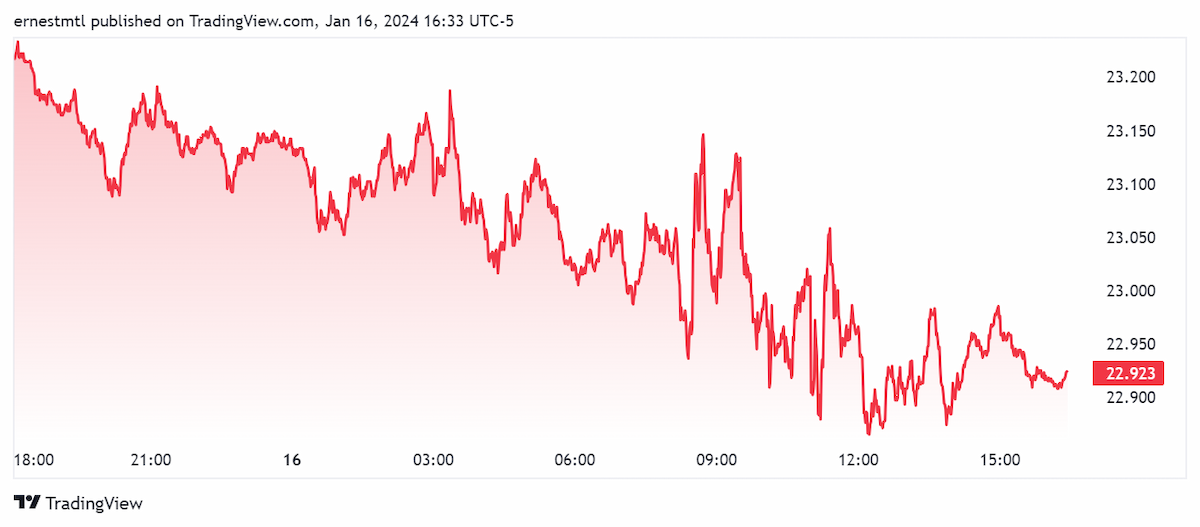
Spot silver also opened the session at a daily high of $23.223 per ounce, but it declined steadily throughout the day, and last traded at $22.923, down 1.29% at the time of writing.