
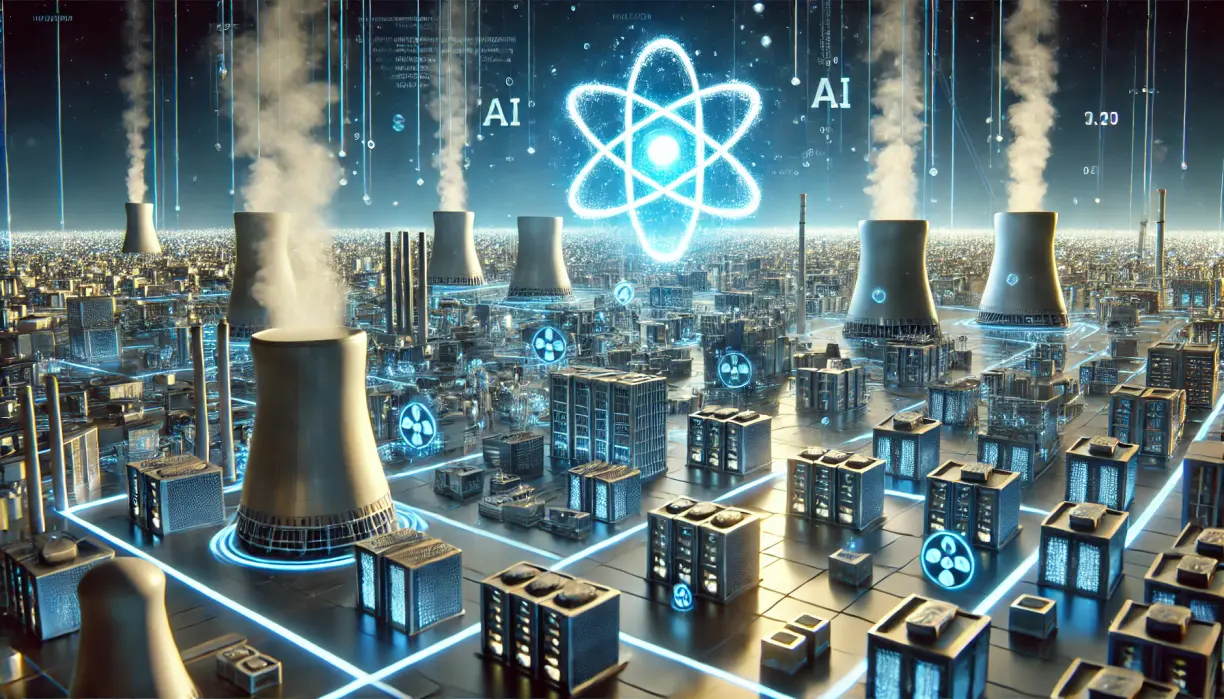
(Kitco News) – Nuclear power has seen a resurgence in interest as the limitations of wind and solar energy have stalled the green energy movement. This leaves nuclear as the best option to power an increasingly tech-powered world, which has led to skyrocketing energy demand, and could bode well for uranium, the metal that powers the industry.
The focus of the recent uptick in interest is on small modular reactors (SMRs) as a viable solution for on-site power generation.
Google recently announced a partnership with Kairo Power to build seven SMRs across the U.S., with the first expected to be operational by 2030 and all completed by 2035. The reactors are anticipated to produce 500 megawatts of clean energy to support Google’s AI needs.
According to CNBC, Amazon is also getting in on the action, with its Amazon Web Services (AWS) cloud-computing subsidiary planning to invest more than $500 million in building SMRs in three projects from Virginia to Washington State. AWS has partnered with Dominion Energy on the venture.
And it’s not just the U.S. that is seeing an uptick in nuclear power investments, as a report from the World Nuclear Association notes that China plans to connect 12 new reactors, including one SMR, to their electrical grid over the next 26 months, adding 11.51 GW in capacity.
To explore what the increased focus on nuclear power could mean for uranium and whether it could have an effect on the Bitcoin (BTC) mining industry, Kitco Crypto reached out to experts in the field to get their insights.
Lars Nyman, Chief Marketing Officer at CUDO Compute, which powers a multitude of AI initiatives by offering flexible and sustainable computing resources, said these developments are “a harbinger of things to come.”
“As the demand for data continues to surge, the sector is trying to escape the choking reliance on fossil fuels,” he said.
“While traditional and sustainable energy sources groan under mounting demand, nuclear power seems to be emerging from its existential malaise – made relevant again by technology's insatiable appetite for power,” Nyman noted. “Quite the irony, isn't it – it's almost poetic to see nuclear energy, once sidelined and even mothballed, becoming the darling of modern tech infrastructure.”
“The impacts on uranium demand are clear, even though the magnitude and timings are a bit less so,” he added. “Over this decade, though, I'd expect potential upticks as the markets realize the true energy appetite of the AI sector.”
“Let's not crown uranium king just yet, though,” he warned. “The miners of Bitcoin and other cryptocurrencies, often painted as the renegades of energy consumption, remain pivotal in this narrative. As nuclear becomes more mainstream, it promises potential reductions in Bitcoin's environmental infamy, or at least introducing a different flavor to it.”
Robert Roth, CEO of Quote For Solar Group, also sees the rising demand for nuclear power benefittin uranium long-term.
“The increasing adoption of nuclear power and small modular reactors represents a notable trend in the energy sector, driven by the need for reliable and scalable energy solutions,” he told Kitco Crypto. “This shift is likely to impact the demand for uranium, the primary fuel for nuclear reactors, potentially influencing its future prices as global supply adjusts to meet heightened demand.”
“The integration of nuclear power in various industries, including potential applications in sectors like crypto mining, could offer a cleaner energy alternative,” he added. “Given the significant energy consumption associated with crypto mining, nuclear power presents an opportunity to mitigate environmental impacts compared to traditional fossil fuel-based energy sources.”
“In essence, the growing interest in nuclear energy underscores a broader move towards sustainable energy solutions, with implications for both energy markets and industries seeking to reduce their carbon footprint,” Roth said. “As nuclear technologies evolve, they may play a crucial role in meeting global energy demands while addressing environmental challenges.”
Adam Koprucki, founder of RealWorldInvestor.com, suggested it's too early to tell if the trend will be a boom or bust for uranium as SMR technology is new and untested, and the nuclear power industry has a mixed performance history.
“I think these are isolated uses of nuclear power, especially given these deals are structured by the largest tech companies (Google and Amazon) to buy directly from these nuclear plants,” he said. “We (The United States) tried its hand at nuclear power, but it was simply too expensive to gain widespread use – especially with the proliferation of other kinds of cheaper and safer alternative energy such as solar power.”
“While Bitcoin and crypto have a high energy footprint, the aforementioned uses are deals struck by these tech companies to buy directly from the nuclear plants,” Koprucki noted. “Perhaps we may see some smaller tech or crypto/mining companies buy some of Amazon/Google's unused nuclear energy as a way to provide a de-risking of their large investments.”
And according to political strategist James Pinkerton, the tech-inspired energy demand will likely be a boon for all energy industries as rising demand is unlikely to slow, while at the same time, the world will be forced to play catch-up on improving energy generation infrastructure.
“Energy demand is growing much faster than the experts, or ‘experts,’ predicted,” he said. “This has led to a surge of interest in nuclear power, and yet the energy hunger will inevitably spill over to more traditional fuels, such as oil and gas—and perhaps even coal.”
“Concerns about climate are real enough, but they are less salient than they were a few years ago,” he added. “Moreover, the same AI that is driving up energy demand will likely facilitate the invention and dissemination of better techniques for carbon capture and carbon conversion—the fruition of a circular carbon economy.”
“AI and energy can trod the upward path together, and investors will make trillions,” Pinkerton said. “The trend is, for sure, your friend.”
