
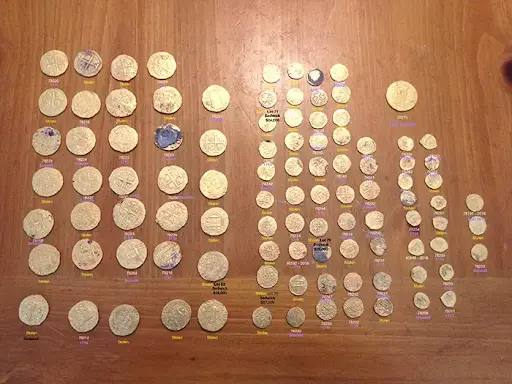
(Kitco News) – Authorities at the Florida Fish and Wildlife Conservation Commission (FWC) have recovered 37 stolen gold coins that were taken nearly a decade ago during the salvage operation of the 1715 Fleet shipwrecks.
The recovered treasure is believed to be worth more than $1 million.
At the same time, the FWC has charged one person, Eric Schmitt, with the theft and illegal trafficking of these priceless historical artifacts.
The investigation began in 2015 when members of the Schmitt family, working as contracted salvage operators for 1715 Fleet - Queens Jewels, LLC, uncovered a treasure trove of 101 gold coins from the wrecks off Florida’s Treasure Coast.
According to the report, 51 gold coins were properly reported and adjudicated; however, 50 were stolen.
Authorities caught a break in their investigation earlier this year when Schmitt began selling the gold coins.
“Five stolen coins were reclaimed from a Florida-based auctioneer, who unknowingly purchased them from Eric Schmitt. Advanced digital forensics identified metadata and geolocation data linking Eric Schmitt to a photograph of the stolen coins taken at the Schmitt family condominium in Fort Pierce. It was also discovered that Eric Schmitt took three of the stolen gold coins and placed them on the ocean floor in 2016 to be found by the new investors of 1715 Fleet - Queens Jewels, LLC,” the FWC said in the press release.
The press release added that the bullion will be returned to its rightful custodians.
The 1715 Fleet represents a collection of Spanish treasure ships that sank during a hurricane off Florida's coast in 1715. The artifacts recovered from these wrecks provide a window into history and are protected by state and federal law.
According to historians, the bullion coins were minted in Lima, Peru, between 1697 and 1712. The fleet consisted of 11 ships carrying gold and jewelry worth roughly $400 million in today’s money.
“This case underscores the importance of safeguarding Florida’s rich cultural heritage and holding accountable those who seek to profit from its exploitation,” said FWC Investigator Camille Soverel.
