

(Kitco News) – Stronger gold demand from China and persistent concerns about fiscal sustainability will offset unfavorable movements in gold's traditional drivers in 2025, pushing the yellow metal back near record-high prices, according to Capital Economics.
“After surging to a record high of ~$2,800 at the end of October, the gold price has since sunk by ~6%,” noted Joe Maher, assistant economist at Capital Economics, in their latest commodities update. “This partly reflects the post-election rally in the dollar and, perhaps, a ceasefire between Israel and Hezbollah. Gold's post-election slide is perhaps surprising given it was billed as part of the ‘Trump trade’ in the run up to election; instead it has faltered following Trump's win while most other Trump Trades have prospered.”
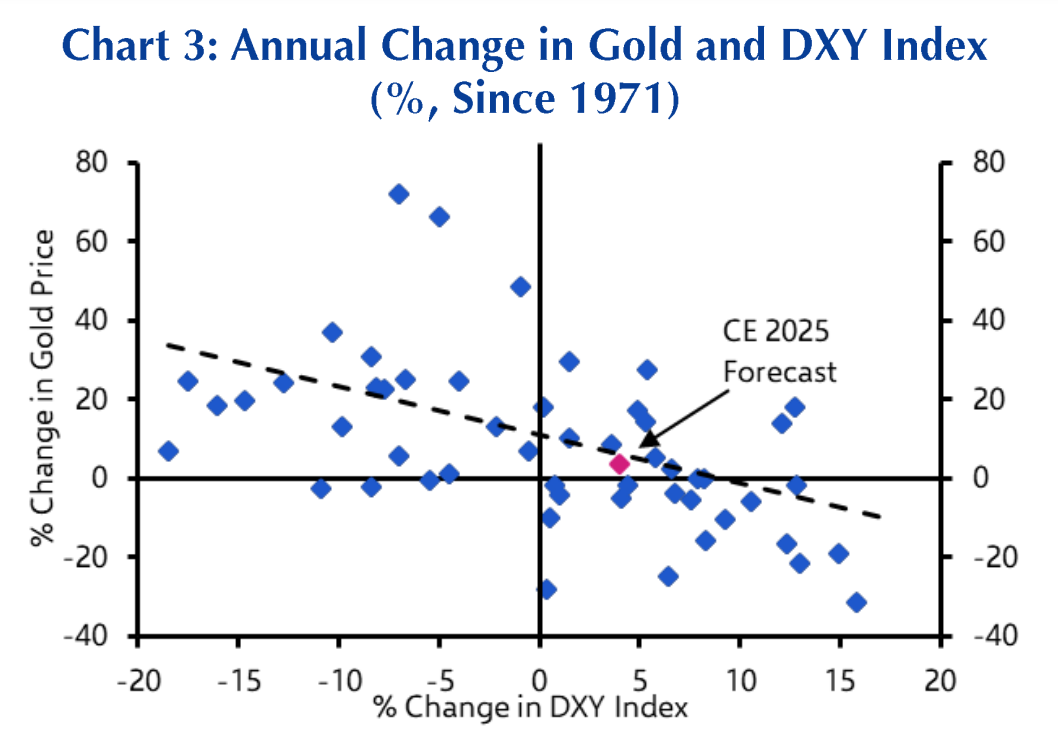
Maher said that when Capital Economics raised their 2025 forecast for the dollar and Treasury yields in the wake of Trump's victory, it would be reasonable to expect that they would lower their forecasts for gold prices. “We now expect the DXY index to rally by ~4% and real yields to rise a bit from their current level in 2025,” he said. “By itself, this points to the gold price coming under pressure next year, given the typical negative relationship between the dollar, real yields and gold prices.”
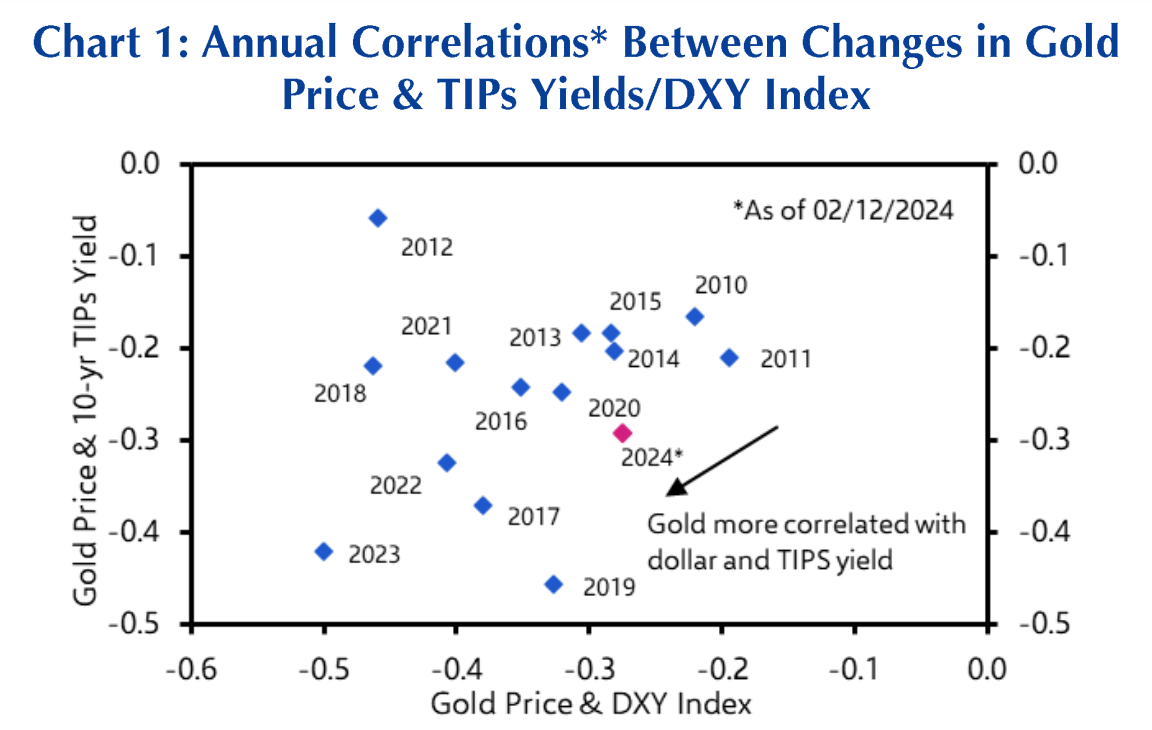
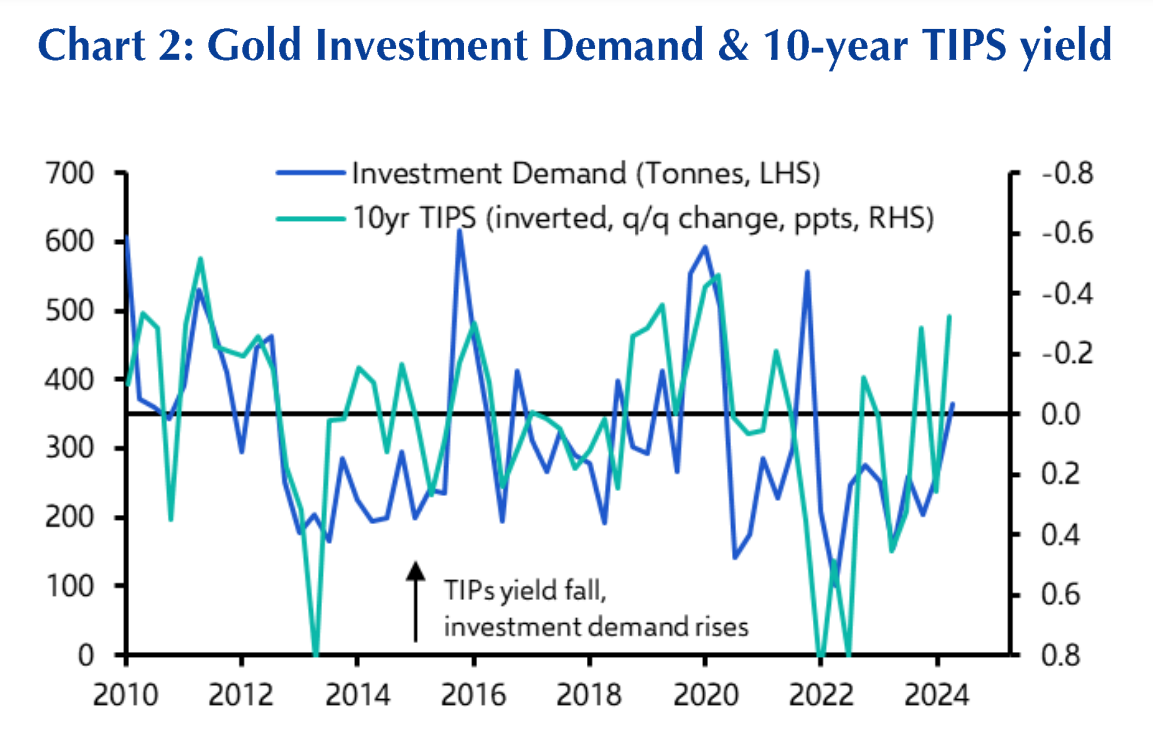
He pointed out that higher real interest rates “are typically a headwind for investment demand for gold (~20% of overall demand in Q3) as they increase the opportunity cost of holding gold, a non-interest-bearing asset.”
But Maher said that a stronger dollar and higher yields do not necessarily mean that gold prices will fall. “Indeed, there have been plenty of years when an appreciation in the dollar has occurred alongside a rise in the gold price,” he said.
“At the same time, we suspect that some of gold's ‘non-traditional’ drivers are likely to support the gold price further in 2025,” Maher said. “China's gold demand was widely credited as a key driver of the gold price upsurge early in the year, but it soon weakened.”
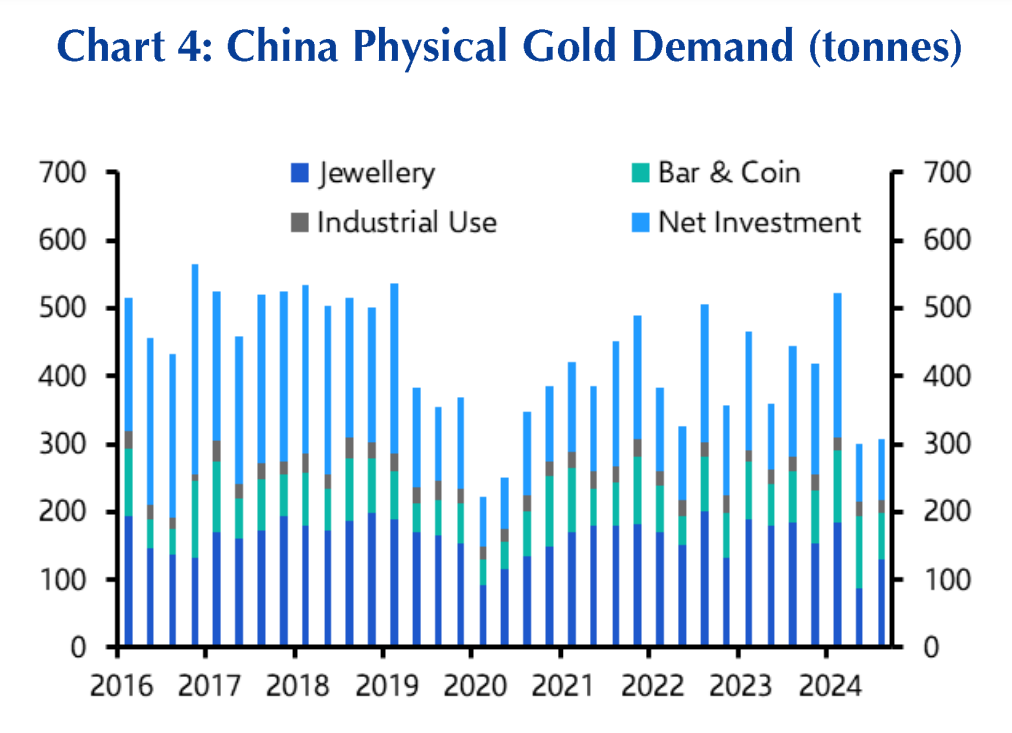
Capital Economics believes that markets could see a significant turnaround in mainland demand next year. “This reflects our view that a structurally slowing economy, poor returns from Chinese equities and ongoing problems in the property sector in 2025 is likely to increase the relative attractiveness of gold as an investment among Chinese investors,” he said.
Maher also expects central banks will continue adding gold to their reserves next year. “The seizure of 300bn in Russian central bank reserves in 2022 following the invasion of Ukraine highlighted the willingness of the US and its allies to use their economic power to punish their enemies,” he wrote. “But some central banks have been making provisions for this for some time – after all the US first sanctioned Russia's financial sector in 2014. Indeed, Russia and China (as well as other BRICS members) have greatly increased their gold holdings over the past 15 years.”
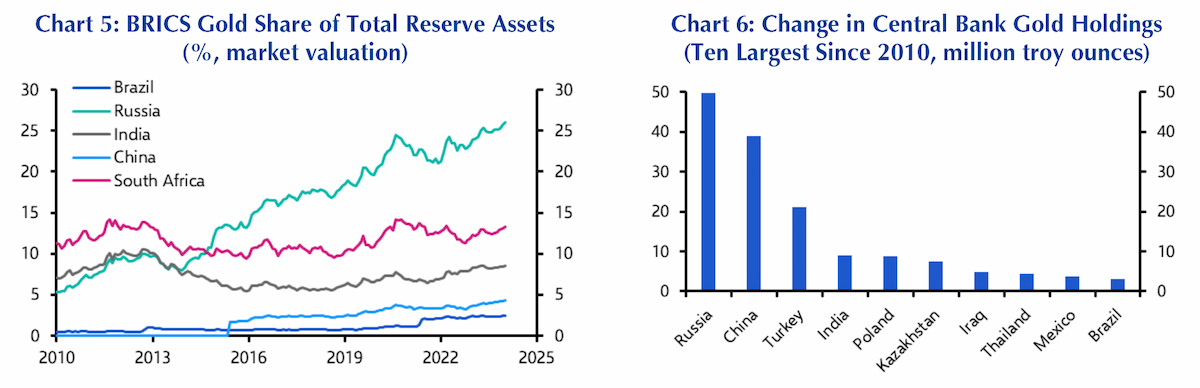
Maher said that the data clearly show “plenty of scope for countries in the China-aligned block, who may worry the most about seizure by the West, to continue to diversify their reserve assets with gold.”
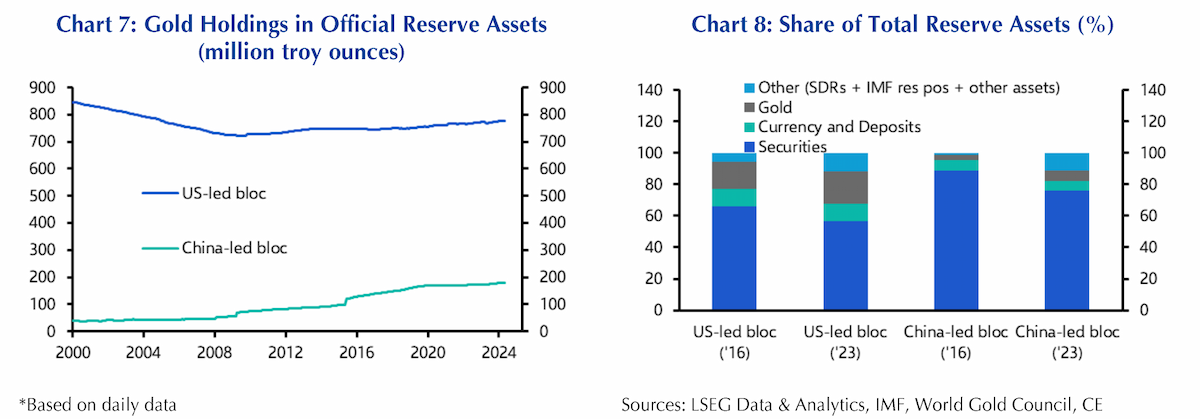
He cautioned, however, that these changes will likely happen slowly, and the pace of sovereign buying may not stay at recent elevated levels. “Indeed, the World Gold Council noted in a recent report that some central banks had been holding off on gold purchases given gold's elevated price,” Maher wrote. “What's more, in the near term, [emerging market] central banks may be more focused on growing their foreign exchange reserves to prevent further slides in their currencies against the dollar.”
Lastly, Maher pointed to deepening concerns about fiscal sustainability as another strong support for the gold price. “Waning confidence in fiat currencies on the back of global growth in public debt has been chalked up as a possible driver behind the recent rise in gold prices to record highs,” he said. “Indeed, there is little indication that the US, or many other countries for that matter, are consolidating their public finances. As debts continue to mount, concerns will only grow which will benefit gold given its role as an inflation hedge.”
“On balance, we think that the gold price will rise in 2025, albeit only slightly, from ~$2,650 to ~$2,750 per ounce by end-2025 as a revival in Chinese gold demand, central bank purchases and fiscal concerns outweigh unfavorable movements in gold's underlying drivers,” he concluded.
