

(Kitco News) – While gold prices enjoyed a strong and steady climb in 2024, physical gold demand, as reflected in ETF flows, was much more uneven, as investors sought to get ahead of big price moves during some periods, and took advantage of record-high prices to liquidate holdings at other times.
Among the major regions, data from the World Gold Council (WGC) showed ETF demand from Asian investors was the most steady, with the overwhelming majority of weekly flows reports showing net gains in the region as China's faltering currency and collapsing property market combined to drive strong safe-haven appeal for the yellow metal. By contrast, European and North American ETF demand reflected a more arbitrary and opportunistic attitude as OECD investors were happy to jump on and off the gold price roller coaster depending on how interest rates, equities, and precious metals prices were performing on a week-to-week basis.
From January through early March, when gold prices were consolidating with a slight downward bias, European and North American funds were dedicated sellers of the yellow metal, with only Asia showing steady regional demand. But when gold began its sharp rise in March, North American ETFs jumped in with both feet, while European funds took the opportunity to liquidate positions and book profits.
Late March through mid-April saw dedicated and dramatic buying from Asian ETFs, while European funds continued to be net sellers, and North America largely sat on the sidelines. As gold prices reached their second peak above $2,400 per ounce in mid-May, North American and European buyers jumped back on the bandwagon, while Asian flows in either direction all but evaporated in the record-high price environment, with the region’s investors unwilling to part with their gold investments on the one hand, but also loath to add to their positions at record high prices.
Summer and Fall marked the steadiest streak of positive flows for global ETFs as a whole, as apart for a few standout weeks, even North American and European funds added significantly to their positions, while Asian demand returned to the ETF space after gold proved it could make further gains above $2,400 per ounce.
September marked a turning point in the gold ETF market, as prices broke definitively above $2,500 per ounce, which drove significant speculative interest from North American funds back into the yellow metal, while Asians once again stood pat or added smaller amounts to their positions. When gold prices ultimately stabilized above $2,600 in early October, Asian demand surged once again, with three straight weeks of massive inflows to finish the month.
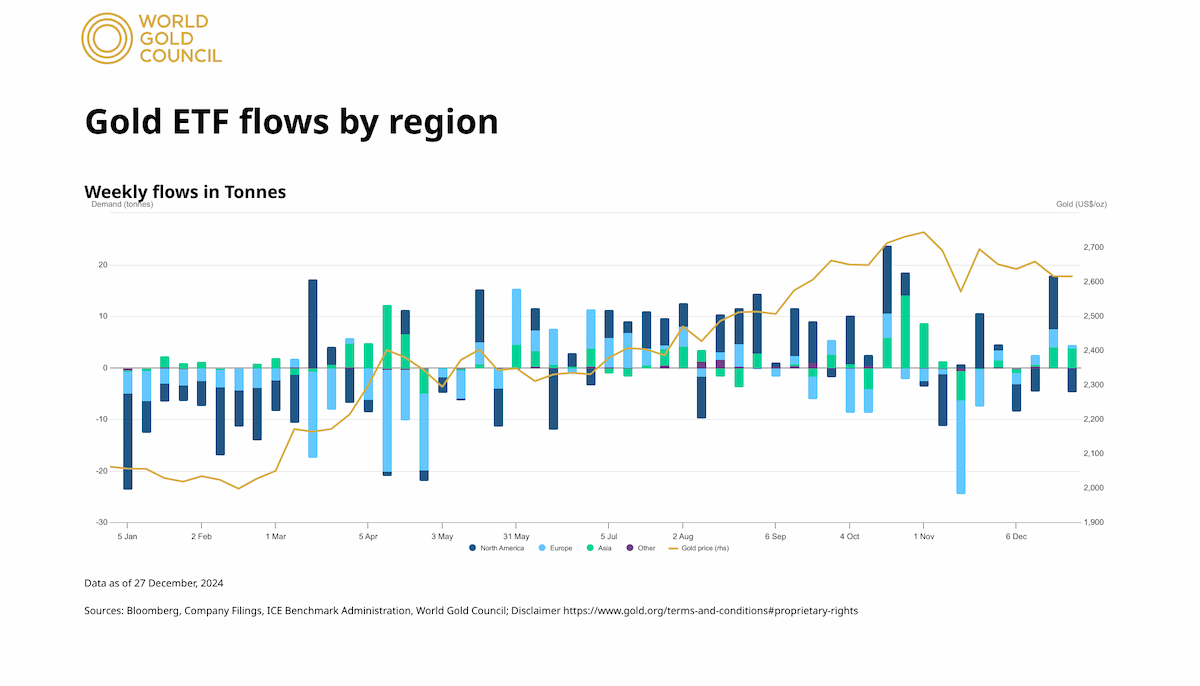
The week of the U.S. election saw a return to the early-year pattern, as a sharp drop in gold prices drove North American and some European speculative interest from the market, while investors in Asian funds were still willing to buy at lower prices. But when gold prices dropped below $2,600 per ounce in mid-November, European and Asian investors drove the single largest outflow event of 2024, liquidating nearly 25 tons of the yellow metal in a single week.
As gold prices broke back above $2,600 per ounce, North American investors returned to their opportunistic investment strategy, driving significant inflows when prices rose, and liquidating positions as prices consolidated or fell, while the last two weeks of the year saw strong demand from Asian ETFs once again.
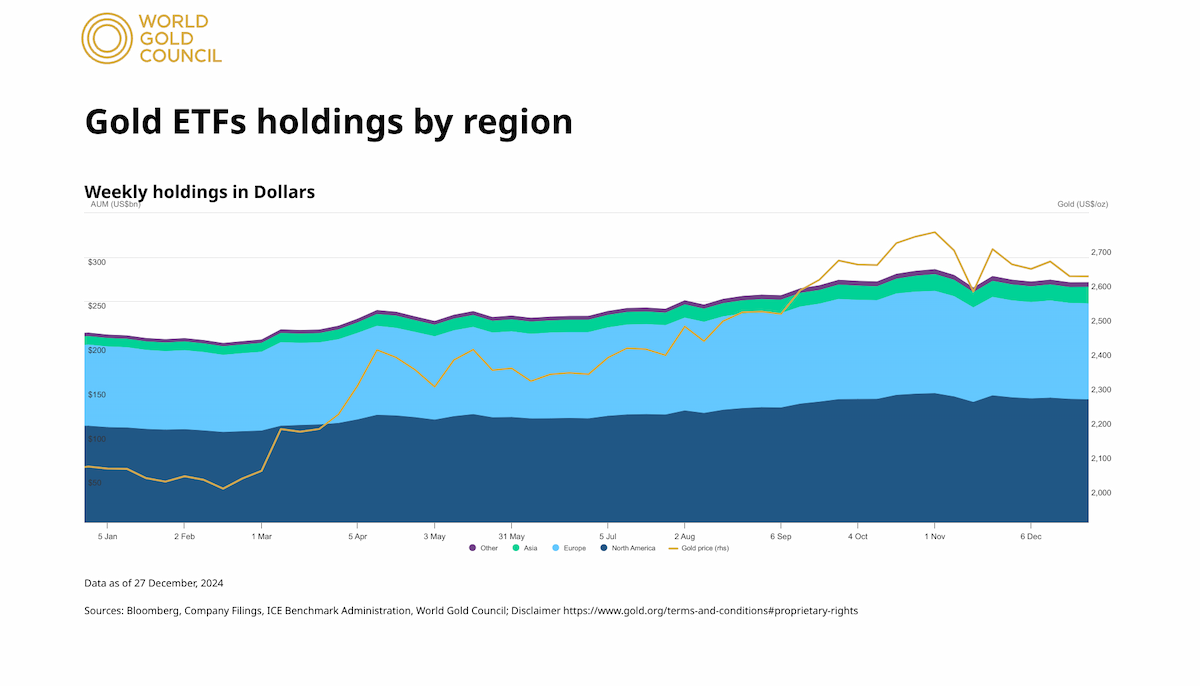
In terms of gold ETF holdings by region, while the story for much of 2024 focused on Asian demand, and the total percentage of Asian holdings - in both physical and dollar terms - did increase dramatically, the aggregate data shows that in absolute terms, the global gold ETF market is still dominated by North American and European funds.
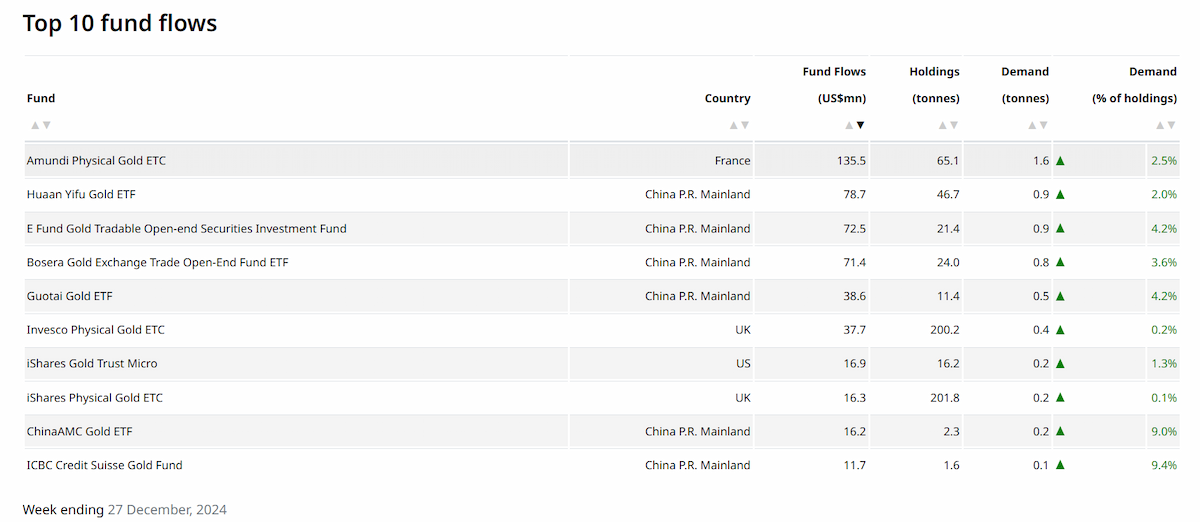
Turning to the performance of individual funds, while it was no surprise that 6 of the top 10 ETFs - and 4 of the top 5 - were based in mainland China, the number-one fund in terms of inflows was French, with two UK and one U.S. ETF rounding out the list. Chinese funds also dominated the top 10 in percentage terms, with several adding over 4% to their holdings, and two - China AMC Gold ETF and ICBC Credit Suisse Gold Fund - adding over 9% in 2024.
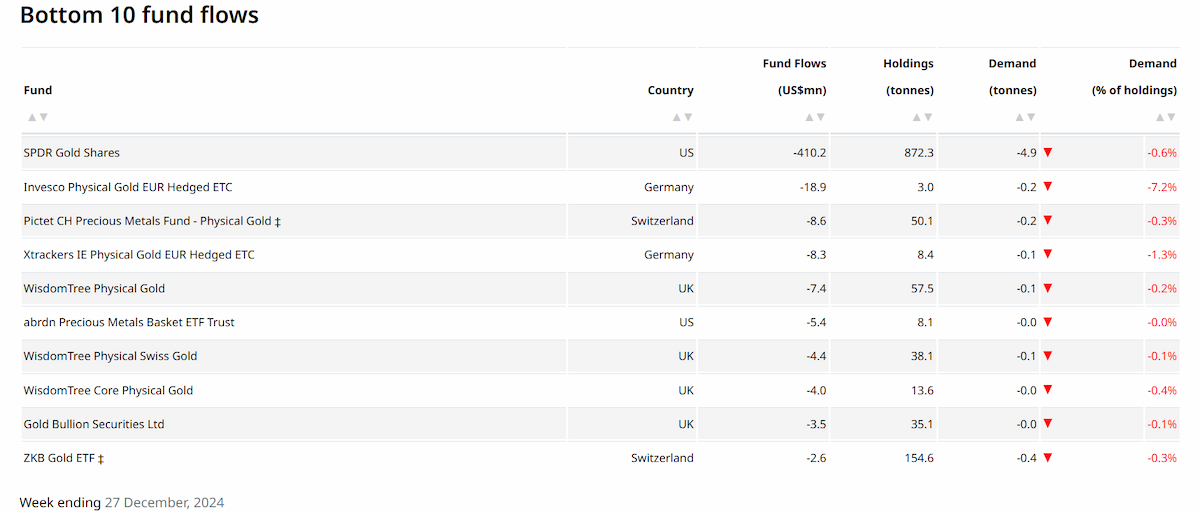
Conversely, European and North American funds completely dominated the list of top ETFs by outflows, with SPDR Gold Shares representing the overwhelming majority of outflows in dollar and tonnage terms, while Germany's Invesco Physical Gold EUR Hedged ETC saw by far the largest percentage drawdown on the year.
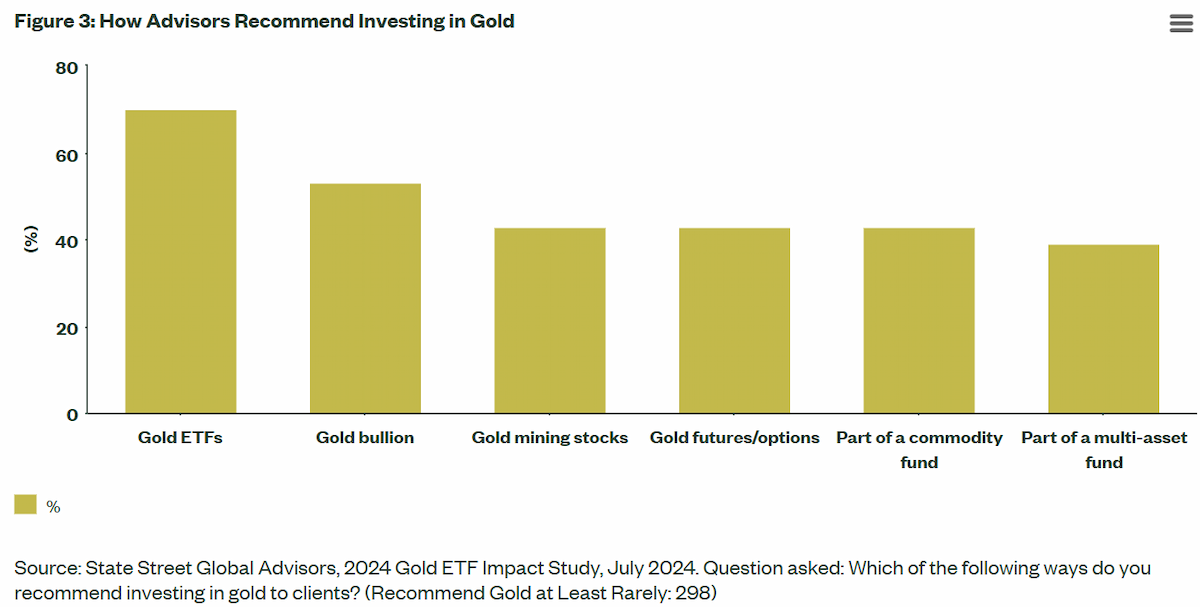
Gold ETFs also enjoyed a privileged position among investment advisors in 2024, according to the 2024 Gold ETF Impact Study from State Street Global Advisors.
“When recommending a gold investment to clients, advisors surveyed predominantly suggest gold ETFs (70%), followed by gold bullion (53%),” they wrote.
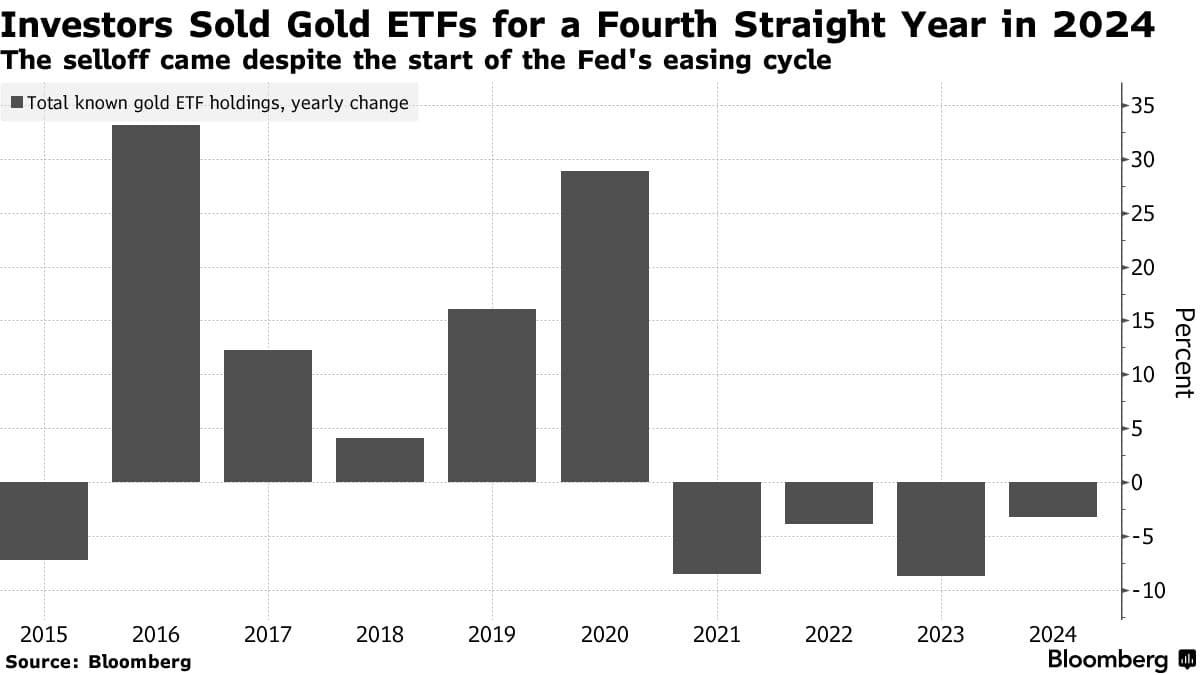
But on balance, despite the much-anticipated start of the Federal Reserve’s easing cycle and record-high prices, global gold ETFs still finished 2024 with net outflows for the fourth straight year.
“While optimism of Fed interest rate cuts in 2024 helped gold ETFs rebound a bit, the US election results in November ended that newfound momentum,” Bloomberg noted in a Jan. 2 report. “A stronger dollar following Donald Trump’s election win saw a renewed selloff of those exchange-traded funds, with bullion prices declining from an all-time high as investors redirected money elsewhere, including equities and Bitcoin.”
The report added that “geopolitical risks from conflicts in Ukraine and the Middle East saw central banks in emerging markets, Asian investors and consumers flock to physical bullion as a portfolio diversifier and hedge,” which also served to reduce demand for gold ETFs.
