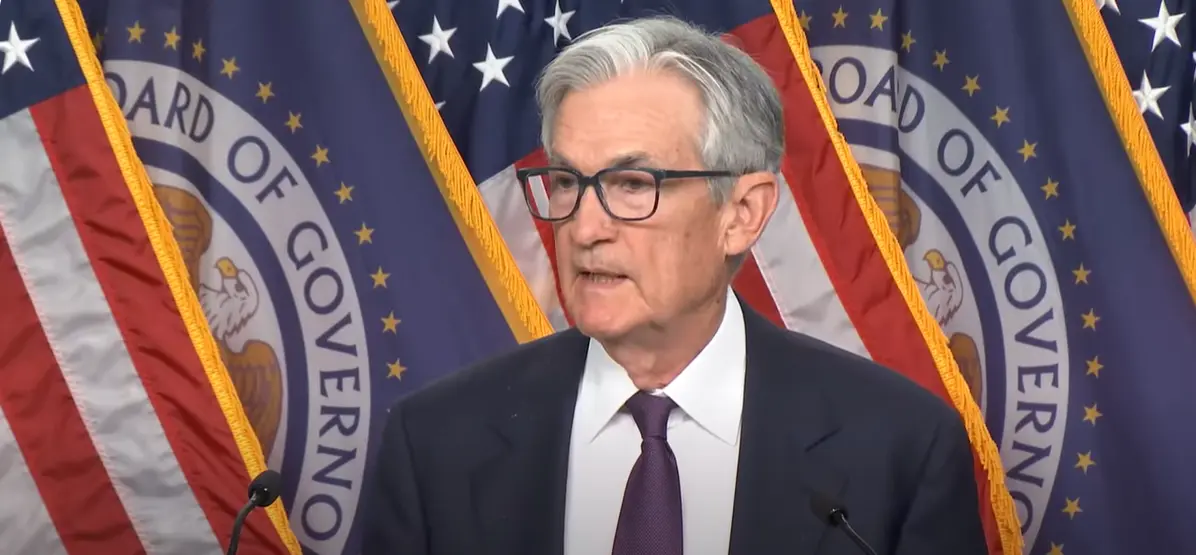
(Kitco News) – After the Federal Reserve once again decided to keep interest rates unchanged, FOMC Chair Jerome Powell struck a measured tone in his post-meeting press conference on Wednesday afternoon, emphasizing again and again that the central bank would stick to its wait-and-see approach.
Asked if the FOMC was any closer to deciding which side of the mandate might need “urgent care” first, Powell suggested that the data would tell them.
“We have judged that the risks to higher employment and higher inflation have both risen […] compared to March,” he said. “I don't think we can say which way this will shake out. I think there's a great deal of uncertainty about where tariff policies are going to settle out, and also when they do settle out, what will be the implications for the economy, for growth, and for employment. I think it's too early to know that.”
Powell characterized U.S. growth as particularly difficult to assess, referring to “the distortions in Q1 GDP” from massive imports ahead of the tariffs.
“The economy is growing at a solid pace, the labor market appears to be solid, inflation is running a bit above 2%,” he said. “It's an economy that's been resilient and in good shape, and our policy is modestly or moderately restrictive. It's 100 basis points less restrictive than it was last fall. We think that leaves us in a good place to wait and see.”
More than once, Powell insisted that there was no real downside to waiting for the fiscal picture to become clearer before applying any monetary policy tools to the economy.
“We are in a good position to wait and see,” he said. “We don't have to be in a hurry. The economy has been resilient. It is doing fairly well. Our policy is well-positioned. The costs of waiting to see further are fairly low, we think.”
Asked whether he still sees a path to a soft landing for the U.S. economy, the Fed chair pointed to the uncertainty surrounding trade tariffs as the probable deciding factor.
“What looks likely, given the scope and scale of the tariffs […] if the tariffs are ultimately put in place at those levels, which we don't know, then we won't see further progress toward our goals. At least for the next, let's say, year, we would not be making progress toward those goals.
“The thing is, we don't know that,” he added. “There's so much uncertainty about the scale, scope, timing, and persistence of the tariffs.”
Powell was also challenged on the likelihood of the Fed being in a position to deliver any rate cuts in 2025.
“It's going to depend,” he said. “There are cases in which it would be appropriate for us to cut rates this year. There are cases in which it wouldn't. And we just don't know. Until we know more about how this is going to settle out and what the economic implications are for employment and for inflation, I couldn't confidently say that I know what the appropriate path will be.”
But the Fed chair was emphatic about what wouldn’t be impacting monetary policy decisions: President Trump’s recurring demands for lower interest rates.
“Doesn't affect doing our job at all,” Powell said. “We are always going to consider only the economic data, the outlook, the balance of risks, and that's it. That's all we are going to consider.”
Powell also cautioned that the consumer and business sentiment indicators – which have worsened dramatically since the April 2 tariff announcement – don’t always translate into the hard data on which the FOMC bases its decisions.
“If that continues, if nothing happens to alleviate those concerns, then you would expect that to begin to show up in economic data,” he said. “But it hasn't happened yet, and there are things that can happen that will change that narrative. In the meantime, yes, we are watching it extremely carefully like everybody is, but don't see really much evidence of it in actual economic data yet.”
The final question focused on why the Fed chair has yet to meet with President Trump, and whether he would ask for a meeting. Powell insisted that the ball is always in the President’s court.
“I have never asked for a meeting with any President, and I never will,” he said. “There's never a reason for me to ask for a meeting. I don't think it's up to a Fed chair to seek a meeting with the President. Although maybe some have done so, I have never done so, and I can't imagine myself doing that. I think it always comes the other way, a President wants to meet with you, but that hasn't happened.”
