
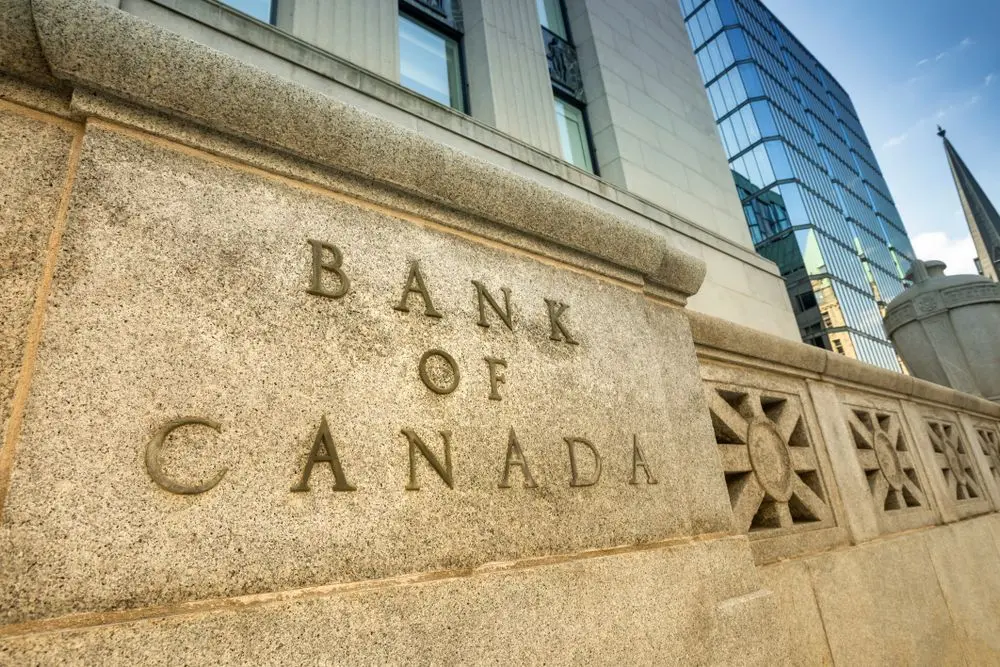
(Kitco News) – Spot gold held steady just below C$4,600 per ounce after the Bank of Canada held interest rates while warning about the growing impacts of trade tariffs from the United States.
In a widely anticipated move, Canada’s central bank maintained its overnight bank rate at 2.75%. At the same time, the BoC signaled that trade uncertainty with the U.S. is beginning to impact the economy.
“Since the April Monetary Policy Report, the US administration has continued to increase and decrease various tariffs,” the central bank said in its statement. “China and the United States have stepped back from extremely high tariffs and bilateral trade negotiations have begun with a number of countries. However, the outcomes of these negotiations are highly uncertain, tariff rates are well above their levels at the beginning of 2025, and new trade actions are still being threatened. Uncertainty remains high.”
The BoC said that while the global economy has shown resilience in recent months, “this partly reflects a temporary surge in activity to get ahead of tariffs. In the United States, domestic demand remained relatively strong but higher imports pulled down first-quarter GDP. US inflation has ticked down but remains above 2%, with the price effects of tariffs still to come.”
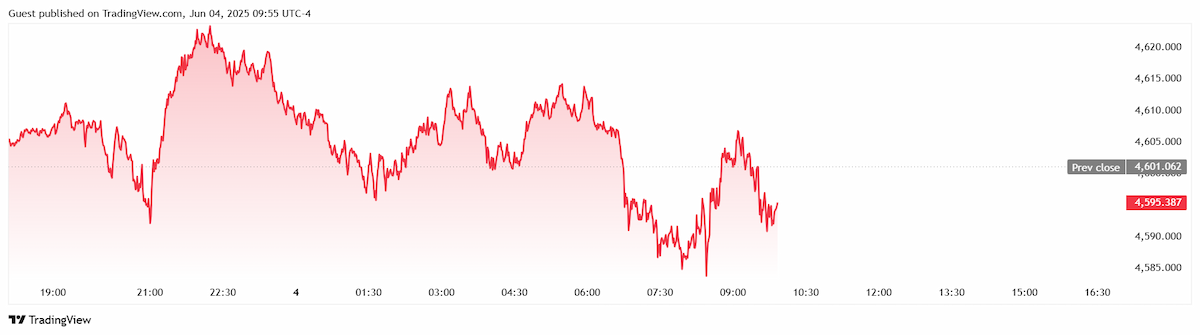
Spot gold held relatively steady against the Canadian dollar in the minutes after the rate announcement, last trading at C$4,595.21 per ounce for a loss of 0.13% on the day.
The BoC said that in the midst of tariff uncertainty, “the Canadian economy softer but not sharply weaker, and some unexpected firmness in recent inflation data, Governing Council decided to hold the policy rate as we gain more information on US trade policy and its impacts.”
“We will continue to assess the timing and strength of both the downward pressures on inflation from a weaker economy and the upward pressures on inflation from higher costs,” they said. “Governing Council is proceeding carefully, with particular attention to the risks and uncertainties facing the Canadian economy. These include: the extent to which higher US tariffs reduce demand for Canadian exports; how much this spills over into business investment, employment and household spending; how much and how quickly cost increases are passed on to consumer prices; and how inflation expectations evolve.”
“We are focused on ensuring that Canadians continue to have confidence in price stability through this period of global upheaval,” the statement concluded. “We will support economic growth while ensuring inflation remains well controlled.”
