
(Kitco News) - The gold market is trading higher ahead of the weekend after the latest data showed consumer sentiment in the U.S. improving more than expected, while inflation expectations pulled back from their elevated levels.
The University of Michigan announced on Friday that the preliminary reading of its Consumer Sentiment survey for June was 60.5, well above May’s final reading of 52.2. The data was better than expectations, as the consensus forecast of economists called for improvement to a 53.5 reading.
“Consumer sentiment improved for the first time in six months, climbing 16% from last month but remaining about 20% below December 2024, when sentiment had exhibited a post-election bump,” said Surveys of Consumers Director Joanne Hsu. “These trends were unanimous across the distributions of age, income, wealth, political party, and geographic region.”
The gold market is trading near the upper edge of its daily range following the 10 am EDT data release, with spot gold last trading at $3,435.07 per ounce for a gain of 1.43% on the day.
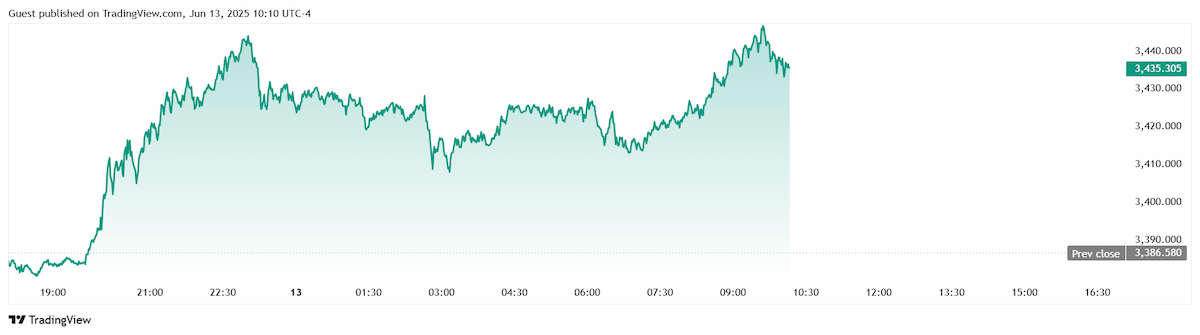
All five components of the index improved in June, with a particularly sharp rise for short and long-run expected business conditions, consistent with a perceived easing of pressures from tariffs.
“Consumers appear to have settled somewhat from the shock of the extremely high tariffs announced in April and the policy volatility seen in the weeks that followed,” Hsu wrote. “However, consumers still perceive wide-ranging downside risks to the economy. Their views of business conditions, personal finances, buying conditions for big ticket items, labor markets, and stock markets all remain well below six months ago in December 2024. Despite this month’s notable improvement, consumers remain guarded and concerned about the trajectory of the economy.
Inflation fears also came down compared to last month. “Year-ahead inflation expectations plunged from 6.6% last month to 5.1% this month,” the report noted. “Long-run inflation expectations fell for the second straight month, stepping down from 4.2% in May to 4.1% in June. Both readings are the lowest in three months.”
“Consumers’ fears about the potential impact of tariffs on future inflation have softened somewhat in June,” Hsu concluded. “Still, inflation expectations remain above readings seen throughout the second half of 2024, reflecting widespread beliefs that trade policy may still contribute to an increase in inflation in the year ahead.”
