
(Kitco News) – After strong first-half performances from gold, silver, and platinum, many investors are wondering if the metals have topped out. But many of the factors that drove precious metals to these lofty price levels remain intact, and additional drivers look likely to kick in during H2, according to Ole Hansen, Head of Commodity Strategy at Saxo Bank.
“After a phenomenal first half, the investment metals sector has entered a period of consolidation,” Hansen wrote. “Gold has traded sideways for the past twelve weeks, creating space for silver and platinum to play catch-up. Yet with year-to-date gains of roughly 26% for gold and silver—and a remarkable 54% for platinum—the natural question from investors is: Is that it?”
“We believe the answer is no.”
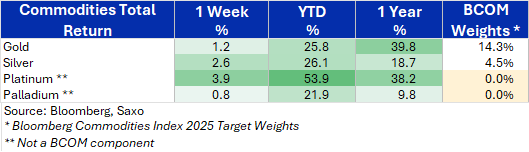
Hansen said the key drivers that propelled metals higher in recent years remain in place, while additional tailwinds could emerge in the second half of 2025. “Most notably, the prospect of lower U.S. interest rates could reignite demand, especially for metal-backed ETFs by reducing the opportunity cost of holding non-yielding assets like precious metals, compared to short-dated government bonds,” he said.
To understand the enduring appeal of gold, as well as silver and platinum, Hansen said investors must understand what sets them apart from other assets. “Precious metals are politically neutral, unlike sovereign bonds or fiat currencies,” he said. “They are universally recognised as a store of value, not tied to the creditworthiness of any nation, which is why central banks are increasingly allocating to gold as a core reserve asset.”
The weakness of the U.S. dollar has been another key driver for precious metals price gains, though they are most dramatic in USD terms. “Investors in Switzerland and the eurozone, for example, have seen gold returns closer to 11%, while those in China and India—both dominant physical consumers—have experienced returns more in line with U.S. dollar-based investors,” he added.
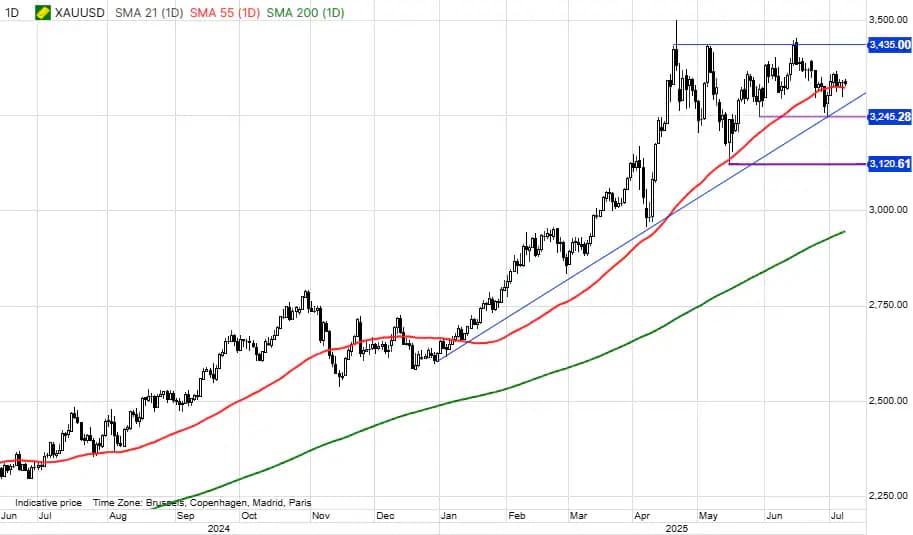
Hansen shared a chart that showed gold trending sideways in a “relatively tight horizontal range” just below the $3,500 record high from April. “A lack of fresh bullish catalysts has raised the risk of a deeper correction, especially after recent signs of buyer fatigue,” he said. “Gold notably failed to rally alongside silver and platinum or attract a safe-haven bid during the brief Israel-Iran conflict. At the same time, surprisingly strong U.S. economic data has postponed rate cut expectations without triggering a significant gold selloff—another sign of underlying resilience.”
“Looking into H2, we remain constructive on gold and its peers,” Hansen said, with key sources of support including persistent central bank demand, U.S. stagflation risks, “Ongoing geopolitical tensions, sanctions, and trade frictions,” growing U.S. fiscal concerns, “Portfolio rebalancing by sovereign wealth funds and institutional investors away from U.S. equities and Treasuries toward tangible assets like metals,” and extended U.S. dollar weakness.
“Technically, gold remains in consolidation mode, with immediate support at $3,245 and secondary support at $3,120,” he said. “A break below the 200-day moving average—currently at $2,945—would challenge our bullish outlook. However, gold has remained above that level since October 2023, when it traded below $2,000. Until then, we view this consolidation as a pause—not the end—of the
Turning to silver, Hansen noted that the recent breakout above $35 per ounce has investors believing that the gray metal may have further to fly. “The move is underpinned by a structural supply deficit dating back to 2019, with annual demand consistently outpacing supply—eroding above-ground stockpiles and tightening the market,” he said. “The break above USD 35 - now key support that needs to hold - also helped silver recover ground lost to gold during the market volatility following Trump’s April ‘Liberation Day’ tariff announcement.”
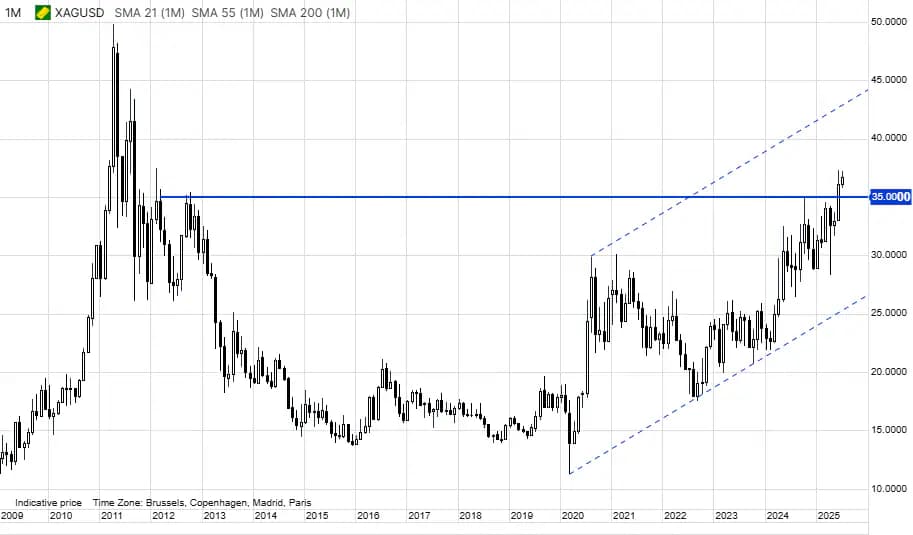
“In relative terms, central bank gold buying since 2022 has left silver trailing leaving the gold-silver ratio elevated, trading near 90, well above its five-year average around 80,” he added. “Should silver continue to close this gap, a move toward USD 40 over the next 6–12 months is not out of reach—particularly if mine supply struggles to keep pace with both industrial and investment demand.”
And platinum has recently emerged as the top-performing major commodity in 2025, posting year-to-date gains of 54%. “The rally was sparked by a technical breakout above USD 1,025, surpassing a long-term descending trendline stretching back to the 2008 peak near USD 2,300,” Hansen noted. “Once priced on par with gold, platinum has long been considered undervalued. The gold–platinum ratio, which hit a record high of 3.6-to-1 in April, has since narrowed to around 2.4-to-1, reflecting renewed investor interest.”
He added that beyond the technical picture, fundamental factors have also become more supportive. “The World Platinum Investment Council projects a third consecutive annual deficit, with demand expected to exceed supply by nearly one million troy ounces in 2025,” he said. “As with silver, this imbalance is drawing down above-ground inventories. Key demand drivers include a recovery in automotive demand—particularly in hybrid and diesel vehicles—as well as a notable uptick in Chinese jewellery and bar investment, encouraged by platinum’s relative price stability and discount to gold.”
Hansen noted that investor appetite for platinum-backed ETFs has not risen along with prices, with total holdings recently falling to a nine-month low. This suggests that “while some are locking in profits, a broader speculative wave may still lie ahead should fundamentals tighten further,” he said. “Having gained almost 40% in a matter of weeks since breaking the 17-year downtrend, platinum has for now found strong resistance around USD 1,427, the 50% retracement of the 2008 to 2020 drop.”
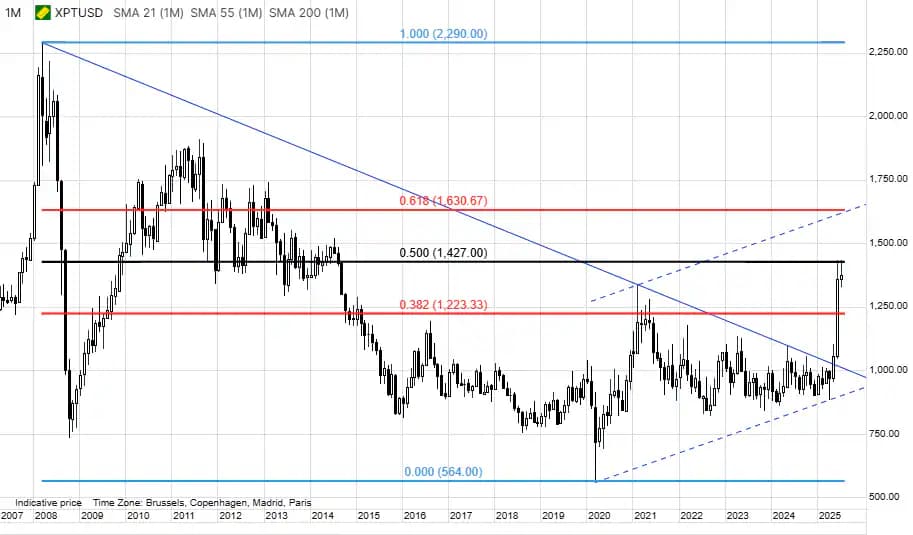
“So far, support at USD 1,340, the 2021 high has prevented a deeper correction, which at this point could extend all the way to USD 1,230 without damaging the overall bullish setup,” Hansen concluded. “Meanwhile, a resumption of the rally through the recent highs may, from a technical perspective, bring the USD 1,630 level into focus.”
