

(Kitco News) - Manufacturing activity in the New York region rose further into expansionary territory this month, according to the latest figures published by the New York Federal Reserve.
The regional central bank announced on Friday that its Empire State manufacturing survey improved to 11.9in August, after posting a 5.5 print in July. The data was much better than expectations, as consensus forecasts called for a decline to 0.0.
“Manufacturing activity in New York State picked up for a second consecutive month, according to the August survey,” the report said. “New orders and shipments increased. Delivery times lengthened significantly, and supply availability worsened somewhat. Inventories declined after growing last month.”
“Employment edged slightly higher, while the average workweek held steady,” they noted. “The pace of input price increases remained elevated but was little changed from last month, while the pace of selling price increases was slightly lower. Capital spending plans were soft. Firms expect conditions to improve in the months ahead, though optimism diminished compared to last month.”
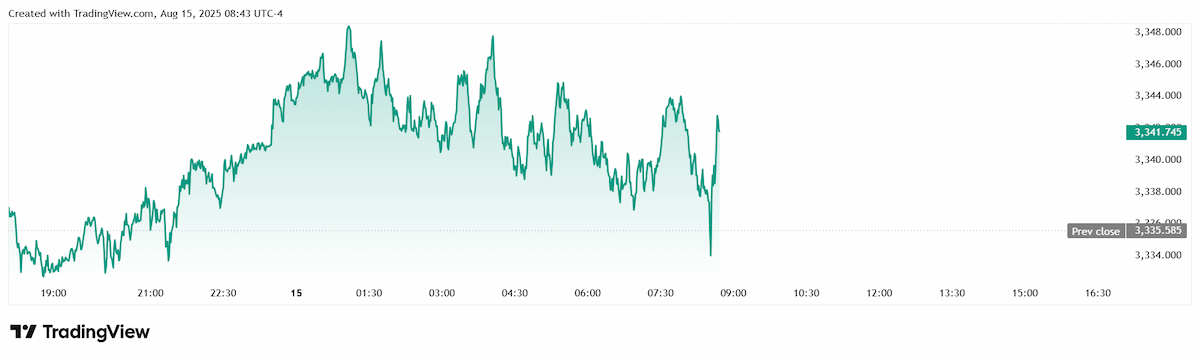
Gold prices dipped to session lows in the moments after the 8:30 am EST release, which came out at the same time as July retail sales, but quickly recovered. Spot gold last traded at $3,341.30 per ounce for a gain of 0.17% on the session.
The components of the report showed conditions improving on balance across the region’s manufacturing sector, but key areas of weakness persisted.
“The new orders index rose thirteen points to 15.4, and the shipments index held steady at 12.2, pointing to increases in both orders and shipments,” the report said. “Unfilled orders edged lower. After rising sharply last month, the inventories index retreated twenty-two points to -6.4, indicating that business inventories shrank. Delivery times were significantly longer, and supply availability was somewhat worse.”
Employment also improved in the region. “The index for number of employees remained positive at 4.4, pointing to a slight increase in employment, and the average workweek index came in at around zero, suggesting that hours worked held steady,” they noted.
Input price increases remained elevated, however. “The prices paid index was little changed at 54.1, a sign that input price increases remained steep, while the prices received index edged down to 22.9, suggesting that selling price increases remained moderate,” the report said.
Looking ahead, the index for future general business conditions fell eight points to 16.0, which suggests that businesses expect activity to increase in the months ahead, but they are less optimistic than they were in July. “New orders and shipments are expected to increase,” they said. “Two-thirds of respondents expect input prices to pick up further over the next six months. Capital spending plans were soft.”
