
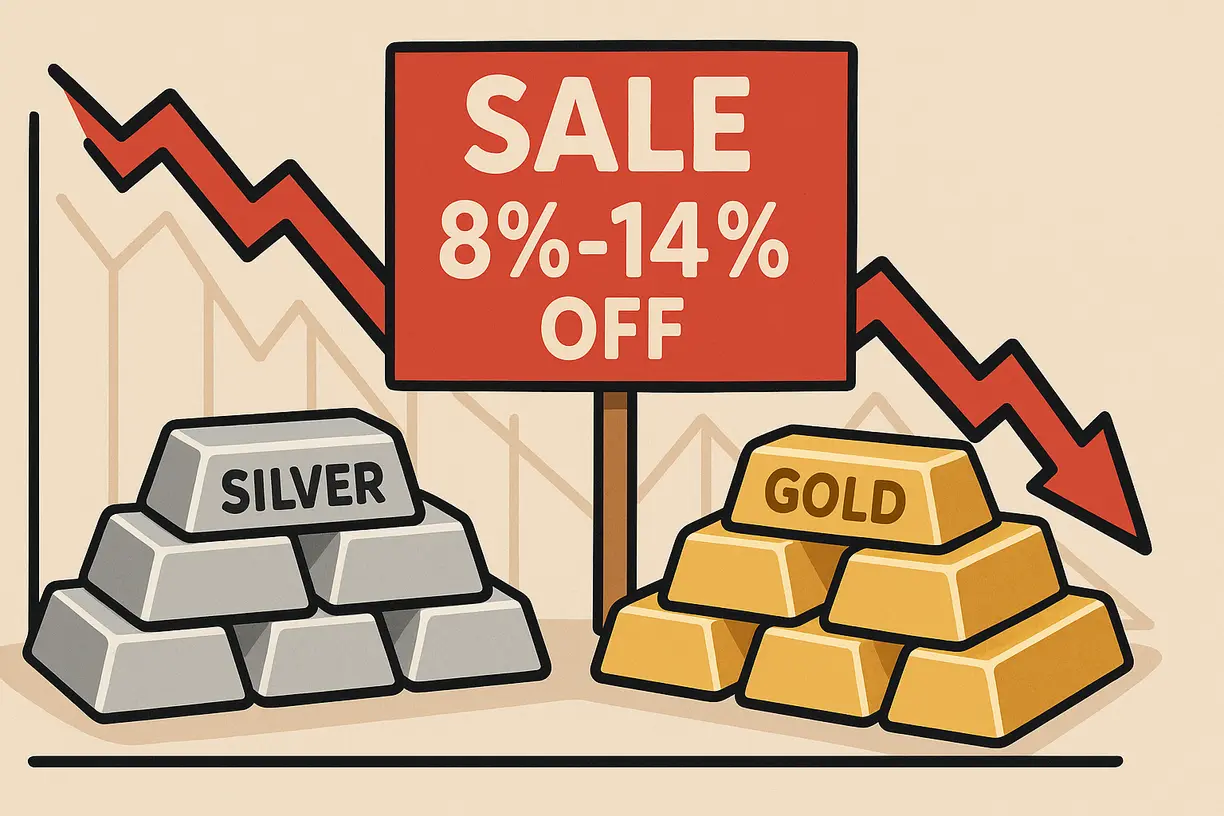
(Kitco News) – Gold and silver prices are seeing a long-overdue correction, with silver’s steeper drop highlighting the liquidity gap between the two metals, but both are still under-owned in portfolios, and the structural drivers behind the rally remain intact, according to Ole Hansen, Head of Commodity Strategy at Saxo Bank.
“The risk of correction in gold and silver has been steadily rising in recent days, though exceptionally strong pre-Diwali demand helped support prices,” Hansen said on Wednesday. “However, a very technical extended rally combined with renewed ‘risk-on’ tone across stock markets, a firmer dollar and not least the start of Diwali—which typically signals softer physical demand from Asia—have made traders increasingly cautious, more focused on protecting gains than chasing new highs.”
He said that while the precise trigger for Monday’s dramatic selloff was unclear, gold’s three failed attempts to break above $4,380 “probably helped change the mindset” from greed to fear among precious metals traders.
“What followed was a classic rush towards an exit too narrow to cope with the sudden burst of selling from technical focused leveraged traders and recent buyers finding themselves underwater,” Hansen said. “The latest price action once again underlined the importance of liquidity differences between gold and silver, with the latter seeing liquidity that is roughly nine times lower than gold’s. These disparities magnify both rallies and corrections: a surge in buying quickly runs into limited supply, and any shift toward profit-taking produces outsized percentage moves.”
He noted that both gold and silver bounced during the Asian session after briefly extending Tuesday’s selloff, the steepest the metals had seen in years.
“The forceful correction shows how one-sided the focus had become leading to a natural reset after a powerful nine-week rally that saw gold gain 31% and silver 45%,” Hansen said. “As mentioned, beyond the firmer dollar, the main catalyst was softer Indian demand in the aftermath of Diwali. Silver, meanwhile, rebounded from the USD 47.80 area of support, with gold buyers emerging just above USD 4000.”
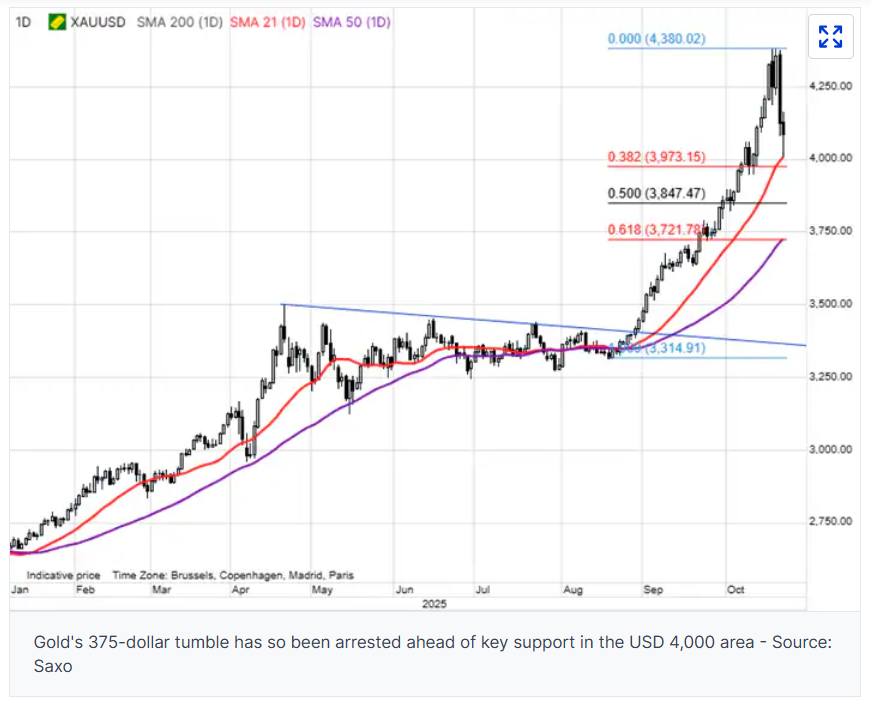
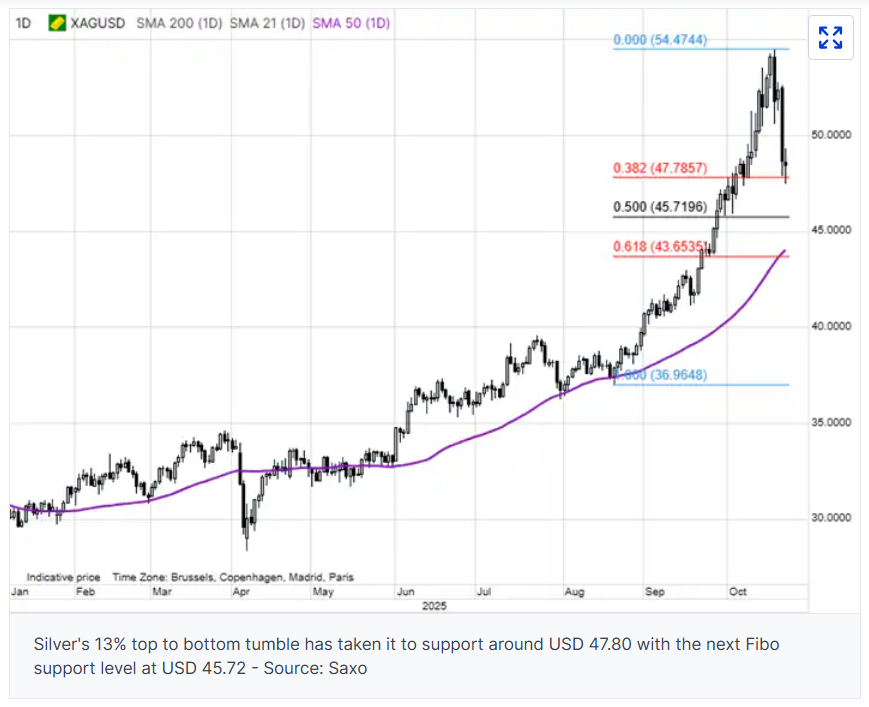
He added that both metals were due for a correction to prevent the formation of a bubble that would burst even more violently at a later date.
“In silver, market focus has now shifted to the pending U.S. Section 232 investigation into imports of critical minerals, including silver, platinum, and palladium—a decision that could reshape short-term supply chains and price dynamics across the Atlantic,” Hansen said. “A no-tariff outcome would ease London’s tightness by allowing more U.S.-held metal to flow to Europe, narrowing the recent London-over-COMEX premium that reached pandemic-era extremes and pushing one-month lease rates back toward normal.”
New tariffs, of course, would have the opposite effect. “Metal already in the United States would become semi-stranded, intensifying scarcity in London and driving COMEX premiums higher,” he said. “Under that scenario, silver could swiftly retest—and potentially exceed—recent highs, propelled by renewed squeeze dynamics rather than genuine demand growth.”
Hansen said Saxo Bank still maintains its bullish outlook for gold and silver into 2026.
“[F]ollowing a much-needed correction/consolidation, traders will likely pause for thought before concluding the developments that drove the historic rallies this year has not gone away, and will likely continue to offer support to metals that are no longer overbought but remains underowned in portfolios,” he predicted. “In the short-term, the Trump-Xi, and Trump-Putin meetings – if they are carried out - are key risk events that may help determine the duration of the current setback.”
