
(Kitco News) – While cyclical tailwinds pushed gold and silver to new all-time highs in 2025, this year’s outlook for precious metals will be determined by evolving asset correlations and physical fundamentals, according to analysts at CME Group.
In their new Precious Metals Outlook published on Thursday, CME Group analysts outlined the five key themes whose dynamics will drive the performance of precious metals in 2026.
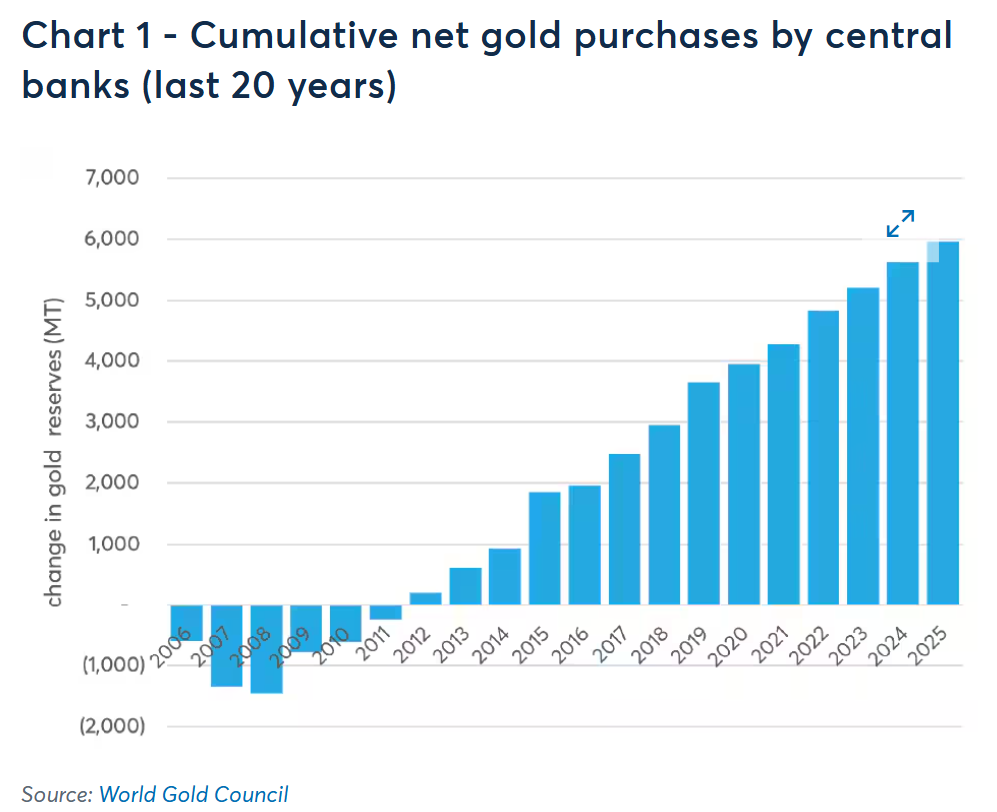
The first of these is continued central bank demand. “Official sector activity has transitioned from sporadic purchasing to a trend of consistent accumulation,” they wrote. “Following significant net purchases in 2024 and 2025, central bank demand is likely to continue being a relevant structural factor in the global gold market.”
The analysts pointed to “a broader strategy amongst monetary institutions to diversify foreign exchange reserves,” citing the 2025 survey of central bankers from the World Gold Council that showed the majority of respondents expected a higher share of gold reserves and lower U.S. dollar holdings in five years, with 95% expecting global central bank gold reserves to increase in the next 12 months.
“Because these purchases are often strategic and longer-term in nature, they contribute to a more diversified market structure,” they wrote. “The persistent presence of these institutional holders adds depth to the overall marketplace, distinct from the patterns often seen in short-term trading flows or price-elastic jewelry demand.”
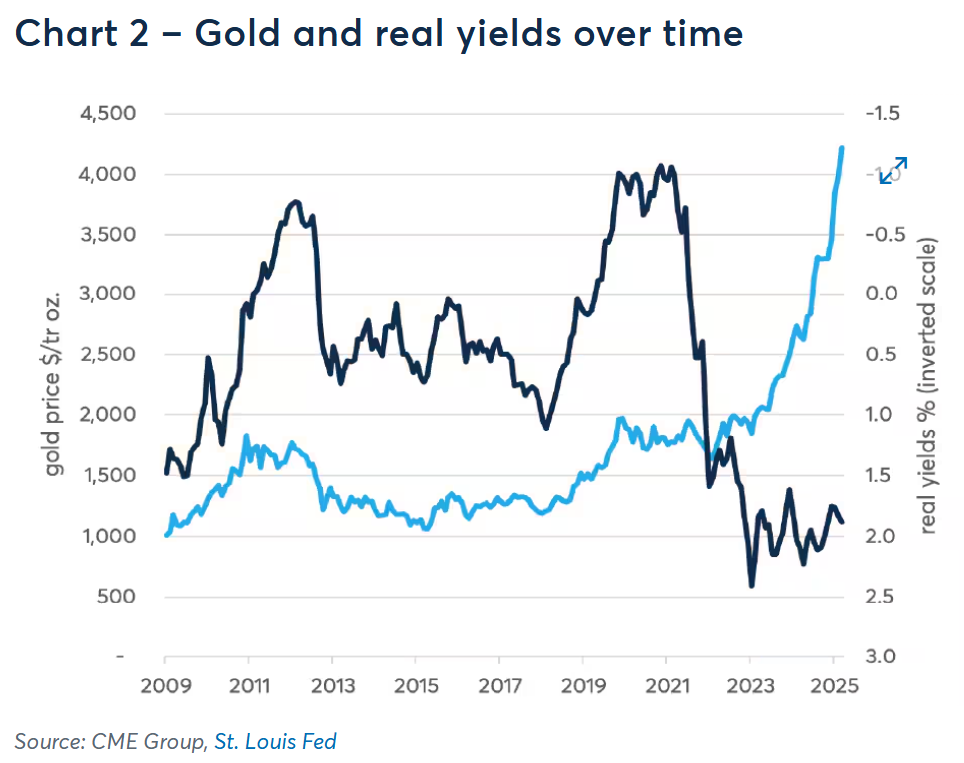
The CME's second key theme for 2026 is the breakdown in the longstanding correlation between gold and real yields.
“A notable feature of the 2025 market was gold’s record setting move during periods of elevated real yields,” the analysts said. “Historically, these two metrics have shared a strong inverse correlation, meaning that gold rallied when real yield weakened, and vice-versa. The recent divergence suggests that while the opportunity cost of holding a non-yielding asset like gold remains a factor, it is currently being outweighed by other variables, such as geopolitical hedging and sovereign diversification.”
“For 2026, this implies that traditional modeling relying heavily on yields may need to be viewed within a wider context,” they cautioned. “The relationship is not necessarily broken, but the sensitivity of gold to real rates may have diminished relative to other macro-drivers.”
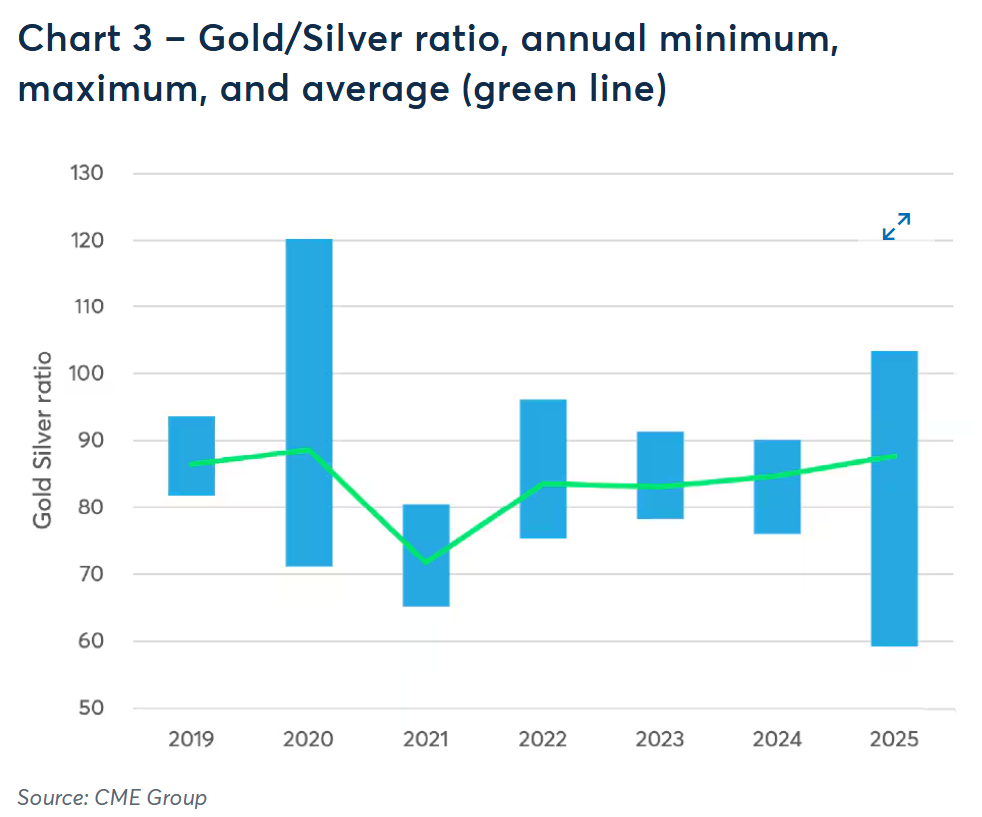
The heightened volatility of the gold:silver ratio is the third key factor for 2026.
“The Gold/Silver Ratio exhibited significant variance in 2025, trading in a widened range that saw it breach 100x for the first time since 2020 before compressing to trade at or below 60x for the first time in over a decade,” the analysts wrote. “This volatility was driven primarily by the fact that the two metals reached their respective peaks in a staggered, rather than coordinated, fashion.”
The CME Group noted that gold led the initial phase of the trend as it responded to central banks and monetary policy, while silver’s rally was delayed but ultimately delivered a higher-velocity move.
“This dynamic—where silver often trails gold’s initial breakout but moves with greater intensity—creates a natural expansion and contraction in the ratio,” they said. “Given silver’s dual role as both a monetary asset and a metal used in industry, market participants should continue to pay close attention to this ratio as these distinct drivers evolve.”
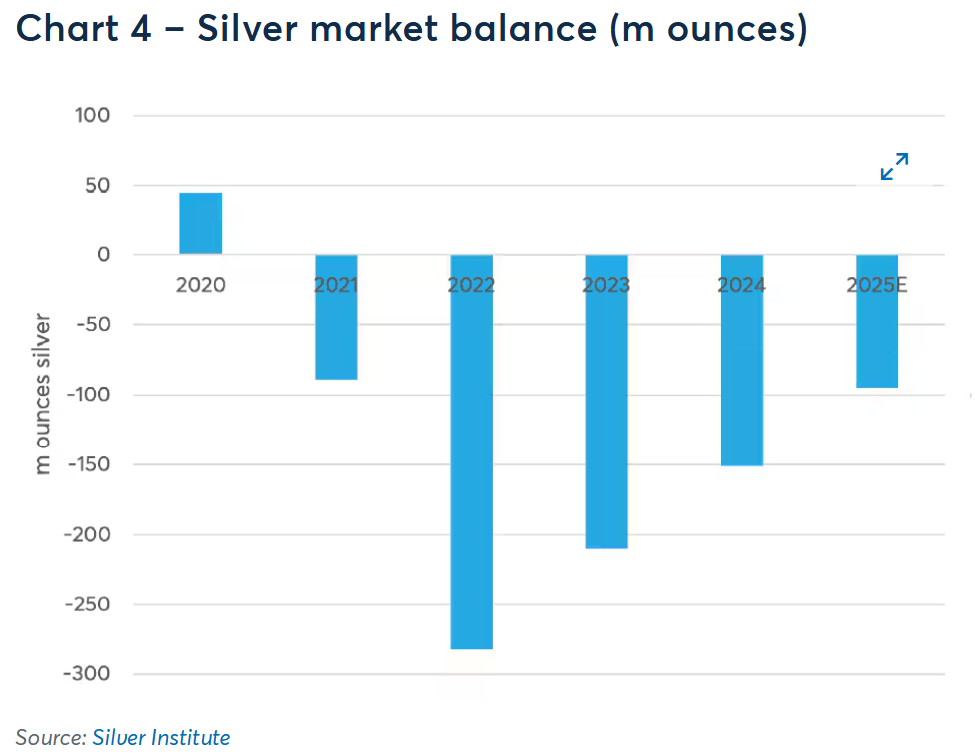
The fourth key theme this year is silver’s mounting supply deficits and stock drawdowns.
The CME Group pointed out that silver market analysis is increasingly focused on physical stocks. “The market is navigating a period where industrial consumption continues to outpace mine supply, resulting in a fifth consecutive year of market deficit,” the analysts wrote. “Supply elasticity remains low, as most of the silver is mined as a by-product, meaning production levels are often dictated by the economics of copper, lead, or zinc rather than silver market trends.”
Meanwhile, on the demand side, steady consumption from photovoltaics and the broader electrification sector have contributed to a drawdown in stockpiles. “This tightness in the physical market adds a fundamental variable to the landscape, making the metal potentially more reactive to supply chain disruptions than in balanced years,” they warned.
The evolving roles of platinum and palladium represent the final key factor in precious metals markets for 2026.
“Platinum Group Metals (PGMs) continue to trade on a distinct set of fundamentals compared to gold and silver,” the analysts said. “The PGM complex is heavily influenced by supply concentration risks in key producing regions and the evolving demand profile of the automotive sector. While substitution from palladium to platinum in auto-catalysts has altered the balance, the long-term outlook remains tied to industrial production rates.”
As a result, CME believes PGMs are behaving “less like monetary assets and more like industrial commodities with specific supply-side constraints.”
“They may offer a different value proposition relative to the rest of the precious metals complex, but this comes with exposure to the cyclical risks of the global auto industry rather than the macro-hedging properties of gold, and, to a lesser extent, silver,” they warned.
The CME Group said the market is currently focused on determining whether the new price highs set in 2025 will serve as a base for consolidation.
“The interplay between sustained central bank activity, physical deficits in silver, and the evolving relationship between gold and interest rates suggests a complex environment,” the analysts concluded. “For market participants, understanding these structural drivers will be essential for managing risk in the year(s) ahead.”
