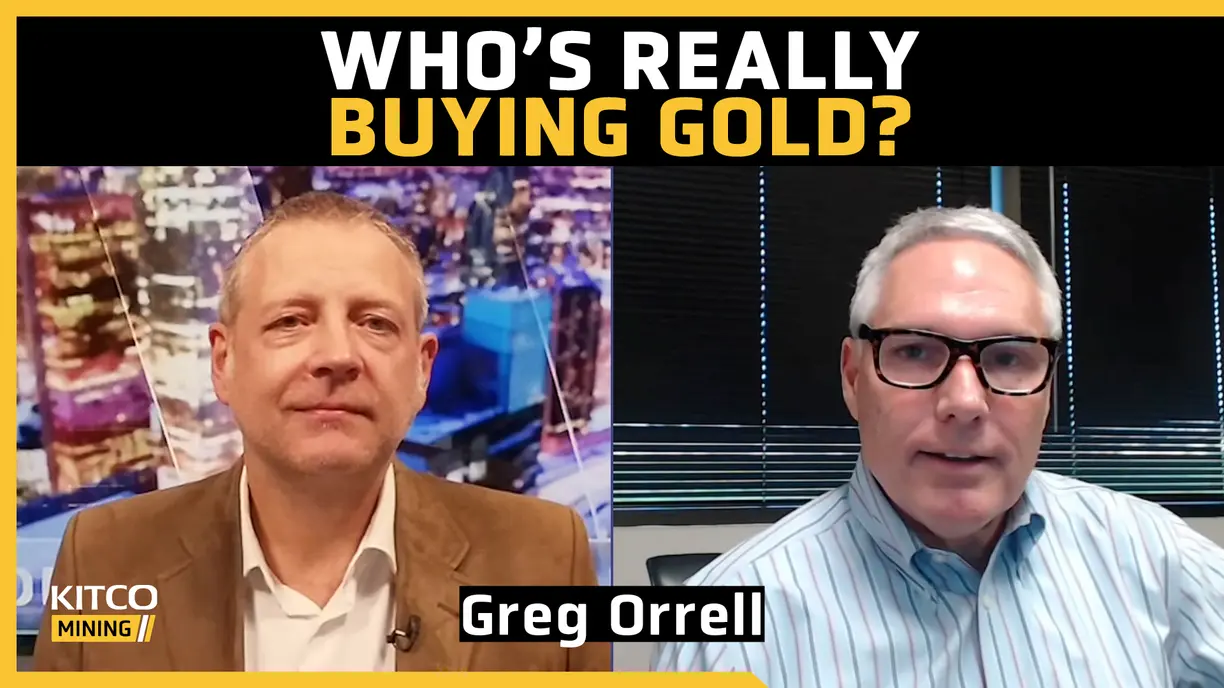
(Kitco News) Greg Orrell, portfolio manager at OCM Gold Fund, says the precious metals market entered 2026 under conditions he described as rarely seen in modern market history, following a year of persistent gains that reshaped investor expectations for gold, silver, and mining equities. Orrell said the move out of 2025 reflects a structural shift in demand and market behavior rather than a late-cycle surge driven by short-term speculation.
Speaking with Kitco Mining, Orrell said 2025 stood apart from previous gold cycles. “The gold price went up every single month in 2025,” he said, adding that this is “something that hasn't happened going back to gold trading in 1971.” Orrell believes the absence of even a single down month underscores how persistent demand has become and how difficult it has been for traditional market forces to contain prices.
Orrell attributed much of that shift to changing sources of demand. While he pointed to continued buying from China and Russia, he said the emergence of new participants has altered market dynamics. He highlighted stablecoin issuer Tether as a notable new buyer, saying it is “in there every single week on Mondays, they say buying two tons every Monday.” Orrell said this steady buying has made it harder to manage prices, and he believes bullion banks have reduced short exposure as producers became less willing to sell forward.
He said Western investors remain largely absent from the rally so far, noting that historically the strongest gold markets have coincided with a broader rollover in equities, something he said “really hasn't happened yet.” If Western capital begins reallocating toward precious metals, Orrell said demand could increase meaningfully.
Addressing the sharp pullback late in December, Orrell dismissed concerns that it signaled a broader reversal. “I think it was nothing more than a trading situation,” he said, adding that he does not view it as “a precursor for what's going forward in 2026.” He said pullbacks are a normal and healthy feature of bull markets, allowing positioning to reset before the next advance.
On silver, Orrell believes the metal has entered a new phase after years of being constrained. He described recent price action as “phenomenal,” including months with gains of roughly 20%, and said supply and demand dynamics are now asserting themselves. “You can only keep the price down so low and have the supply that you need, and I think that's where we've reached,” he said, arguing that higher prices are required to attract sufficient production. Orrell added that silver’s investor base could broaden significantly as prices rise.
Orrell framed his longer-term gold outlook around U.S. fiscal trends rather than geopolitics, noting that “since 1971, there's a 93% correlation to total federal debt outstanding in the gold price.” With U.S. debt now measured in the tens of trillions of dollars, Orrell said it is “really hard to see the equation where the U.S. does grapple and get its hands around the total federal debt outstanding,” leaving gold well supported as a monetary asset.
For producers, Orrell said the current price environment represents “certainly the best of times to be a gold producer,” with margins expanding as prices rise. However, he cautioned that investors should watch mine plans closely, warning against companies that extend mine life by lowering cutoff grades and chasing marginal ounces, a behavior he said created problems in prior cycles.
As free cash flow expands, Orrell said capital discipline will be critical, starting with repaying the capital invested to build mines and ensuring shareholders participate directly in cash flow before funding future growth. Without that alignment, he warned, “it makes it pretty much a fool's game to be an investor in the gold space.”
Orrell said his investment approach emphasizes consistency and per-share delivery over headline growth. “When's the best time to sell a miner is usually when the management starts to do things other than what they say,” he said. He added that investors should focus on reserves per share, earnings per share, and cash flow per share when evaluating management performance.
Looking ahead, Orrell said years of limited exploration financing have created the potential for renewed discovery as capital returns to the sector. He also expects consolidation to remain a feature of the cycle, highlighting Barrick’s Fourmile discovery as “probably the best deposit that's been discovered in the last 20 years.”
Despite the strong outlook, Orrell said risks remain, including the possibility of a sharp reversal, though he argues that the broader trajectory is shaped by structural forces that are difficult to reverse quickly. “At some point, we will have to have a new monetary system,” he said.
Watch the full interview on the Kitco Mining YouTube channel for Orrell’s complete views on gold’s rare 2025 performance, shifting sources of demand, silver’s evolving market, producer discipline, and how he is positioning portfolios as the precious metals cycle develops.