
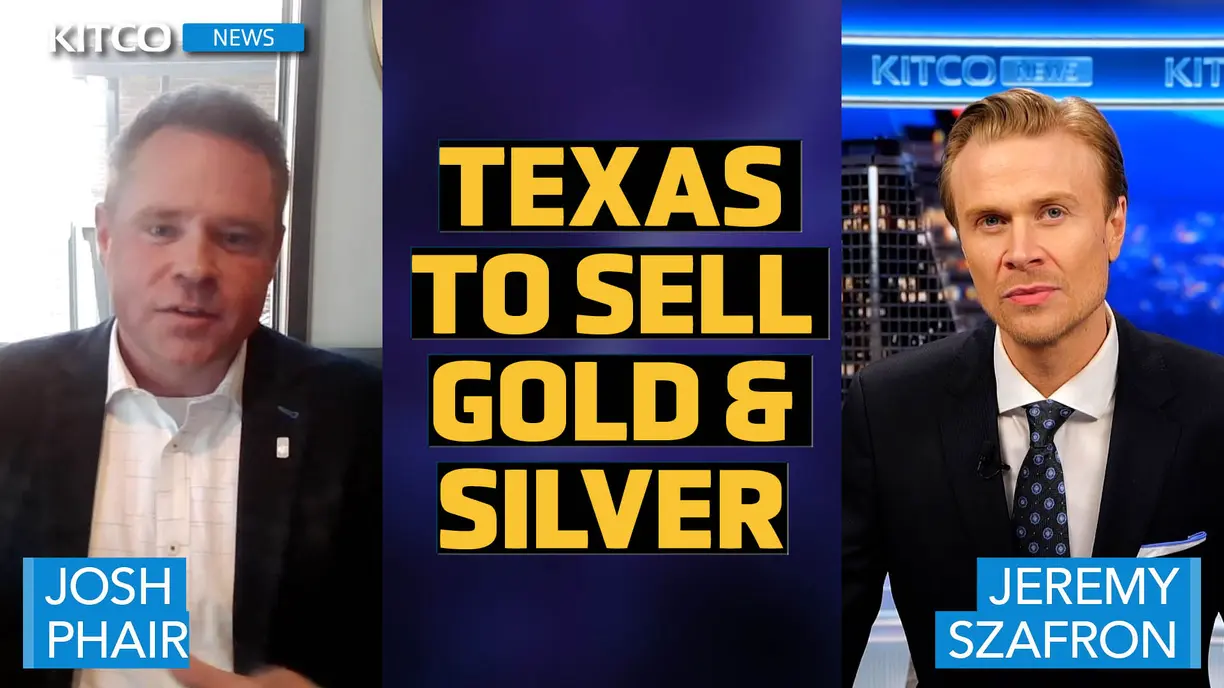
(Kitco News) - In a historic shift for state level finance, Texas has officially moved from a passive storage model to an active, state run bullion supply chain. The rollout, announced live from the Texas State Capitol, introduces a first of its kind dot gov storefront that allows the public to purchase state branded gold and silver directly from the Comptroller office.
The initiative marks the first time a U.S. state has facilitated a closed loop system for precious metals, bridging the gap between manufacturing, vaulting, and direct to consumer sales.
"Texas is the first state to facilitate a closed loop system for precious metals from manufacturing to vaulting to direct to consumer sales," said Josh Phair, CEO of Scottsdale Mint, in an exclusive interview with Kitco News. "By launching its own branded coins and gold bills through an official dot gov storefront, the state is creating a physical alternative to traditional financial systems."
The Sovereign Distributor Model
While states like Wyoming and Utah have made headlines for recognizing gold and silver as legal tender, the Texas program establishes a new "Sovereign Distributor" infrastructure. The program includes the 2026 Texas Lone Star Coins—minted in one ounce gold and silver—and official Texas Gold Bills, which are thin, durable notes containing verifiable layers of 24 karat gold.
These products are not merely commemorative. They are integrated with the Texas Bullion Depository, the only state administered and audited vaulting facility in the nation. Investors can now purchase metals through the Comptroller’s official website and choose to have them vaulted within the state’s secure infrastructure, effectively bypassing traditional commercial banking rails.
"This is a new paradigm," Phair told Kitco News. "States are increasingly viewing physical metal as a necessary treasury asset due to diluted monetary bases and broken federal budgets."

The Battle for Sound Money: Texas vs. Wyoming
Texas is not alone in its pursuit of physical asset sovereignty. Wyoming has been a pioneer in this space, recently passing the Wyoming Legal Tender Act and exploring the "Sovereign Buyer" model where the state treasury holds physical gold. However, Texas has taken the concept a step further by becoming the distributor. While Wyoming focuses on state level holdings, Texas is building the plumbing for its citizens to hold, spend, and vault state branded metal seamlessly.
Phair confirmed that this competitive environment is accelerating, noting that multiple other state legislatures are currently in active discussions to build out similar physical metals infrastructure as a hedge against federal monetary policy.
The Basel Three Catalyst
The move by Texas coincides with a monumental regulatory shift in the global banking system. Under the recently implemented Basel Three "Endgame" reforms, physical gold has been elevated to a Tier 1 High Quality Liquid Asset (HQLA). This allows banks and sovereign institutions to count allocated physical gold at 100 percent of its market value toward their liquidity reserves, placing it on equal footing with cash and top rated government bonds.
Phair emphasized that this regulatory change is driving a "scramble for physical" at the institutional level. "Under Basel Three, physical gold is now a 100 percent risk free asset, which is why we are seeing states build their own physical infrastructure. They want possession, audits, and jurisdictional security," he said.
Physical Market Strains
The entry of a sovereign distributor like Texas into the market comes at a time of extreme physical tightness. With gold pushing 5,100 dollars and silver rallying toward 83 dollars, Phair warns that the current demand is beginning to outpace global refining and delivery capacity.
"We are looking at a genuine physical supply squeeze heading into Q3 of 2026 due to record breaking demand," Phair stated. He noted that refineries are already facing significant backlogs and that international metal flows are being redirected away from traditional hubs like London and New York toward jurisdictions with more robust custodial security.