

(Kitco News) - The gold market is trading at session lows after the Philadelphia Federal Reserve's manufacturing sector survey surprised market forecasters with a sharp decline back into negative territory this month.
On Thursday, the regional central bank said its manufacturing business outlook for August fell to -7.0, compared to July’s strong expansionary reading of 13.9. The data was much worse than expected as economists were looking for a positive reading of 7 this month.
"The survey’s indicators for current general activity, new orders, and shipments all declined, with the former turning negative,” the report said. “The employment index suggests declines in employment overall. Both price indexes indicate overall increases in prices and remain near their long-run averages. The firms continue to expect growth over the next six months, but expectations were less widespread this month."
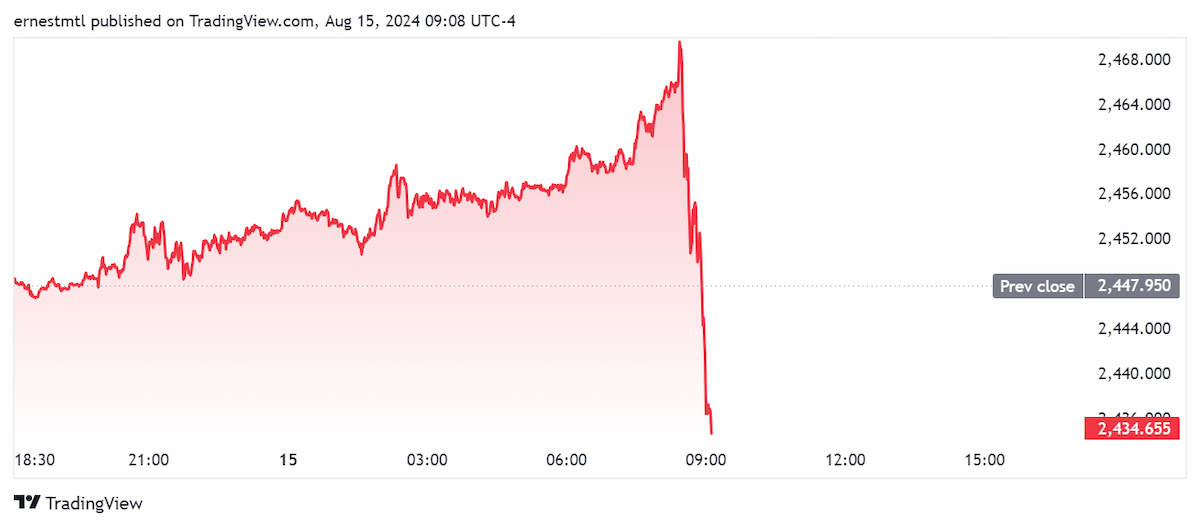
Gold prices declined sharply in the minutes following the manufacturing data release, which came out at the same time as weekly jobless claims and retail sales for July. Spot gold last traded at $2,434.76, down 0.54% on the day and within a dollar of the daily low.
The key components of the index painted a worsening picture this month. “The indexes for new orders and shipments also declined but remained positive for the second consecutive month: The new orders index decreased 6 points to 14.6, and the shipments index fell 19 points to 8.5,” the report said.
Firms reported a decline in employment, on balance, after reporting an overall increase last month. “The employment index returned to negative territory, falling to -5.7,” they wrote. “Nearly three-quarters of the firms reported no change in employment levels this month, while the share of firms reporting decreases (16 percent) exceeded the share reporting increases (10 percent). The average workweek index ticked down to -2.3.”
The Philly Fed report also showed stubbornly high inflation pressures.
“On balance, the firms continued to report overall increases in prices,” they said. “The prices paid index moved up 4 points to 24.0. More than 31 percent of the firms reported increases in input prices, while 7 percent reported decreases; 58 percent of the firms reported no change. The current prices received index fell 10 points to 13.7, undoing its increase from last month. Over 18 percent of the firms reported increases in prices received for their own goods, 5 percent reported decreases, and 73 percent reported no change.”
The survey’s broad indicators for future activity suggest less widespread expectations for growth over the next six months.
