
(Kitco News) – November was a standout month for Bitcoin, while gold and oil saw significant losses, according to Mohamed El-Erian, Former CEO of PIMCO and current president of Queens’ College, Cambridge.
In an X post on Saturday, El-Erian shared “The usual end-of-month table for YTD performance for major assets/asset classes, along with one highlighting November's developments.”
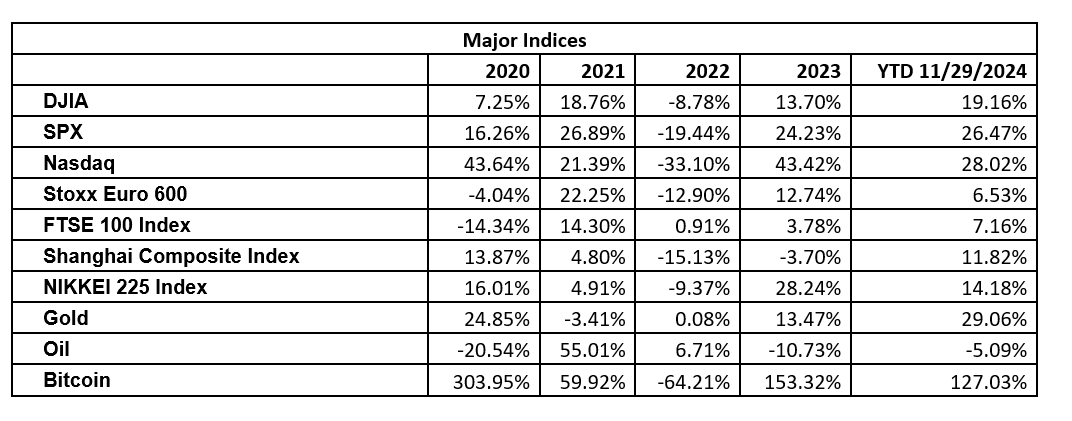
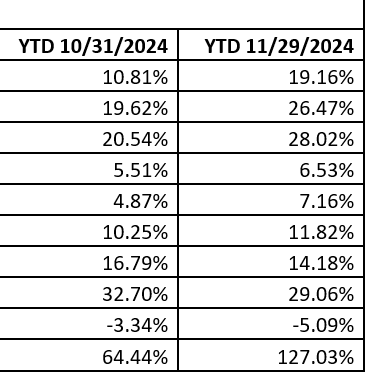
“It was the strongest month of the year for #Bitcoin and the S&P while, at the other end, #gold and #oil registered monthly losses,” he noted.
El Erian has been sounding the alarm recently about gold prices and the broader implications of the global gold rally. On Oct. 21, he penned an op-ed in the Financial Times arguing that Western countries should pay more attention to the rise in gold prices, as the precious metal’s persistent rally reflects increasing interest in alternatives to the dollar-based financial system.
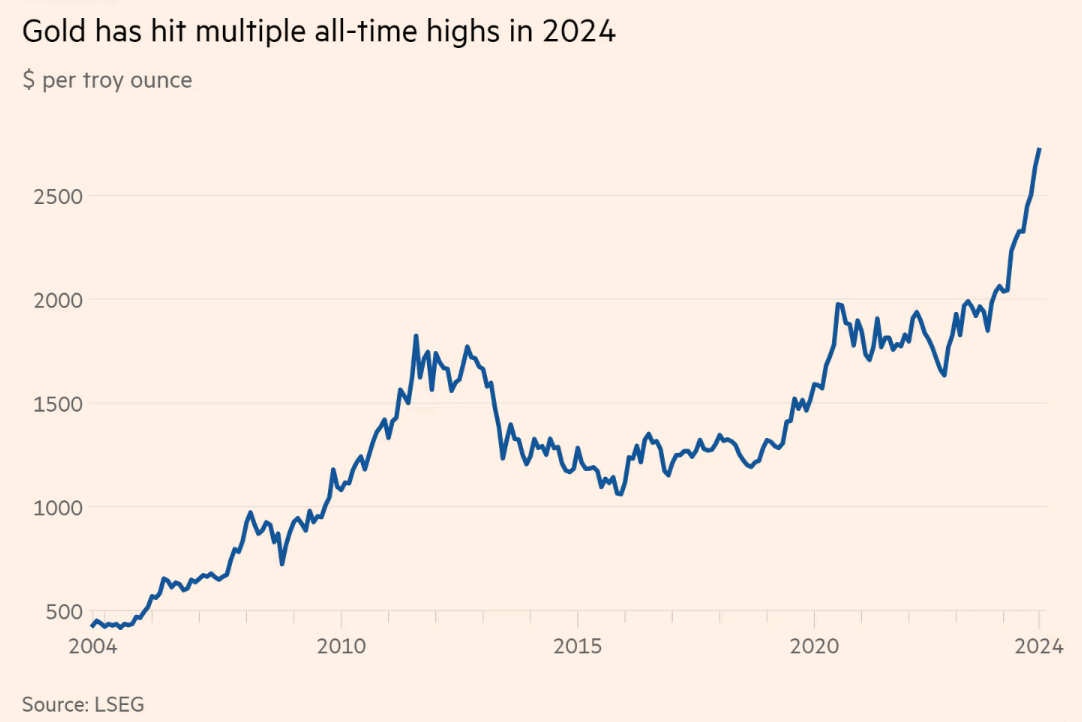
“Something strange has happened to the price of gold over the past year,” El-Erian said. “In setting one record level after the other, it seems to have decoupled from its traditional historical influencers, such as interest rates, inflation and the dollar. Moreover, the consistency of its rise stands in contrast to fluctuations in pivotal geopolitical situations.”
He said that gold’s ‘all-weather’ price increase indicates the presence of something that goes beyond short-term economic, electoral, and geopolitical developments. “It captures an increasingly persistent behavioural trend among China and ‘middle power’ countries, as well as others,” he said. “And it is a trend that the West should be paying greater attention to.”
El-Erian noted that the price of an ounce of gold has increased from $1,947 per ounce to over $2,700, a gain of almost 40% in the past 12 months. “Interestingly, this march up in price has been relatively linear, with any pullback attracting more buyers,” he said. “It has occurred despite some wild swings in expected policy rates, a wide fluctuation band for benchmark US yields, falling inflation and currency volatility.”
“Some may be tempted to dismiss gold’s performance as part of a more general increase in asset prices that, for example, has seen the US S&P index gain about 35% in the past 12 months,” he said. “Yet that correlation itself is unusual. Others will attribute it to the risk of military conflicts that have seen so many innocent civilians lose their lives and livelihoods, together with massive destruction of infrastructure. Yet the price journey suggests that there may well be a lot more going on.”
El-Erian pointed to consistent bullion purchases by central banks as a significant driver of gold’s strength. “Such buying seems not just related to the desire of many to gradually diversify their reserve holdings away from significant dollar dominance despite America’s ‘economic exceptionalism,’” he wrote. “There is also interest in exploring possible alternatives to the dollar-based payments system that has been at the core of the international architecture for some 80 years.”
“Ask why this is happening and you will normally get an answer that mentions a general loss in confidence in America’s management of the global order and two specific developments,” he said. “You will hear about America’s weaponisation of trade tariffs and investment sanctions, together with its reduced interest in the rule-based, co-operative multilateral system that it played a pivotal role in designing 80 years ago.”
El-Erian said that Russia’s ability to maintain international trade and actually grow its economy despite many of the country’s banks losing access to the Swift interbank payment system since 2022 has also played a role in the yellow metal’s rally. “It has done this by creating a clunky trade and payments alternative system that involves a handful of other countries,” he said. “While inefficient and costly, this allowed Russia to bypass the dollar and maintain a core set of international economic and financial relations.”
Another factor is related to the conflict in the Middle East, where El-Erian believes the United States is viewed by many as inconsistent in its support for human rights and international law. “This perception has been amplified by how the US has shielded its main ally from a response to actions widely condemned in the international community,” he wrote.
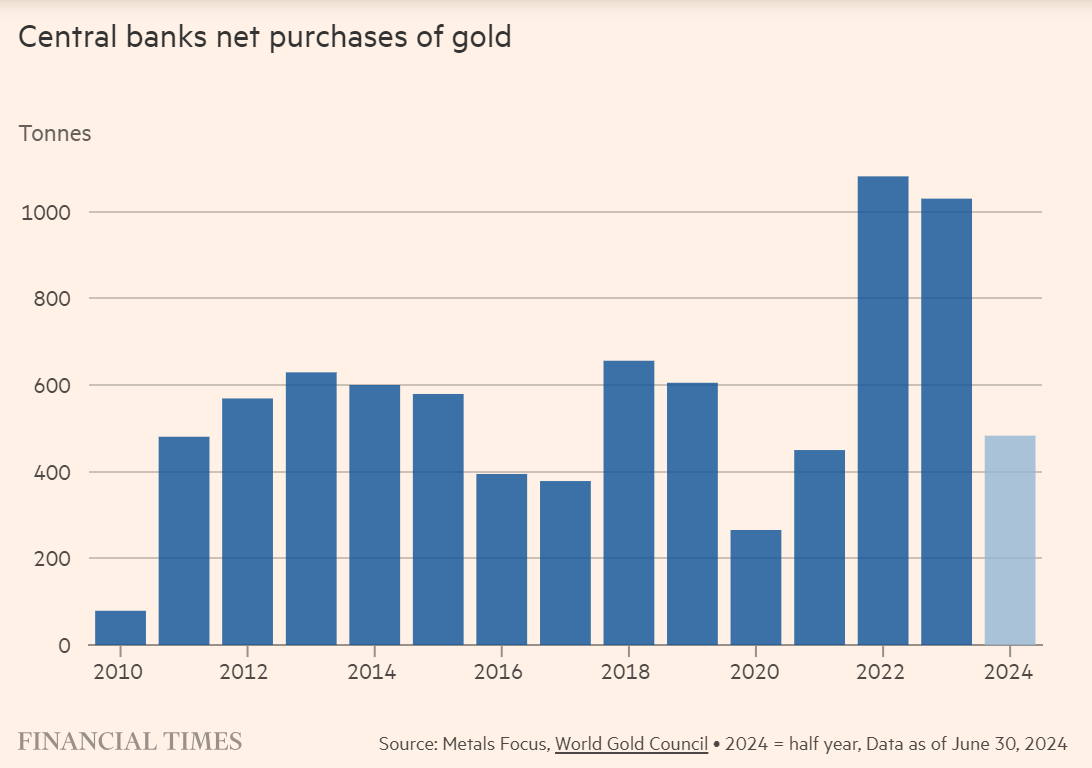
“What is at stake here is not just the erosion of the dollar’s dominant role but also a gradual change in the operation of the global system,” he wrote. “No other currency or payment system is able and willing to displace the dollar at the core of the system and there is a practical limit to reserve diversification. But an increasing number of little pipes are being built to go around this core; and a growing number of countries are interested and increasingly involved.”
El-Erian said that the current gold price rally is “not just unusual in terms of traditional economic and financial influences” but it also surpasses strict geopolitical influences to capture a broader phenomenon which is building secular momentum.”
As these alternative pathways for international finance develop and grow, they could cause a fragmentation of the global system and an erosion of the power of the dollar and the U.S. financial system. “That would have an impact on the US’s ability to inform and influence outcomes, and undermine its national security,” he said.
“It is a phenomenon that Western governments should pay more attention to,” El-Erian concluded. “And it is one where there is still time to course-correct, though not as much as some would hope.”
