
(Kitco News) - Despite the significant selling pressure on the final trading day of January, the first month of 2026 started off on a strong note, with robust investment demand in gold-backed exchange-traded products, according to the World Gold Council’s monthly ETF data.
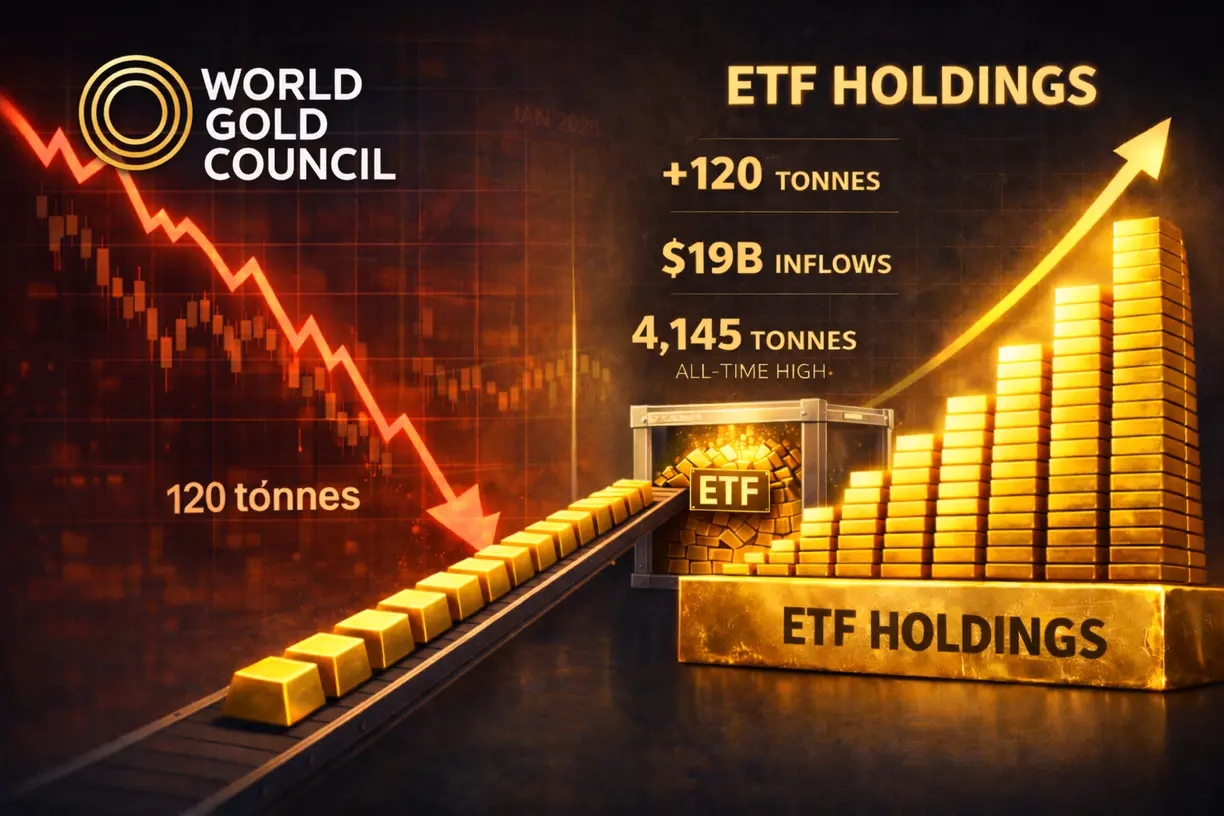
The WGC said that global gold ETFs saw inflows of 120 tonnes last month, valued at nearly $19 billion—the strongest month on record. The report noted that total volumes reached a new all-time high of 4,145 tonnes, surpassing the record set in 2020. At the same time, a 14% price increase pushed the value of the metal held to a record high of $669 billion.
The analysts pointed out that even during gold’s biggest decline in decades and its follow-through selling on Monday, investors were still buying gold-backed ETFs.
Asian demand dominated the global marketplace last month. Regional ETFs saw inflows of 62 tonnes, valued at nearly $10 billion. The report said this was the fifth consecutive monthly inflow—their strongest month on record.
“The region accounted for 51% of net global inflows, an especially notable achievement given that Asian holdings are only about one-fifth the size of North America’s,” the analysts said. “China once again led the region’s inflows (US$6bn), ranking as the second-largest source of inflows globally, closely behind the US. Robust gold prices, lingering geopolitical uncertainty, and strong institutional demand all underpinned the country’s continued appetite for gold ETFs.”
North American-listed ETFs also saw robust activity, as investors bought 43.4 tonnes of gold last month, valued at nearly $7 billion.
“Gold experienced a sharp pullback into month-end, following the nomination of Kevin Warsh as the new Fed Chair. Prices had become stretched through January, making a correction increasingly likely. Despite the drawdown and heightened volatility, the region still reported net positive flows on the final trading day of the month,” the analysts said. ‘“During the month, inflows benefited from both the price rally and rising geopolitical tensions involving the US and regions such as Iran, Greenland, and parts of Europe, which helped sustain investor interest in gold.”
European demand, while positive, continued to lag behind Asia and North America. European investors bought nearly 13 tonnes of gold, valued at roughly $2 billion.
“The region had to contend with broader market volatility stemming from EU preparations for retaliatory tariffs and pressure on export-heavy economies, reinforcing demand for defensive assets such as gold,” the analysts said. “In the UK, which led regional inflows, persistently elevated inflation and renewed political tensions further fuelled investor appetite for gold ETFs as a hedge against both domestic and external risks.”
Although prices are well off January’s highs near $6,000 an ounce, analysts at the WGC expect investment demand for gold to remain a critical element in the marketplace. In their monthly commentary, the analysts said that low interest rates, coupled with stubborn inflation and renewed government spending, make gold a more attractive safe-haven asset than bonds.
“The recent run-up in gold prices probably warrants a pause, but we see continued investment demand as a feature of 2026,” the analysts said. “Geopolitics is likely to remain the primary driver, with macro conditions potentially reinforcing the trend - most plausibly via a renewed rise in inflation expectations amid fiscal support ahead of the mid-term elections, pushing the stock–bond correlation higher.”
