
(Kitco News) - And now for something completely different…
The 2026 Milan and Cortina Winter Olympics are in full swing as athletes from around the world compete for gold, silver and bronze.
From a commodity perspective, this year’s Games are particularly compelling, as the intrinsic value of the medals is the highest it has ever been following the unprecedented surge in gold and silver prices. Interestingly, gold accounts for only a small fraction of the total metal used.
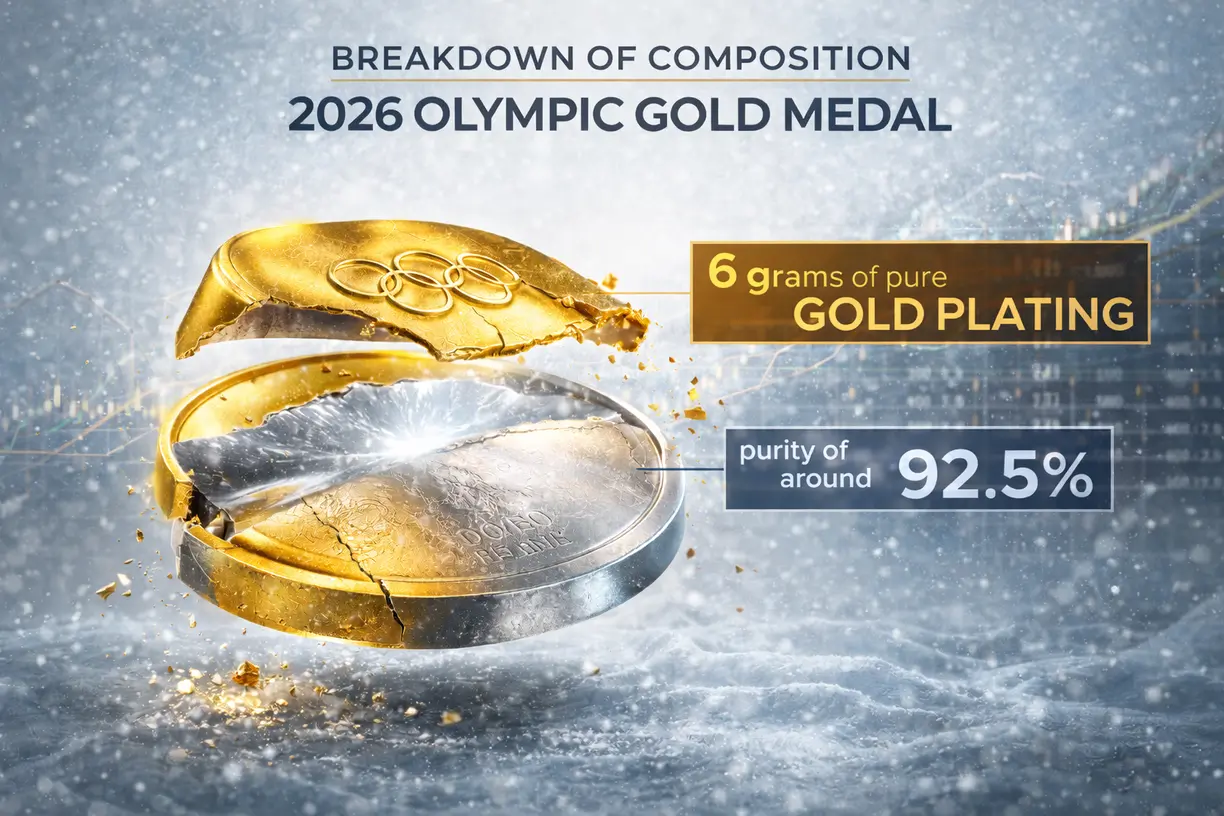
The 2026 Winter Olympic medals follow the International Olympic Committee’s long-standing formula: a silver base with a thin layer of gold plating for first place, solid silver for second, and copper-based bronze for third.
Under IOC rules, a gold medal must contain at least 6 grams of pure gold and be composed primarily of sterling silver, which has a purity of around 92.5%. That means just over 1% of the medal’s total weight is gold.
At current prices — with gold trading near historic highs around $5,000 an ounce — the gold content is worth only a few hundred dollars per medal. Meanwhile, silver’s roughly 150% rally over the past 12 months has significantly boosted the raw value of both gold and silver medals.
A total of 1,146 medals — 735 during the Olympics and 411 during the Paralympics — will be awarded at this year’s Games. Doing the math, the Winter Games have required about 382 kilograms of silver, or approximately 12,280 troy ounces. Because of the relatively low gold content, only about 74 troy ounces of gold were needed. Roughly 337 pounds of copper alloy were required to produce the bronze medals.
The medals were manufactured by the Italian State Mint (IPZS) and, continuing a recent Olympic trend, were produced using recycled metals and renewable energy — adding a sustainability dimension to one of the world’s most visible showcases of precious metals.
The next Olympics will be the Summer Games in Los Angeles in 2028. Although gold and silver prices have experienced recent volatility, it is difficult to argue that the longer-term trend in precious metals is anything but higher.
The intrinsic value is calculated in dollars and cents; however, the value to the athlete standing on the podium is measured cannot be quantified. For investors, the medals are measured in ounces. For athletes, they are measured in years — years of training, sacrifice and persistence. The gold plating may be thin, but the effort behind it is anything but.
That is it for this week. Have a great weekend.
