(Kitco News) - The mining sector has seen significant gains in the last 12 months as investors start to recognize its importance in the evolution of the global economy. However, according to one senior mining executive, to unlock its full value, the sector needs to become essential to society.
Gustavo Pimenta, CEO of Vale, kicked off the Prospectors & Developers Association of Canada 2026 Convention, telling a packed house that the industry is facing its best period in recent history as demand for minerals continues to grow.
However, he added, even as the future looks bright, the sector has to do more to attract new sustainable investment capital.
“ Mining has been the fundamental element of many of the things that improve people's lives over the last several years. And when we look into the future, the need for what we do is gonna be substantially bigger. There is no AI without mining. There is no energy transition without mining,” he said. “ We can talk about supply/demand, long-term future price expectations. I believe, and I think my team at Vale strongly believes, that there is another fundamental element: society still doesn't accept mining as it should.”
Pimenta’s keynote speech comes as the mining sector has seen significant investment flows, with rising commodity prices supporting equities. After lagging for several years, gold miners have started to outperform the precious metal. The VanEck Gold Miners ETF (NYSE: GDX) is up more than 200% since January 2025; during that same period, gold prices are up 120%.
Meanwhile, Pimenta’s philosophical outlook also comes as the world’s largest iron ore producer continues to feel the effects of its Brumadinho dam disaster in Brazil in January 2019. The collapse of the tailings dam released a mudflow that killed 270 people.
Pimenta, who has only been CEO of Vale for 18 months, said the company continues to prioritize improving its social license to regain the public’s trust.
“ We have improved our reputation. We track reputation very carefully, not because we're gonna look good, but because this is a very important signal of my license to operate,” he said. “And our reputation has improved substantially in the last seven years. It's still bad. Let's just be clear about that. Right now, we are substantially below what I think we should be. But we are making a few strides and I think we can continue to improve over the next several years.”
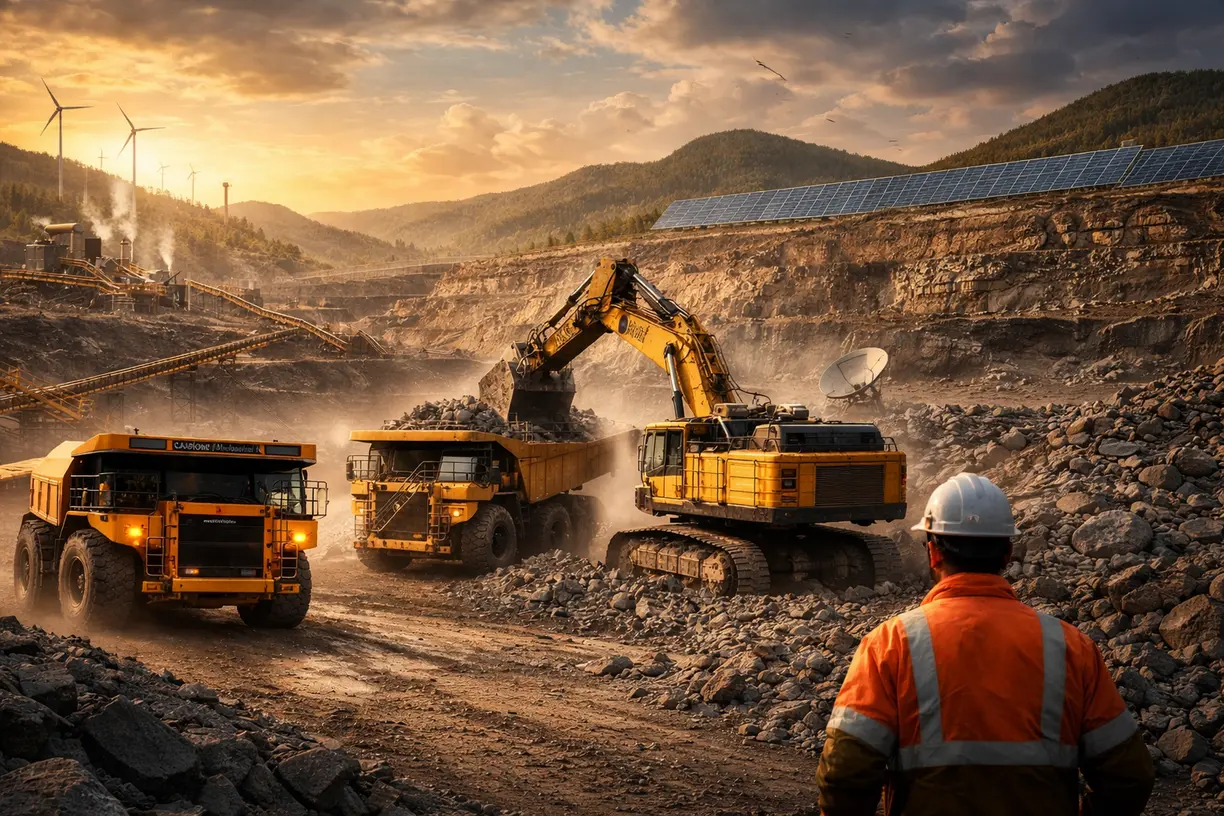
In his keynote, he laid out five priorities the company is working on. He said the first step is the development and incorporation of autonomous mining equipment. He noted that this equipment will make mining safer and more efficient.
The second priority is to develop projects that are as minimally invasive as possible and that have a low land-use and water-use footprint.
Pimenta pointed out that Vale has operations in Brazil’s Carajás National Forest but has an agreement to use only 2% to 3% of the 800,000 hectares.
“ That's 12 times the size of Toronto, right? So five times the size of London. It's a massive area,” he said. “ What has happened to that area? Everything has been devastated outside the area that we protect. In the last three years, we’ve had more than 500 attempts of evasion. Bad miners. Illegal miners. So the point that we always make, and sometimes it's counterintuitive for societies, but mining protects the environment and protects the forest.”
The company’s next priority is to operate with zero waste and zero tailings. Pimenta said that evolving technology makes dry stacking — storing waste rock without tailings — possible.
“ The future of mining is gonna be a future where we generate zero waste. I believe that future is possible,” he said. “ Today, 85% of our production is without dams. It’s dry stacking filtration.”
The company’s fourth priority is to create shared value within the communities in which it operates to help bring families out of poverty.
The company’s final pillar is to support a diverse and inclusive workforce.
“We have to make sure that we are an interested partner, that society sees us as someone that makes their life better,” he said. “We believe that over the next couple of years, we'll be able to move from being just essential to a company that really cares and drives shared prosperity.”
